




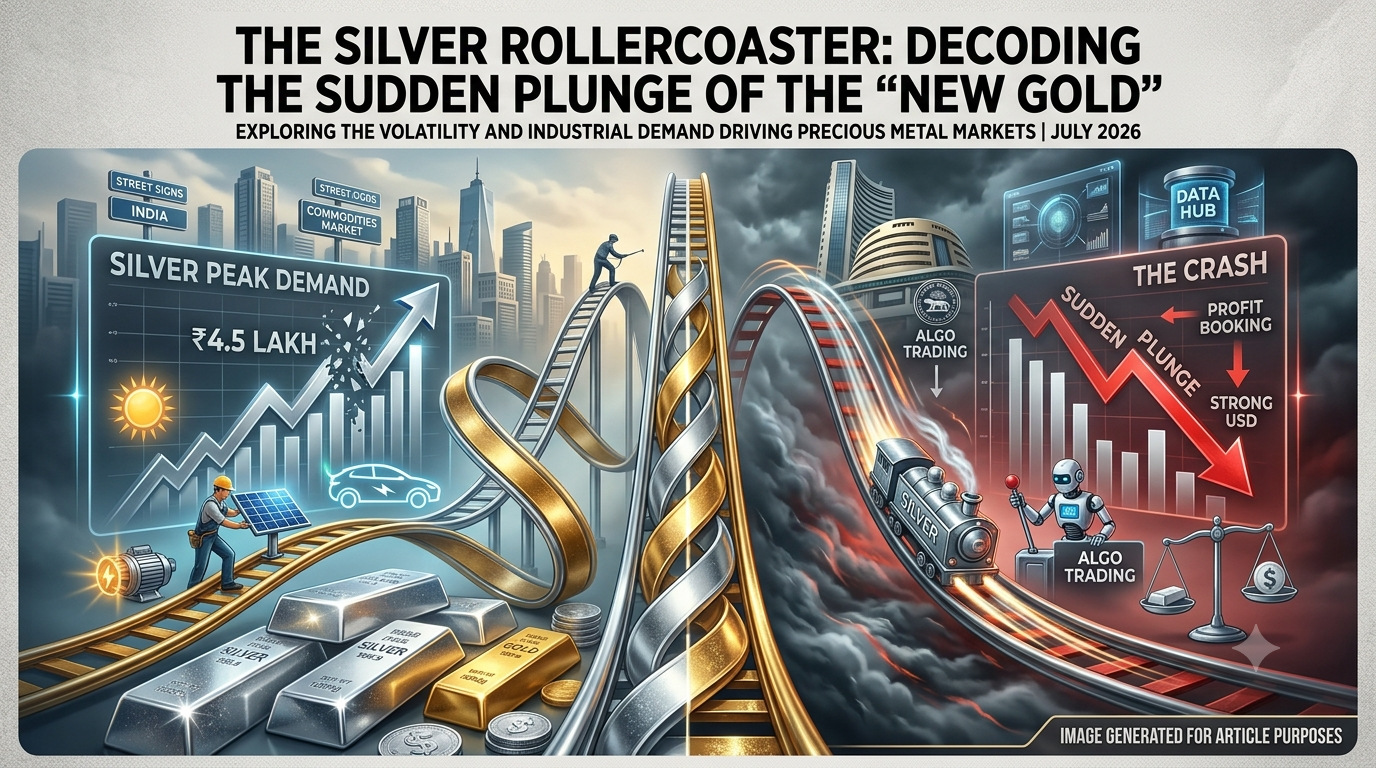
The global commodities market recently witnessed a staggering drop in silver prices, catching many investors off guard. Just a couple of years ago, silver was trading near ₹1 lakh per kilogram, before embarking on a massive bull run that pushed its value to an eye-watering peak of ₹4.5 lakh per kilogram. Following this historic high, the market experienced a sharp and rapid correction. This dramatic reversal has sparked intense discussions, especially since market analysts had recently crowned silver as the “new gold,” predicting a continuous, long-term upward trajectory.
The Dual Appeal: Why It Was Dubbed the ‘New Gold’
The optimistic nickname for silver stems from its unique position in the market. Unlike gold, which is heavily stockpiled by central banks and viewed almost exclusively as a financial reserve, silver benefits from a powerful “dual demand” structure:
- Financial Safe Haven: Traditionally, silver acts as a reliable store of wealth and is used extensively in jewelry and coinage. During times of inflation, currency devaluation, or geopolitical stress, investors flock to it as a protective asset.
- Industrial Necessity: Silver possesses unmatched thermal and electrical conductivity, alongside antibacterial and reflective properties. This makes it an irreplaceable component in modern industries, ranging from defense and medical equipment to everyday electronics.
Catalysts Behind the Historic Surge
Before the crash, a “perfect storm” of global trends drove silver prices to unprecedented heights:
- The Green Energy Shift: The worldwide push toward renewable energy requires immense amounts of silver, primarily for manufacturing photovoltaic cells in solar panels and critical components in electric vehicles (EVs).
- The AI Revolution: The explosion of artificial intelligence relies on massive data centers, advanced processors, and sophisticated electronics—all of which require silver to function efficiently.
- Strained Supply Chains: While global demand skyrocketed, miners struggled to keep pace. Silver is largely a byproduct of mining other metals like copper, lead, and zinc. Combined with stricter environmental regulations and declining ore quality, the supply simply could not match the aggressive demand.
- The Gold Price Effect: As gold prices soared out of reach for many average consumers and wedding buyers, silver emerged as the most attractive and affordable substitute.
Anatomy of the Crash
When an asset’s value multiplies so rapidly in a short timeframe, the market becomes highly susceptible to sharp corrections. The bubble eventually burst due to a combination of financial pressures:
- Aggressive Profit-Taking: Institutional investors who rode the wave up began liquidating their positions to lock in massive profits, flooding the market with supply.
- Currency and Yield Pressures: A strengthening US dollar made silver more expensive for international buyers. Simultaneously, rising US Treasury yields offered investors attractive, risk-free interest payouts—something physical silver cannot provide.
- Algorithmic and Speculative Trading: Many retail traders purchased silver on margin (borrowed money). When prices began to dip slightly, institutional computer algorithms automatically triggered stop-loss sell orders, creating a cascading domino effect that forced prices down rapidly.
- Cooling Gold Markets: A slight downward correction in the gold market also dragged silver down with it, souring the overall sentiment for precious metals.
Understanding the Extreme Volatility
Silver is notoriously more volatile than gold. The primary reason is the size of the market; the global silver market is substantially smaller than the gold market, meaning that a few large transactions can cause exaggerated price swings. Furthermore, because silver is deeply tied to industrial manufacturing, any hints of a global economic slowdown can immediately suppress its value.
What This Means for the Indian Market
For India, the price crash brings a mixed bag of consequences. On the positive side, consumers will benefit from more affordable jewelry. Additionally, lower input costs will greatly benefit domestic electronics manufacturers and solar energy developers, aligning perfectly with the country’s ambitious renewable energy goals. Conversely, retail investors or traders who purchased silver exchange-traded funds (ETFs) or physical bars at the peak of the frenzy are now left navigating significant financial losses.