




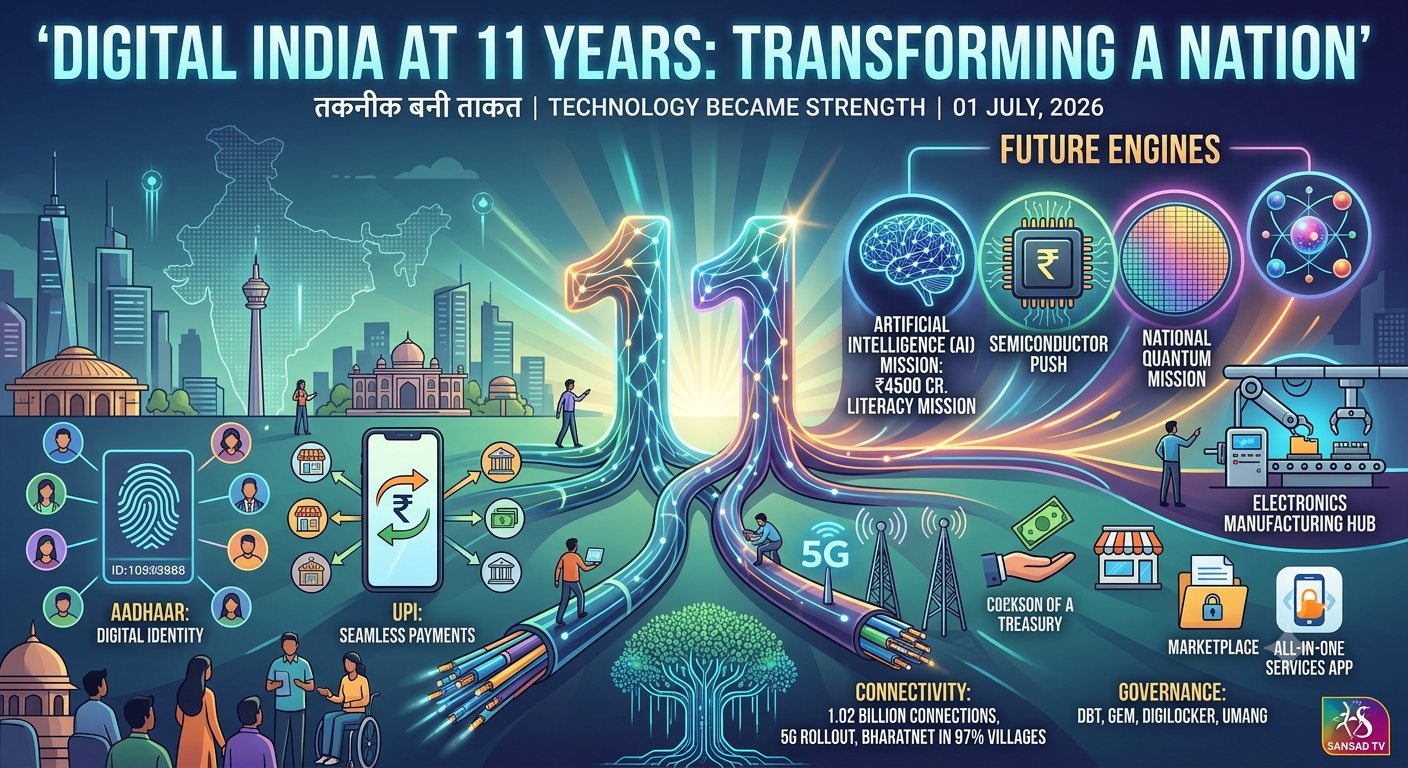
The Digital India initiative has officially marked its 11th anniversary, celebrating a decade-plus journey that has reshaped the nation’s technological landscape. Initially met with doubt, the campaign has successfully built a world-class Digital Public Infrastructure (DPI). As the country looks to the future, the next era of economic expansion is set to be powered by emerging sectors like artificial intelligence (AI), semiconductor production, and quantum computing.
The Telecom and Internet Boom
The foundation of this transformation has been a massive expansion in connectivity. Since 2014, mobile connections in the country have skyrocketed from 250 million to over a billion. Initiatives like BharatNet have brought internet access to nearly 97% of rural villages. Furthermore, the democratization of the internet was fueled by a drastic drop in data prices—falling from around ₹270 per gigabyte to just ₹8 to ₹10. Paired with a rapid 5G rollout, this accessible connectivity has fueled nationwide digital adoption.
Pioneering Digital Identity and Financial Inclusion
A major pillar of India’s technological success is its integrated digital ecosystem, starting with the Aadhaar digital identity framework. Once citizens were digitally identifiable, services like the Unified Payments Interface (UPI) could flourish. While early critics questioned whether a rural-heavy population could adapt to digital payments, UPI’s phenomenal success proved them wrong. Today, India’s DPI approach—where the government lays down the fundamental digital tracks and private companies build innovative services on top—is considered a global template.
Redefining Governance and Transparency
Technology has also proven to be a powerful weapon against systemic corruption. In the past, welfare funds frequently leaked through a chain of middlemen. The introduction of the JAM trinity (Jan Dhan bank accounts, Aadhaar, and Mobile connectivity) changed the game. Through Direct Benefit Transfers (DBT), financial assistance is now routed instantly and securely into the bank accounts of those in need. Similarly, platforms like the Government e-Marketplace (GeM) have modernized and transparently streamlined state procurement processes.
Navigating the Cybersecurity Landscape
However, rapid digitization brings significant risks. The expansion of online infrastructure has widened the surface for cyber threats, putting critical sectors like healthcare, finance, power, and telecommunications in the crosshairs of malicious actors. From the rise of AI-generated deepfakes to crippling ransomware attacks, the challenges are immense. To safeguard its digital wealth and centralized biometric data, the country is actively working to overcome a shortage of cybersecurity experts and secure its supply chains against global vulnerabilities.
Future-Proofing: AI, Chips, and Hardware Independence
To maintain its momentum, the nation is heavily investing in the technologies of tomorrow. Recognizing the dual nature of AI as both an asset and a threat, the government is launching a ₹4,500 crore AI literacy mission designed to educate the public and foster a secure AI environment.
Simultaneously, there is a strong strategic push toward hardware sovereignty. By ramping up domestic semiconductor manufacturing and electronics assembly, the country aims to reduce its reliance on foreign imports and shield itself from geopolitical disruptions.
Looking Forward
From streamlining everyday tasks through apps like Umang and DigiLocker to leading the world in digital payments, the Digital India program has fundamentally altered the lives of over 1.4 billion people. By integrating legal frameworks directly into technology—such as the digital enforcement of privacy laws—India has laid a robust, forward-thinking foundation. The progress of the past 11 years now serves as the launching pad for the nation’s journey toward becoming a fully developed, technologically sovereign global power.