


The Caspian Sea is shrinking at an alarming rate. A recent 2026 study highlights this as a major warning sign, showing how a mix of global warming and human activity is deeply damaging our planet’s inland water systems.
Here is a simple breakdown of what is happening, why it matters, and how it impacts global trade.
What is the Caspian Sea?
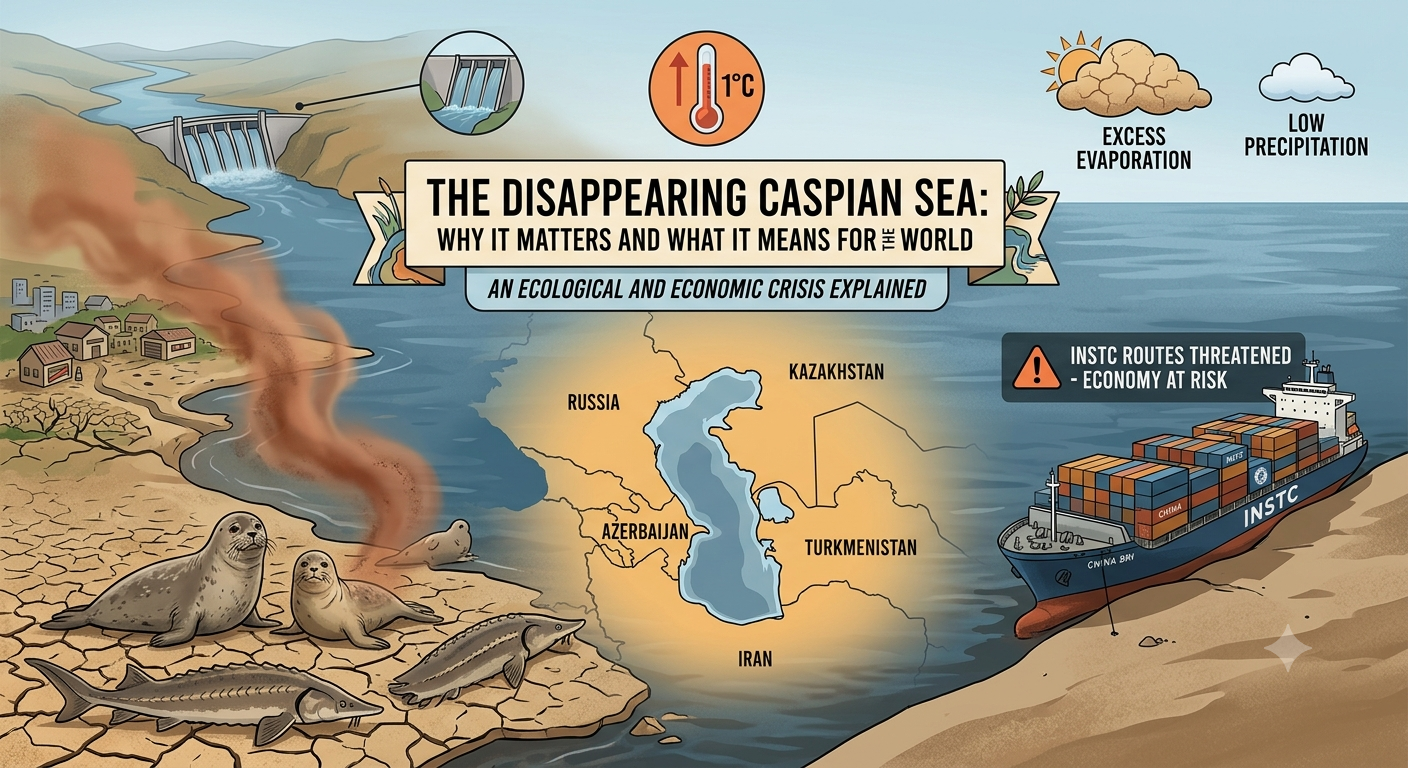
Even though it is called a “sea,” it is actually the largest landlocked lake on Earth. It is surrounded by five countries: Russia, Kazakhstan, Azerbaijan, Turkmenistan, and Iran.
Because it does not connect to any ocean, it relies entirely on rivers to stay full. In fact, just one river—Russia’s Volga River—supplies 80% of its fresh water. The lake is also a special home to unique wildlife, like the Caspian seal and certain types of sturgeon fish, which cannot be found anywhere else in the world.
Why is the Lake Shrinking?
Since the mid-1990s, the Caspian Sea has lost about 5.5% of its total surface area. This rapid shrinking is caused by three main issues:
Human Roadblocks: People have built many dams and reservoirs on the Volga River, mostly to divert water for farming. This heavily restricts the amount of fresh water that actually makes it into the lake.
Extreme Heat: Global temperatures are rising. The area’s average water temperature has gone up by about 1°C since the mid-1900s, causing the lake’s water to evaporate much faster than before.
Lack of Rain: Normally, evaporated water turns into clouds and rains back down. However, the current heat is causing water to evaporate far faster than the rain can replace it.
The Danger to Nature and People
As the water disappears, it creates severe problems for both the environment and local communities:
Threatened Wildlife: The dropping water levels make it hard for fish to migrate and breed, while seals are losing the shallow waters they rely on. The unusually warm water is also causing toxic algae to grow.
Poisonous Dust Storms: If the water drops just 5 more meters, a massive 20% of the lake will dry up completely. This will expose a salty, dry seabed that can whip up toxic dust storms, posing a serious health risk to people living on the coast.
How This Hurts the Economy and Trade
The shrinking lake is not just an environmental disaster; it is a major economic headache, especially for international trade routes like India’s International North-South Transport Corridor (INSTC).
Stuck Cargo Ships: The water near ports and canals has become so shallow that cargo ships cannot carry a full load. They must operate at only 75% capacity to avoid getting stuck in the mud.
Skyrocketing Costs: The INSTC trade route was originally designed to be 30% cheaper than using the traditional Suez Canal. However, because ships must sail partially empty and ports require constant digging, those savings have completely vanished.
Complicated Detours: Because the sea route is failing, India and other nations are forced to use longer, more complicated land routes. Moving goods across multiple land borders means paying more tolls and dealing with more middlemen, which makes products much more expensive.
Can We Fix It?
Global leaders have tried to step in. The five neighboring countries signed the Tehran Convention in 2003 and made new pledges at the 2024 climate summits to protect the lake’s wildlife and track water levels.
However, there is a big catch: these treaties only work if every country fully cooperates. Right now, it is extremely difficult to force nations to stop using so much river water upstream. Until all the bordering countries work together to manage their water use, the future of the Caspian Sea remains in danger.