




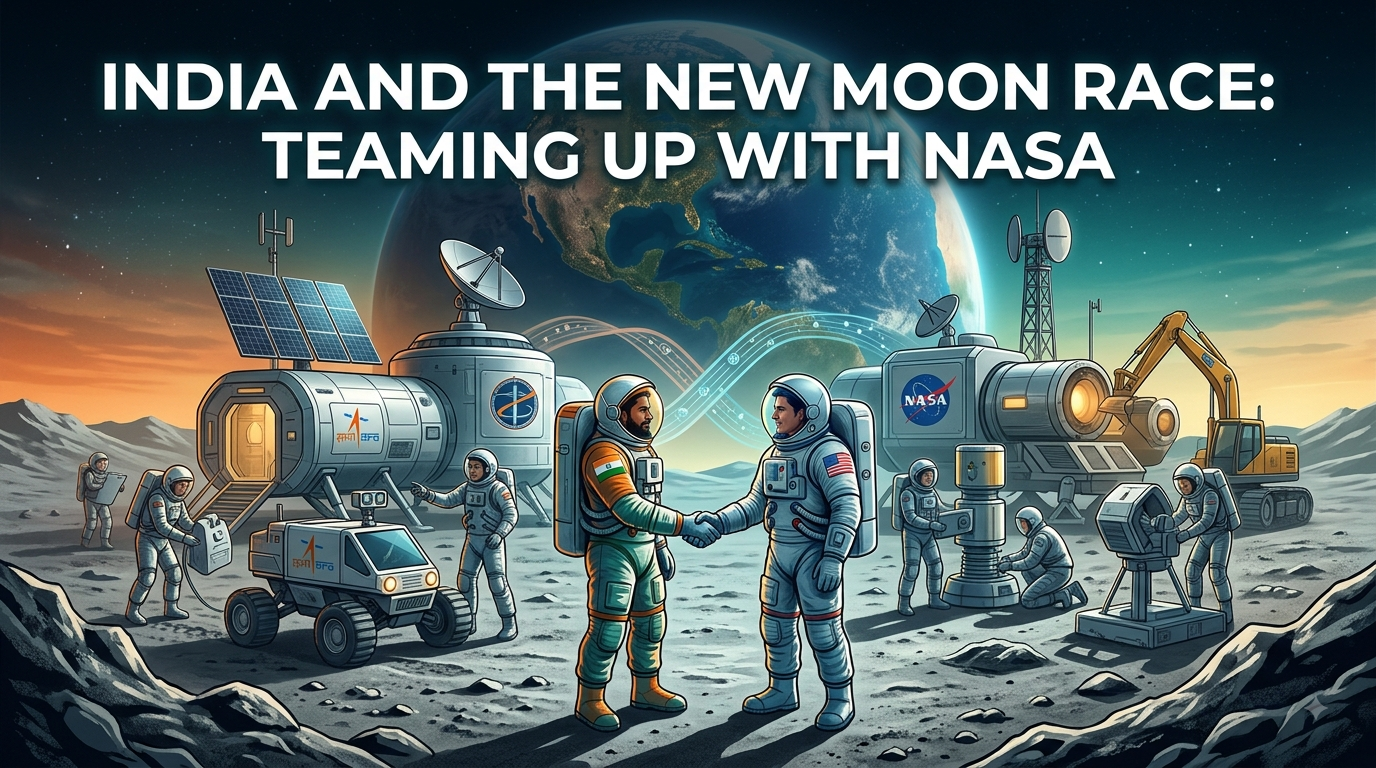
Going to the moon is no longer just about planting a flag and coming home. Today, countries are racing to build permanent research stations and bases on the lunar surface. In this new space race, India has stepped up as a major player. Recently, NASA invited India’s space agency, ISRO, to join its moon base project.
Here is a simple look at why NASA wants India’s help and what this means for the future.
Why Does NASA Need ISRO?
NASA is putting together a global team to build the first permanent human outpost near the moon’s South Pole. They really want India on this team for a few big reasons:
Experience at the South Pole: In 2023, India’s Chandrayaan-3 mission made history by becoming the first to successfully land near the moon’s South Pole. This area is tough to explore, and ISRO gathered important data that NASA needs to build its base safely.
Smart and Affordable Engineering: ISRO is famous around the world for doing amazing space research without spending a fortune. NASA wants to use ISRO’s smart methods to save time and money.
A History of Teamwork: NASA and ISRO already have a great track record of working together. They are currently partnering on a new satellite and working to send an Indian astronaut to the International Space Station.
NASA’s Three-Step Plan for the Moon
NASA has a long-term plan to set up camp on the moon. It is broken down into three steps:
Step 1 (Now until 2029): Mapping the moon’s surface and testing new technologies.
Step 2 (2029 to 2032): Setting up power grids, communication systems, and delivery methods for supplies.
Step 3 (2032 and beyond): Building permanent habitats where humans can live and work.
Two Big Teams in Space
Right now, there are two main groups competing to use the moon’s resources:
The Artemis Alliance: Led by the United States. India joined this group in 2023, and it now includes over 70 countries.
The ILRS: Led by China and Russia. This group includes about 13 countries, including Pakistan.
India chose to join the US-led team because of its long history of sharing space technology with America. It also helps balance out China’s growing power in space.
What Does This Mean for India?
Teaming up with NASA perfectly matches India’s own big space goals. India wants to send an Indian astronaut to the moon by 2040 and eventually build its own space station. By sharing data and technology with NASA, India gets a huge boost toward making these dreams come true.
The Rules of Space
As countries plan to build on the moon, they have to figure out the legal rules. This is tricky because of conflicting agreements:
The 1967 Outer Space Treaty: An old rule that says space belongs to everyone and no single country can claim to “own” the moon.
The Artemis Accords: A newer agreement that allows countries to extract and use the moon’s resources (like water).
This creates a big debate: How can a country mine resources from the moon without technically “claiming” the land? As humans get closer to living on the moon, solving these legal puzzles will be just as important as building the rockets to get there.