




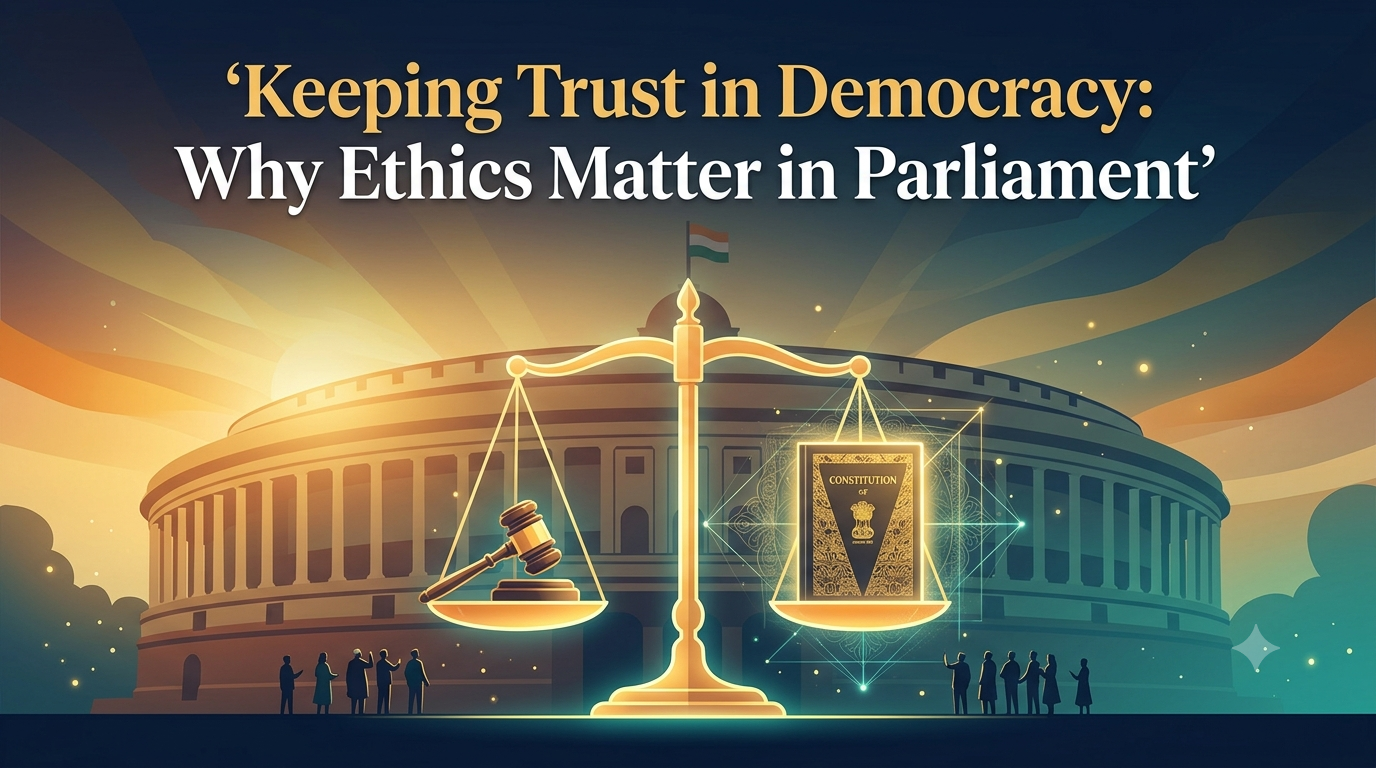
Parliament is where the people’s voice is turned into law. To do their jobs effectively and without fear, Members of Parliament (MPs) are given special protections and freedoms. However, these powers must be used responsibly. Parliamentary ethics act as a strict guide to ensure that leaders act with honesty and maintain the public’s trust.
The Role of Parliament
The Indian Parliament, made up of the President, the Lok Sabha, and the Rajya Sabha, handles massive responsibilities. It debates and passes laws, controls public money, and questions the government to make sure it is doing its job. Because MPs need to speak freely to represent their states and communities, they are protected from legal trouble for what they say or how they vote inside the house.
Watching Over Behavior: The Ethics Committees
To make sure MPs do not abuse their special freedoms, Parliament created Ethics Committees. The idea was first proposed in 1996. By 1997, the Rajya Sabha had set up India’s first committee to monitor the moral conduct of its members. The Lok Sabha followed, forming its first Ethics Committee in 2000, which officially became a permanent fixture in 2015.
The Rules MPs Must Follow
MPs are expected to follow a strict Code of Conduct. This code is not just a list of restrictions; it is a reminder that holding a public office means serving the people. The main rules include:
Putting People First: Personal interests must never get in the way of public duties.
No Bribes or Favors: MPs cannot accept money, gifts, or benefits in exchange for their votes or for bringing up new laws.
Showing Respect: Members must respect all religions, promote equality, and behave decently in public life.
Protecting the Institution: MPs must avoid any actions that would make the Parliament look bad or ruin its credibility.
Ethics vs. Privileges
Parliament has two distinct groups that deal with bad behavior, and while they sometimes overlap, they have different jobs. The Privileges Committee is focused on protecting the overall power and respect of Parliament itself. If anyone—whether they are an MP or an ordinary citizen—attacks the dignity of the house, this committee gets involved. On the other hand, the Ethics Committee only focuses on the moral and ethical mistakes made specifically by MPs.
The Importance of Good Behavior
Time in Parliament is limited and valuable. Tools like “Question Hour” are designed to solve the real problems faced by everyday citizens, from farmers to students. While politicians will naturally disagree on issues, healthy democracy requires them to debate with respect. Disrupting meetings, shouting, or blocking others from speaking wastes valuable time and hurts the nation’s progress. A truly strong democracy relies on leaders who not only make good laws but also lead by example with dignity and discipline.