




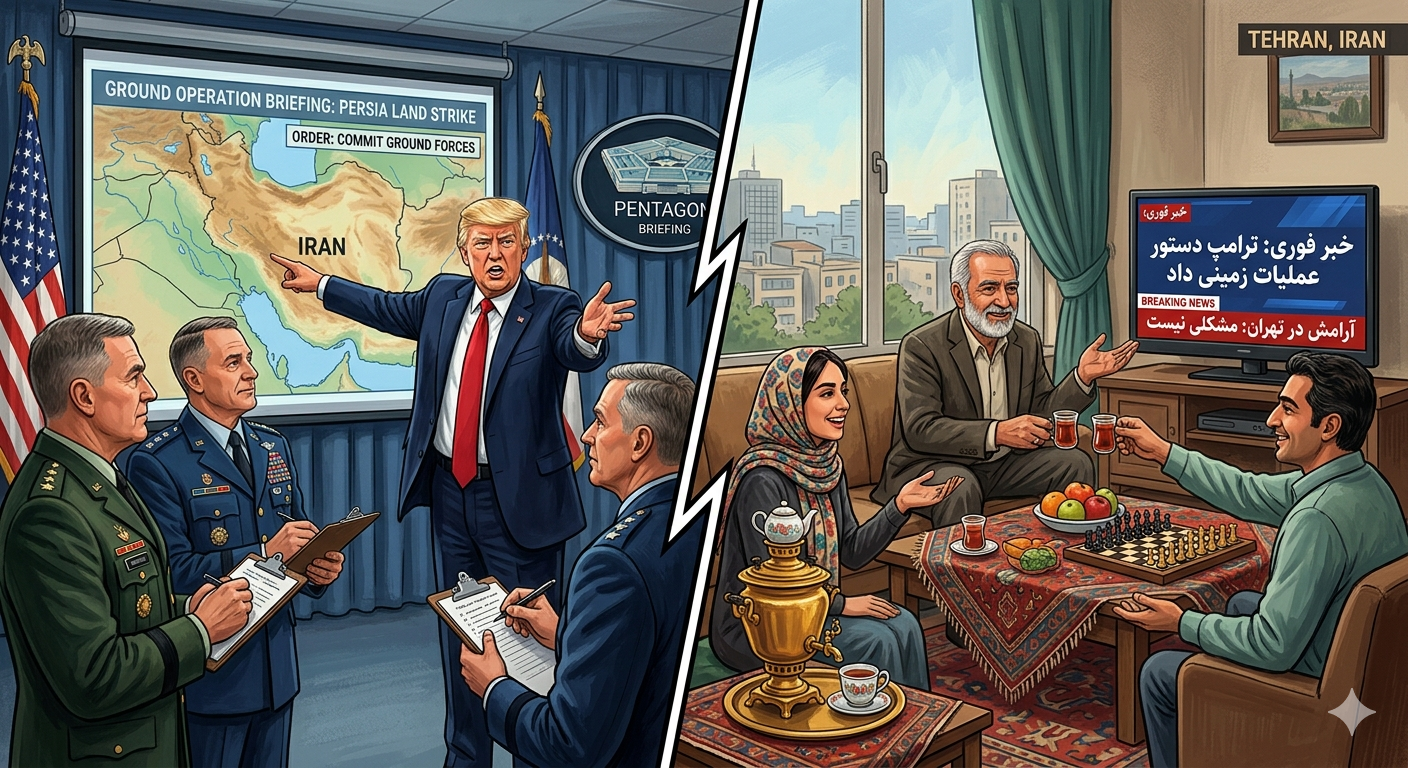
When analyzing geopolitical rivalries, focusing solely on military hardware offers an incomplete picture. The enduring conflict between the United States, its regional allies, and Iran is fundamentally rooted in competing ideologies, long-term economic maneuvering, and historical grievances. To truly grasp Tehran’s current positioning, one must look at the patient, multi-layered strategy it has cultivated over the past four decades.
The Turning Point: The Fall of the Twin Pillars
To understand today’s Middle East, we have to look back to the early 1970s. As the British Empire rolled back its military presence from the Persian Gulf, a power vacuum emerged. The United States stepped in, adopting an “offshore balancing” approach. Instead of deploying massive American forces, Washington relied on two regional pillars to maintain stability and protect its interests: Saudi Arabia and the monarch-ruled Iran.
This fragile balance was obliterated by the 1979 Islamic Revolution. The ousting of the US-backed Shah resulted in a new Iranian state that merged nationalist, leftist, and religious fervor into a potent revolutionary force. The new leadership did not view their success as a mere domestic regime change; they framed it as a regional liberation movement against Western interference, immediately putting neighboring Gulf monarchies and Washington on high alert.
The Economic Chessboard: Dollars vs. Resilience
In response to the shifting tides, the US fortified its ties with other Gulf states through a masterstroke of economic diplomacy: the petrodollar. By guaranteeing military protection to oil-rich nations on the condition that they price their exports exclusively in US dollars, Washington ensured that massive global wealth would continually flow back into Western financial markets.
Recognizing the vulnerability of relying on a Western-dominated financial system, Tehran began engineering a “resistance economy.” Knowing that severe sanctions were an inevitable tool of Western diplomacy, Iran focused on:
De-dollarization: Establishing barter systems and currency swap agreements with nations like China and India to bypass the SWIFT banking network.
Domesticating Supply Chains: Heavily investing in local manufacturing and agriculture to ensure the survival of its population during extreme economic blockades.
The Crucible of the 1980s: Forging an Asymmetric Strategy
The devastating eight-year war with Iraq in the 1980s served as a brutal, defining lesson for Iran’s leadership. During the conflict, global powers—including the US, European nations, and even the Soviet Union—covertly or overtly supported Saddam Hussein to prevent the spread of Iran’s revolutionary model. The United States effectively employed a strategy of exhaustion, ensuring both nations depleted their resources.
Iran emerged from the war with a profound realization: it could never win a conventional, symmetrical arms race against the West. Consequently, Tehran pivoted to an entirely new military doctrine:
The Proxy Doctrine: Instead of relying on traditional state-to-state alliances, Iran funded, trained, and equipped militia networks across Lebanon, Syria, and Iraq. This strategy effectively pushed Iran’s defensive borders outward, allowing it to project power without committing its own conventional forces.
Underground Fortification: Acknowledging the aerial superiority of its adversaries, Iran relocated its most sensitive military and nuclear infrastructure deep underground into fortified bunkers, making them incredibly difficult to neutralize completely.
Cost-Effective Deterrence: Rather than spending billions on modern fighter jets or massive naval fleets, Iran pioneered the mass production of cheap, lethal technologies, including loitering munitions (suicide drones), anti-ship missiles, and fast-attack boats.
Weaponizing Geography and Development
Iran’s ultimate trump card lies in its geography. By heavily fortifying its presence along the Strait of Hormuz, Iran retains the ability to threaten a massive portion of the global energy supply. It does not need to win a naval battle in the open ocean; it merely needs to disrupt traffic in a narrow chokepoint to trigger a global economic crisis.
Furthermore, as neighboring nations attempt to pivot their economies away from oil—investing heavily in futuristic cities, tech hubs, and global tourism—Iran’s asymmetric strategy adapts. By demonstrating the capability to strike critical, non-military infrastructure like desalination plants or data centers, Tehran holds these multi-billion-dollar modernization projects hostage, deterring foreign investment in rival states.
The Long Game
The current friction in the Middle East is the result of a meticulously planned strategy that Iran has been executing for over forty years. While the United States continues to leverage its unmatched conventional military might and economic sanctions, Iran has explicitly designed itself to absorb punishment and wage a long-drawn-out war of attrition. By rewriting the rules of engagement and focusing on endurance rather than outright dominance, Iran has proven that strategic patience can fiercely rival traditional superpower strength.