




A Geopolitical Analysis
What began with expectations of a swift military resolution has rapidly evolved into a protracted and complex standoff. The ongoing conflict between the United States and Iran has now stretched into its second month, defying initial projections of a rapid victory for US and Israeli forces. As the conflict continues, it is triggering profound global economic consequences and an unprecedented realignment of international alliances.
At the heart of the global disruption is the strategic Strait of Hormuz. The severe restriction of maritime traffic through this vital choke point has sent shockwaves through global energy markets, resulting in a continuous surge in the prices of crude oil and natural gas.
The Fragmentation of Traditional Alliances
Perhaps the most significant development in this conflict is the unexpected isolation of the United States on the world stage. Traditional Western allies and NATO members are showing a deep reluctance to support US military operations, prioritizing their domestic economies and regional stability over historical alliances.
European nations have taken concrete steps to distance themselves from the military campaign:
Airspace and Base Restrictions: Countries such as Spain and France have restricted the use of their airspace for US military logistics and supply routes.
Denial of Operational Support: Italy has reportedly denied refueling permissions for American military aircraft, citing a lack of parliamentary approval for the sudden requests.
Resource Withholding: Poland rejected a request to relocate vital air defense systems to the Middle East, a significant blow given the depletion of US defensive assets in the region.
This collective distancing highlights a potential fracturing within NATO. Observers note that European leadership is increasingly frustrated by unilateral US decision-making and is highly wary of being dragged into a war that directly threatens their economic survival.
Economic Warfare and Energy Leverage
The military standoff is paralleled by an intense economic war. Europe is heavily reliant on the Middle East, with a significant percentage of its Liquid Natural Gas (LNG), diesel, and jet fuel passing through the Strait of Hormuz.
Iran has astutely capitalized on Europe’s energy vulnerability by adopting a tiered approach to maritime passage. While vessels associated with the US and its direct allies face severe blockades, Iran has signaled that “friendly” and “neutral” nations are permitted to transit the strait, albeit sometimes subject to access fees. This targeted economic strategy creates a strong incentive for European nations to remain strictly neutral, thereby deepening the diplomatic and military isolation of the US.
Broadening the Battlefield
The scope of the conflict is expanding beyond conventional military targets. In response to ongoing strikes against its infrastructure and leadership, Iran has threatened to retaliate against the regional corporate interests of major American technology firms, signaling a shift toward asymmetric economic warfare.
Furthermore, the geopolitical chessboard is complicated by the involvement of other global powers. Reports indicate that nations like Russia and China are providing strategic backing to Iran, ranging from naval deployments in the region to advanced satellite guidance assistance.
A Strategic Crossroads
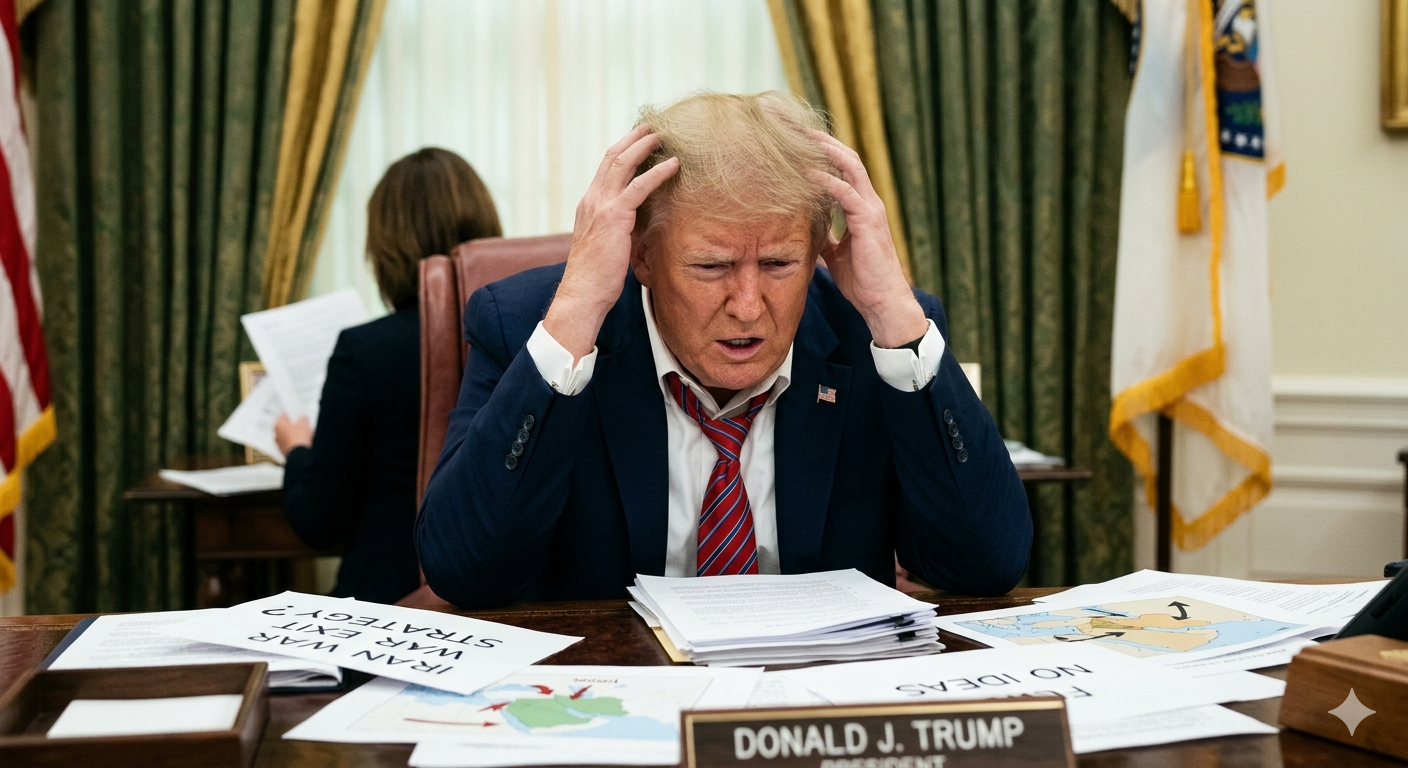
The US administration currently finds itself at a critical juncture, facing two distinct paths forward:
Strategic De-escalation: The pragmatic approach involves declaring the military objectives achieved and initiating a swift withdrawal. While this would stabilize global markets and prevent further military losses, it essentially concedes indirect control of the region’s strategic waterways to Iran.
Military Escalation: Driven by geopolitical pressure and domestic political optics, leadership may choose to escalate the conflict, potentially involving a ground invasion. Analysts warn that this path lacks a clear exit strategy and would likely trigger massive casualties and a severe global market crash.
Despite recent rhetoric from President Trump suggesting a rapid exit from the conflict, the continuous deployment of military assets and ground-support aircraft to the Middle East suggests that the situation remains highly volatile. With diplomatic channels frozen due to a profound lack of mutual trust, the international community remains on edge, watching a conflict that has fundamentally altered the modern geopolitical landscape.