




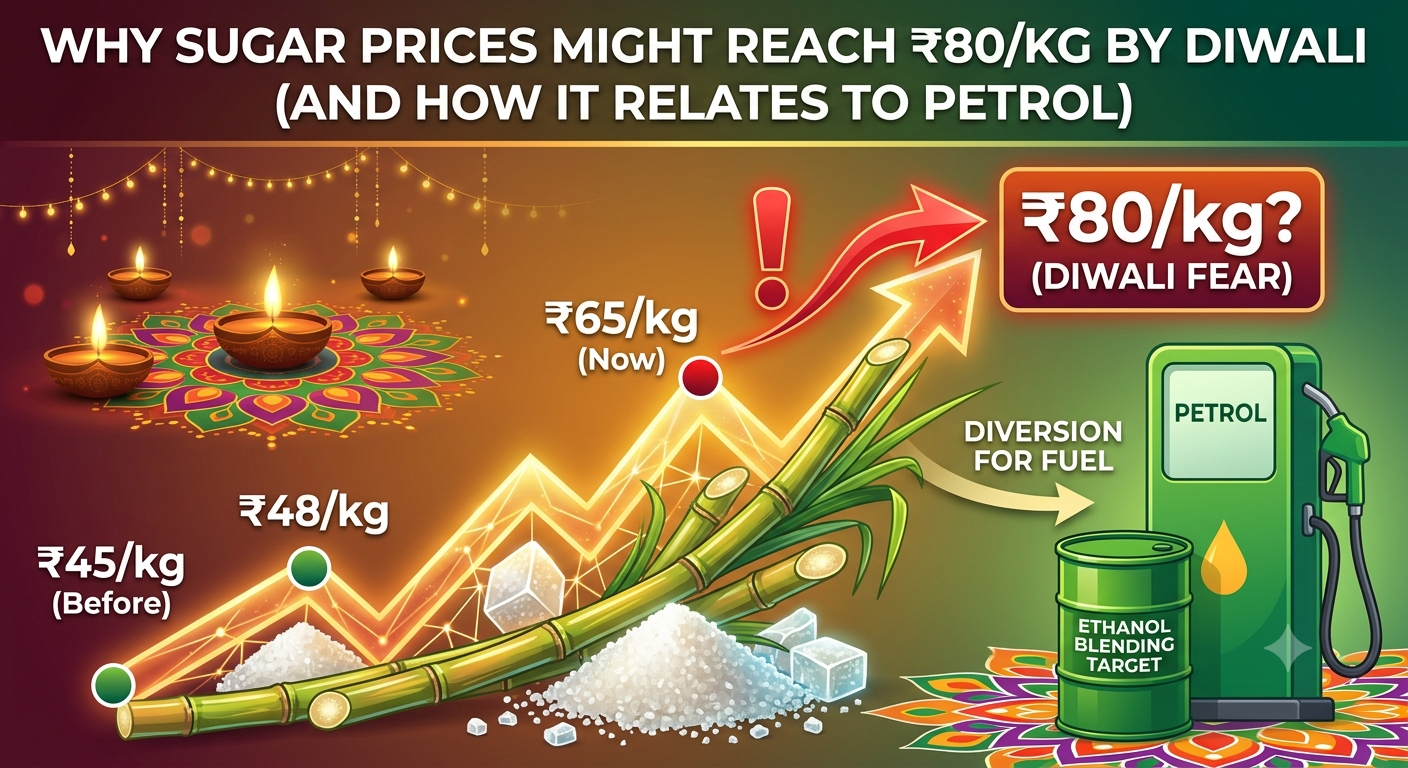
Just a few weeks ago, buying a kilogram of sugar cost around ₹45 to ₹48. Today, that price has jumped to ₹65. With major festivals like Navratri, Dussehra, and Diwali just around the corner, the demand for sweets is about to peak. If things don’t change quickly, experts fear that sugar could soon cost as much as ₹80 per kilo.
India grows a massive amount of sugarcane, so why is there suddenly a shortage? The answer lies in a mix of government policies, corporate profits, and changing weather.
The Hidden Connection to Petrol
The biggest reason for the sudden price hike is tied to the fuel we put in our cars. To save money on buying crude oil from other countries, the government has a plan to mix a plant-based fuel called “ethanol” into regular petrol.
This ethanol is made from sugarcane. While creating greener, homegrown fuel is a good idea, it has created a problem for our food supply. Huge amounts of sugarcane—about 31 lakh tonnes—that would normally be turned into sugar for our kitchens have been redirected to factories making fuel. Because so much sugarcane is being used for petrol, there is simply less sugar available in the market.
Big Profits and Hidden Sugar
While regular people are worrying about their grocery bills, big sugar companies are actually seeing record profits on the stock market.
Because the overall supply of sugar has dropped, some large traders and syndicates are taking advantage of the situation. They are hoarding sugar—buying large amounts and hiding it away—to create a fake shortage. This panic drives the prices up even higher.
Paying More for Less (“Shrinkflation”)
Sugar isn’t just used for making tea at home; it is a basic ingredient for bakeries, chocolates, biscuits, and packaged juices. When sugar becomes expensive, it costs more to make these products.
However, you might not see the price of your favorite biscuits go up. Instead, companies use a trick called “shrinkflation.” They keep the price exactly the same, but they make the packet smaller. You still pay ₹10, but instead of 100 grams of biscuits, you only get 80 grams. You are getting less food for your money without even realizing it.
The Dilemma of Buying from Abroad
Bad weather and poor rainfall in major farming states like Maharashtra and Karnataka have also hurt sugarcane crops this year.
To fix the shortage, the government is considering importing sugar from other countries without charging tax on it. But this puts the government in a tough spot:
If they don’t import sugar: Prices will stay too high, and normal families will suffer.
If they import too much sugar: Cheap foreign sugar will flood the market, causing domestic prices to crash. This would hurt local Indian farmers who rely on selling their crops to make a living.
What is the Solution?
Making eco-friendly fuel is important, but making sure people can afford food during the festival season is even more critical.
To stop sugar prices from hitting ₹80 per kilo, a few things need to happen immediately:
The government needs to pause or limit the amount of sugarcane being used for ethanol and bring that sugar back to the food market.
More sugar needs to be released into the wholesale markets every month to meet the festival demand.
Strict action must be taken against traders who are illegally hoarding sugar.
Ultimately, the cost of running our vehicles on cleaner fuel shouldn’t be paid by families struggling to afford their daily groceries.