


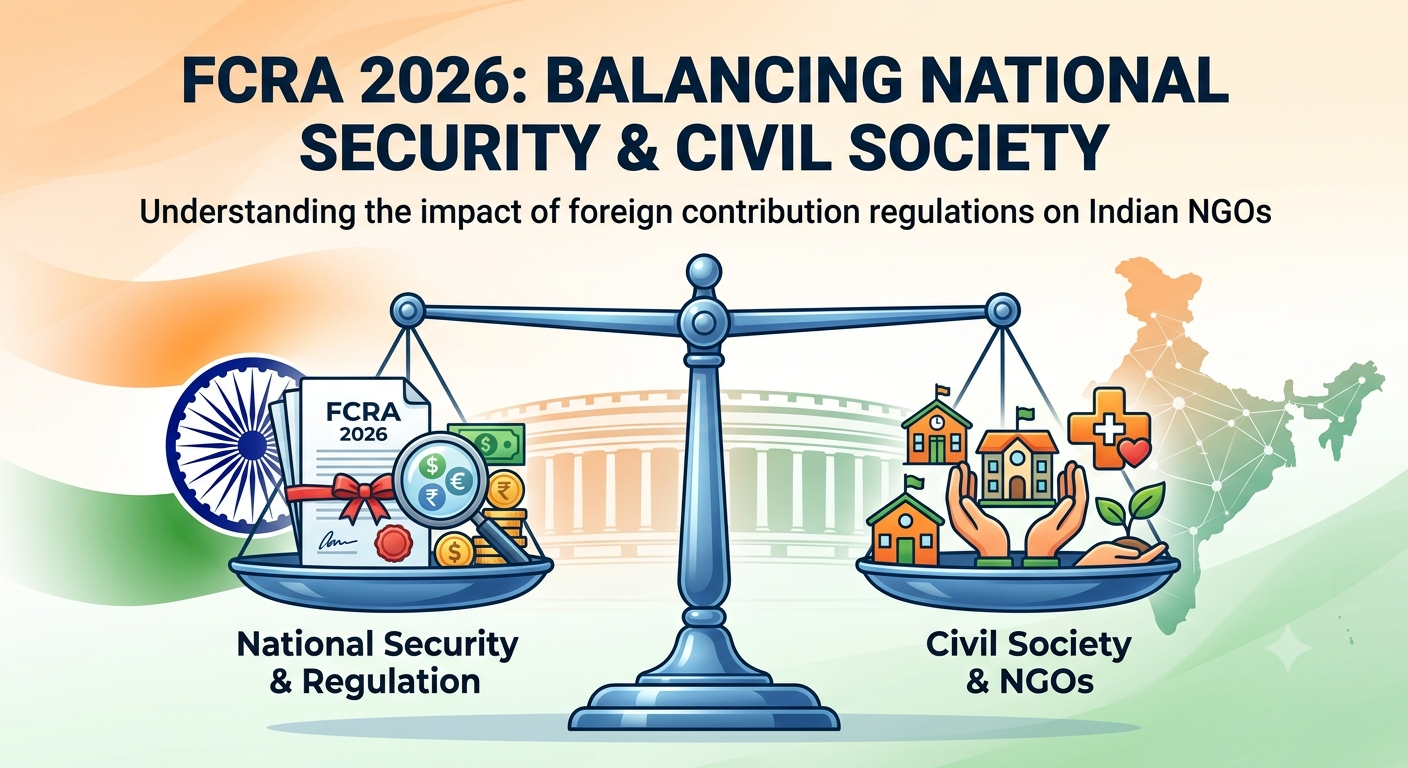
Charities and NGOs often rely on foreign donations to build schools, run hospitals, and help during disasters. While this money does a lot of good, there is a risk that it could be used secretly for illegal activities or to threaten national security. To prevent this, the Indian government uses a law called the Foreign Contribution Regulation Act (FCRA).
The Basics of FCRA
The FCRA is designed to monitor international support to make sure it is used for the right reasons. It strictly regulates two main areas:
Foreign Money: Financial donations given to Indian NGOs from outside the country.
Foreign Hospitality: Free travel, meals, or hotel stays provided by foreign groups to Indian public officials.
The main goal is to ensure transparency, hold organizations accountable for their spending, and protect India from unwanted outside interference.
Key Changes in the 2026 Bill
Lawmakers are currently reviewing the newly proposed FCRA Amendment Bill 2026. If it becomes law, it will introduce several major changes:
Asset Takeover: If an NGO loses its FCRA license (or fails to renew it), a special government authority will take control of its foreign funds and any properties—like buildings or hospitals—created with that money.
Protection for Religious Sites: If the government takes over a place of worship, its religious character must remain intact.
Reduced Jail Time: The maximum prison sentence for certain rule violations would drop from five years to one year.
Central Control over Investigations: Local state police would now need permission from the Central Government before they can investigate an NGO for breaking FCRA rules.
New Active Rules for NGOs
While the main bill is still being debated, the day-to-day FCRA Rules for 2026 are already active. NGOs now face stricter daily requirements:
They must clearly declare the exact type of work they will do and the specific locations where they will operate.
To renew a license, an organization must prove it has spent at least ₹10 Lakhs in foreign funds over the previous two years.
NGOs must share deep details about their foreign donors and provide exact breakdowns of how the money was spent.
The Ongoing Debate
The government argues these strict updates are completely necessary to stop illegal foreign meddling, prevent money laundering, and keep the nation safe.
However, critics are raising red flags. They argue that requiring central permission for local investigations hurts the balance of power between the Center and the States. Furthermore, the massive amount of new paperwork could force small, helpful charities to close. There is also a fear that the threat of permanently losing their hard-built properties might scare NGOs into silence, stopping them from speaking out on important social issues.
The ultimate challenge is finding the perfect balance between keeping the country secure and allowing non-profits to continue their vital work.