




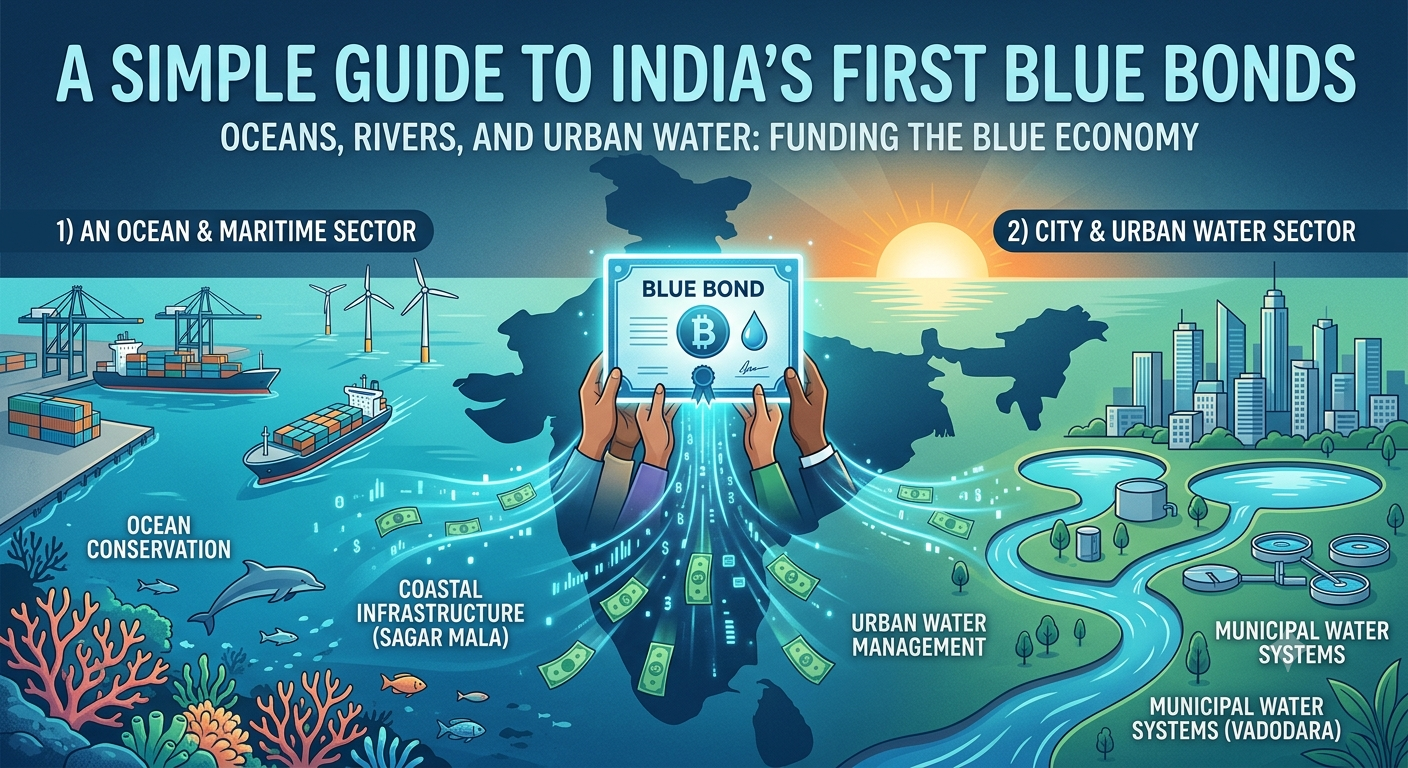
India is taking a major step to fund its water and ocean-related projects by launching its very first “blue bonds.” But what exactly does this mean, and how will it help the country? Here is a simple breakdown.
What is a Blue Bond?
A blue bond is a way for organizations to borrow money from investors, much like a regular loan. However, there is one strict rule: the money raised can only be used for water-related projects.
These projects might include:
Cleaning up oceans and protecting marine life.
Building better port facilities.
Treating dirty city water (wastewater).
Controlling water pollution.
To make sure the money is used correctly, organizations must regularly report on how their projects are actually helping the environment. This ensures that investors know exactly where their money is going.
Who is Launching Them in India?
Two major organizations in India are preparing to raise a total of ₹1,200 crore using blue bonds:
Sagar Mala Finance Corporation: They plan to raise ₹1,000 crore. This money will be used for large coastal projects, like building roads near the sea, improving inland waterways, and shipbuilding.
Vadodara Municipal Corporation: They want to raise ₹200 crore to improve city water systems. This includes building clean water storage and water treatment plants.
The involvement of a city corporation shows that blue bonds are not just for oceans—they are also for protecting local, everyday water systems.
Why is India Doing This Now?
India has a few strategic reasons for entering the blue bond market at this moment:
Growing the “Blue Economy”: Right now, ocean and water-based businesses make up about 4.1% of India’s total economy (GDP). However, a massive 95% of India’s trade travels by sea.
Big Goals for 2047: India wants the maritime sector to make up 12% of its GDP by the year 2047. To reach this goal, the country needs to build a lot of new infrastructure, which requires eco-friendly funding.
New Investment Options: Currently, most eco-friendly funding in India goes toward “green” (land or renewable energy) projects. Blue bonds give investors a brand new way to support the environment.
What Are the Benefits?
Using blue bonds offers several practical advantages:
Better Loan Timelines: Big infrastructure projects often take 10 to 12 years to build, but normal loans usually have to be paid back in just 3 to 4 years. A 10-year blue bond gives organizations the long-term stability they need to finish their work.
Attracting Caring Investors: Many investors care deeply about the earth. They are often willing to accept slightly lower profits (interest rates) if they know their money is actively healing the environment.
Less Corruption and Waste: Because blue bonds require strict environmental tracking and reporting, there is a much higher level of transparency in how the money is spent.
The Global Picture
India is joining a growing global trend. The very first blue bond in the world was launched by the country of Seychelles in 2018. Today, the global blue bond market is worth over $15 billion and is expected to grow to $70 billion by 2030.
By starting now, India is placing itself at the front of the next big wave in global, earth-friendly finance.