



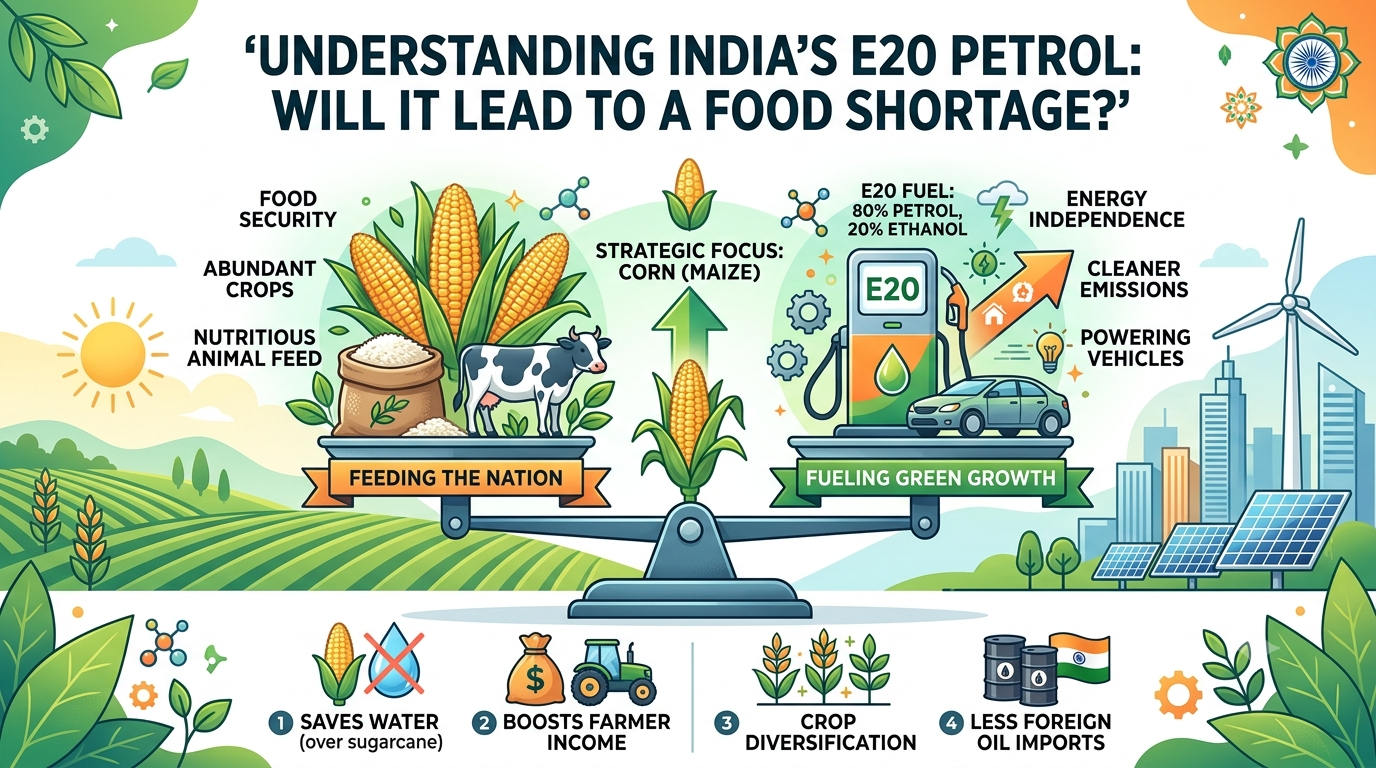
Lately, there has been a lot of discussion about India’s move to E20 petrol, which is a mix of 80% regular petrol and 20% ethanol (a fuel made from crops). While this move is designed to help the country, it has sparked a major debate: If we use our crops to make fuel, will we run out of food?
To clear up the confusion, India’s Chief Economic Advisor recently explained the reality behind the policy, addressing concerns about vehicle damage, food security, and the economy. Here is a simple breakdown of the main points.
Will E20 Damage Your Vehicle?
Many people are worried that mixing ethanol with petrol will ruin their engines and give them lower mileage.
However, studies from countries that already use a lot of ethanol, like the US and Brazil, show that it does not cause severe engine damage. It is true that your vehicle’s mileage might drop slightly—by about 6% to 7%. But there is a very good trade-off: E20 fuel burns much cleaner. This means a massive drop in harmful pollution and toxic gases, which is a big win for the environment.
What Happens to Older Cars and Bikes?
India has millions of older vehicles on the road that were not built for E20 fuel. To make sure these vehicle owners aren’t left behind, the government has a few practical ideas:
Small Modifications: Older vehicles can be slightly modified (retrofitted) by mechanics so they can run safely on E20.
Alternative Fuels: Since upgrading every single old vehicle would take too long, the government could continue selling petrol with less ethanol, like E5 (5%) or E10 (10%), just for older vehicles.
Insurance Support: Making sure insurance companies have clear rules to cover any ethanol-related damages will help vehicle owners feel more secure.
The Food and Water Worry
The biggest question remains: Ethanol is made from crops like sugarcane and rice. If we burn these crops in our cars, will human beings have enough to eat?
The solution to this problem is Corn (Maize). Instead of using important food staples or water-heavy crops like sugarcane, the government is encouraging farmers to grow corn to make ethanol. This is a smart move for three reasons:
Saves Water: Corn needs much less water to grow than sugarcane, protecting our valuable groundwater.
Helps Farmers: The government is offering good prices to farmers who grow corn. This encourages them to grow different types of crops instead of just sticking to wheat or rice year after year.
Animal Food: The leftover waste from making ethanol out of corn is actually highly nutritious. It can be used as food for farm animals, replacing other expensive animal feeds.
The Big Picture: Why is India Doing This?
Right now, India buys most of its crude oil from other countries. This costs a massive amount of money. Plus, if a war or crisis breaks out in oil-producing regions like the Middle East, fuel prices in India skyrocket, causing everyday items to become more expensive.
By mixing our own home-grown ethanol into our petrol, India won’t have to buy as much oil from foreign countries. It saves the country billions of dollars, helps local farmers earn more money, and protects our environment—all without risking our food supply, as long as we use smart crops like corn.