




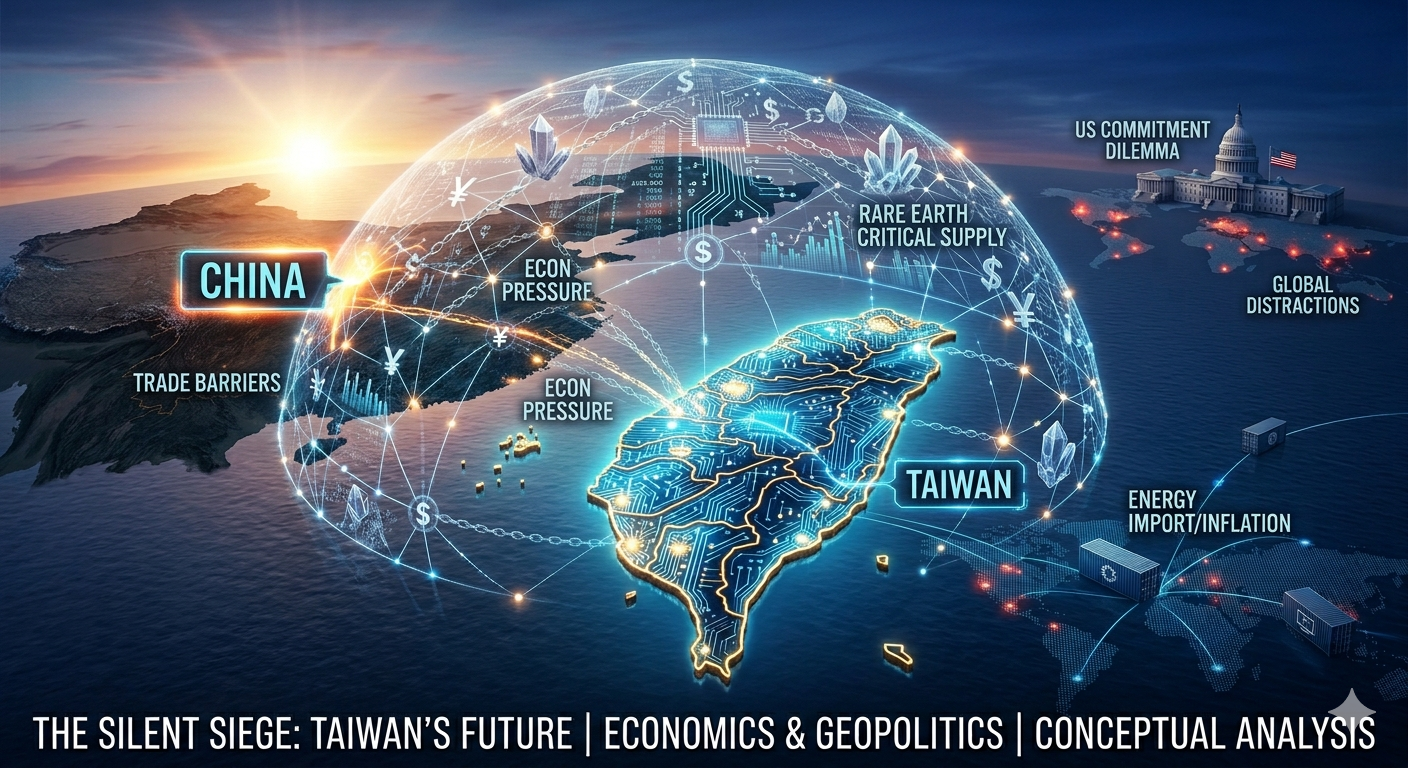
Introduction
A core tenet of ancient military strategy is that the greatest triumphs are achieved without ever engaging in physical combat. Today, this philosophy appears to be the driving force behind the shifting dynamics across the Taiwan Strait. While the world’s attention is frequently drawn to the possibility of armed conflict, a quieter, more strategic campaign is underway. By utilizing economic pressure, leveraging global distractions, and tapping into domestic political divides, Beijing is maneuvering to achieve integration without firing a single shot.
The Historical Divide
The roots of today’s cross-strait tensions lie deep within the political upheavals of the 20th century. Following the collapse of the Chinese monarchy, efforts to modernize the nation eventually fractured into a bitter civil war.
A Fractured Nation: The conflict primarily pitted the Nationalist forces against the Communist faction.
The Relocation: By 1949, the Communist forces established control over the mainland, prompting the Nationalists to retreat to the island of Taiwan.
A Shared Heritage: Because of this history, the Nationalist political descendants traditionally maintained a vision of a unified Chinese identity, differing primarily on who held the legitimate mandate to govern it.
The Diplomatic Workaround
For decades, the two sides existed in a state of deep freeze. However, as global markets opened up in the late 20th century, the mutual desire for economic growth forced a pragmatic compromise.
In the early 1990s, an informal understanding was reached. Both sides agreed to acknowledge that there was only “One China,” but they agreed to disagree on what exactly that meant. This deliberate diplomatic ambiguity was a masterstroke of pragmatism. It allowed for booming cross-strait trade, investment, and manufacturing partnerships without requiring either side to officially surrender their core sovereignty claims.
The Modern Political Battlefield
Today, Taiwan’s internal politics heavily dictate its relationship with the mainland, creating a fractured landscape:
The Pro-Sovereignty Stance: The current ruling administration heavily emphasizes Taiwan’s distinct identity and sovereignty, formally rejecting the ambiguous agreements of the 1990s.
The Engagement Approach: Conversely, the primary opposition party remains open to maintaining those historical consensuses, arguing that institutional dialogue and economic cooperation with the mainland are essential for the island’s stability and prosperity.
Beijing has capitalized on this divide. By imposing trade barriers and economic restrictions during the rule of the pro-sovereignty party, while simultaneously offering lucrative trade relaxations and “gifts” to the opposition leaders during diplomatic visits, the strategy is clear: incentivize the Taiwanese public to vote for politicians who favor closer cross-strait ties.
Global Dominoes and the US Dilemma
Taiwan’s domestic vulnerabilities are currently being magnified by international crises.
Energy and Inflation
Taiwan is heavily reliant on imported energy, purchasing the vast majority of its natural gas from abroad. As conflicts in the Middle East disrupt global shipping lanes and spike energy costs, Taiwan’s critical industries—particularly its world-leading semiconductor manufacturing sector—face significant financial strain. This imported inflation creates domestic dissatisfaction, which can easily translate into political shifts.
The Superpower Complication
Historically, Taiwan has relied on the United States as its ultimate security guarantor. However, the current geopolitical reality makes this reliance incredibly complicated:
Stretched Resources: The US is currently managing its involvement and resources across multiple international conflicts, raising questions about its bandwidth to respond to a crisis in the Pacific.
The Supply Chain Trap: The global economy—and the US military-industrial complex—is heavily dependent on Rare Earth Elements. With the majority of the world’s refining capacity for these critical materials controlled by Beijing, the US faces a severe supply chain vulnerability. Forceful intervention in Taiwan could trigger a catastrophic embargo on the materials needed for modern technology and defense systems.
Transactional Diplomacy: Recent shifts in US foreign policy have taken a more transactional tone, occasionally threatening tariffs on Taiwan’s tech exports to force a reduction in trade deficits. This approach has left many on the island questioning the reliability of American backing.
Conclusion
The battle for Taiwan’s future is actively being fought, but not with traditional military might. Through the strategic control of global supply chains, the manipulation of international energy crises, and the exploitation of domestic political rifts, the groundwork is being laid for a quiet integration. For Taiwan, navigating this silent siege requires far more than just defense budgets; it requires navigating a highly complex web of economic survival and shifting global alliances.