



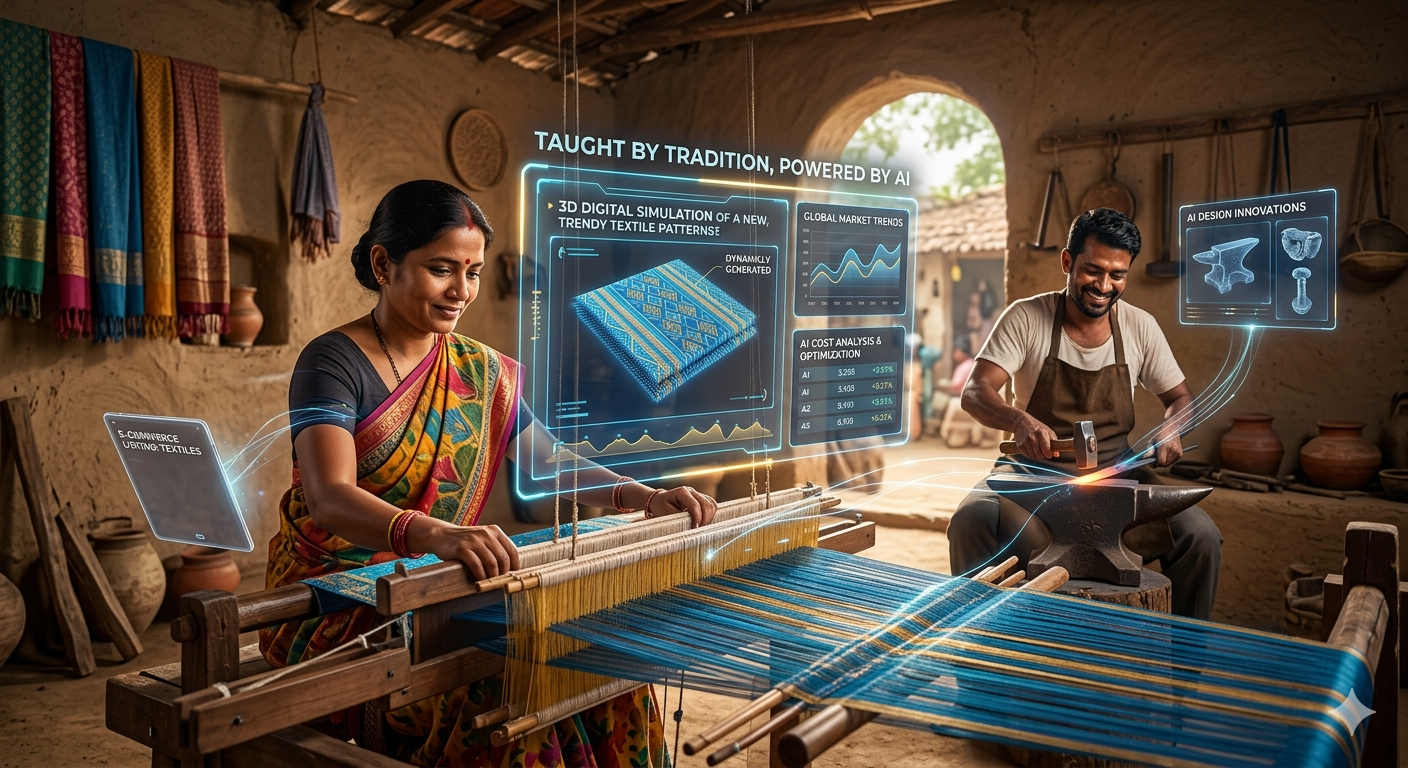
For generations, India’s local craftspeople—from metalworkers and carpenters to potters and weavers—have been the cultural and economic pillars of their communities. However, the surge of mass manufacturing and rapid industrialization gradually pushed these highly skilled creators to the margins. Today, a new initiative is bridging the gap between ancestral craftsmanship and modern commerce: the integration of Artificial Intelligence (AI) into grassroots enterprises.
Spearheaded by initiatives like the PM Vishwakarma Yojana, the fusion of traditional skills with AI tools is equipping rural artisans to thrive as modern, tech-enabled entrepreneurs.
The Digital Mentor: AI in the Hands of Creators
The introduction of AI is not about replacing the human element; rather, it serves as an accessible, localized guide for artisans. By leveraging smart technology, creators can overcome traditional barriers to entry in the modern market:
Overcoming Language Barriers: AI platforms can deliver step-by-step business and design simulations in regional languages, providing personalized guidance without the need for expensive consultants.
Automated Storefronts: Setting up an online shop historically required professional photographers and catalog managers. Today, AI applications can automatically enhance product images, draft compelling descriptions, and streamline listings on major e-commerce platforms, directly cutting overhead costs.
Predictive Market Insights: Instead of guessing what consumers want, artisans can use AI to track global design trends, ensuring their output aligns with current market demands while retaining its traditional essence.
Unlocking the “Green” Economy
A hidden advantage of traditional craftsmanship is its sustainability. Handcrafted goods naturally rely on local materials and produce minimal emissions. AI technology can now quantify these eco-friendly practices, allowing rural artisans to tap into the global Carbon Credit market. By tracking their sustainable footprint, craftspeople can sell these credits to larger corporations looking to offset their emissions, generating a completely new stream of income.
Driving Grassroots Social Change
This technological shift also has profound social implications, particularly for women. In many craft-based communities, women handle the foundational, behind-the-scenes labor. By providing them with digital literacy and AI-driven financial tools, these women are stepping into primary entrepreneurial roles, fostering a massive wave of localized financial independence.
The Value of the Human Touch
A natural concern is whether AI will dilute the authenticity of handmade goods. Industry experts suggest the opposite. As markets become flooded with mass-produced, identical items, consumers are increasingly seeking out authentic, ethically made products.
AI does not build the product; it verifies and markets it. By using digital tools to trace a product’s origin—highlighting the specific artisan, the time invested, and the materials used—the craft is elevated from a mere commodity to a premium, verifiable piece of art.
A Collaborative Future
For this digital transition to succeed on a national scale, a unified approach is required:
Community Outreach: Hosting localized tech fairs to introduce artisans and trade students to accessible AI tools.
Supply Chain Synergy: Connecting grassroots creators with larger localized businesses that can supply quality raw materials or advanced prototyping tools, like 3D printers.
Corporate Integration: Encouraging larger corporations to source sustainable materials directly from tech-enabled artisan groups.
Moving Forward
Merging centuries-old artistic heritage with the analytical power of Artificial Intelligence is reshaping the rural economy. By empowering creators with data, digital storefronts, and sustainability metrics, India is ensuring that its traditional craftsmen do not just survive in the digital age, but lead the charge in sustainable, smart entrepreneurship.