




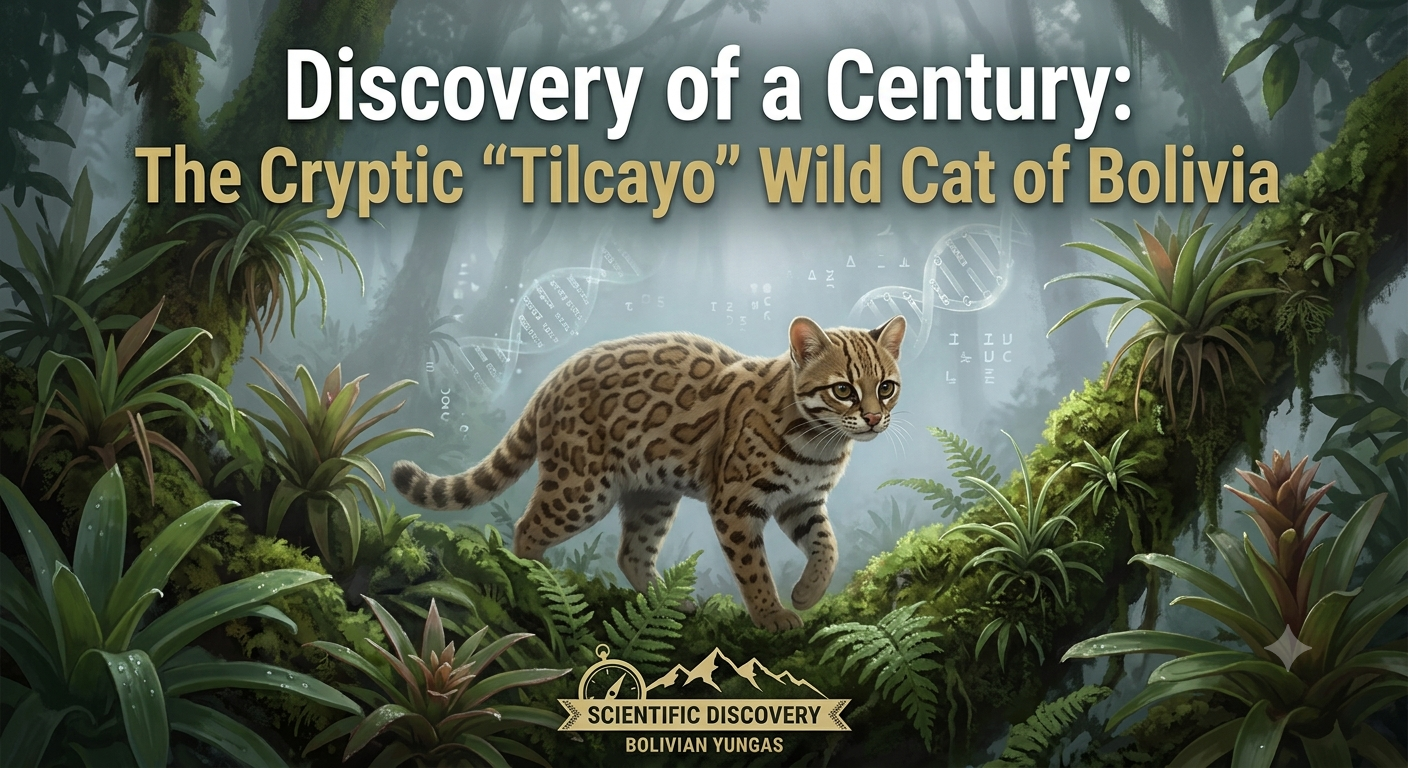
For over a hundred years, local communities in Bolivia knew about a small wild cat roaming their local forests. They called it the Tilcayo. Modern science, however, only recently officially recognized it as a unique species. This fascinating discovery is completely changing what we know about wildlife in South America.
Hiding in Plain Sight
Why did it take so long for scientists to identify the Tilcayo? The answer is that it is a “cryptic species.” This means the animal looks almost exactly like other wild cats in the region. South America is home to dozens of small tiger cat species with similar brown fur and spotted patterns. Because they look so identical on the outside, it is nearly impossible to tell them apart just by looking at them.
The Power of DNA
The big breakthrough happened when researchers started using DNA testing. Around 2016, scientists studied these cats at a local wildlife sanctuary and compared their genetic makeup to older specimens kept in museums. The tests revealed a massive surprise: the Tilcayo is an entirely different species. In fact, its family tree split from other tiger cats roughly 1.4 million years ago.
Life in the Cloud Forests
The Tilcayo lives in a very specific environment called the Yungas. This is a humid, mountainous cloud forest located on the eastern slopes of the Andes mountains, stretching across parts of Bolivia and Peru near Lake Titicaca. The Yungas is famous for its heavy fog, high moisture, and incredibly rich variety of plants and animals.
Traits and Habits
Even though it was just officially identified, researchers have already learned a few key facts about how the Tilcayo lives:
Size and Appearance: It is quite small, weighing only about 1.4 kilograms, which makes it similar in size to a standard house cat. Its coat is light brown and covered in uneven, rose-shaped spots.
Active Hours: The cat is mostly awake during the night, as well as during the early morning and late evening hours.
Diet: Like many small cats, it survives primarily by hunting small rodents.
Dangers in the Wild
Because it is a newly classified species, experts have not yet officially ranked how close it is to extinction. However, its forest home is under severe threat. The clearing of forests for farming, human-made wildfires, and mining operations are destroying the natural environment the Tilcayo relies on to hunt and survive.
Finding the Leopardus tilcayo is a powerful reminder that our planet still holds many hidden secrets. It also highlights an important partnership: while local and indigenous people often know their land best, advanced science and genetic testing are essential tools for proving these discoveries so we can better protect vulnerable wildlife.