




Right now, a massive shift in technology is happening across the globe. In Beijing, China is hosting a massive competition for humanoid robots. These machines are not just walking; they are sprinting faster than Olympic champions, cooking meals, and assembling products in factories. The company behind many of these robots is now valued at billions of dollars.
Meanwhile, a quieter but equally important story is unfolding in India—one that highlights a major roadblock in our country’s technological journey.
A Brilliant Idea Born in Bengaluru
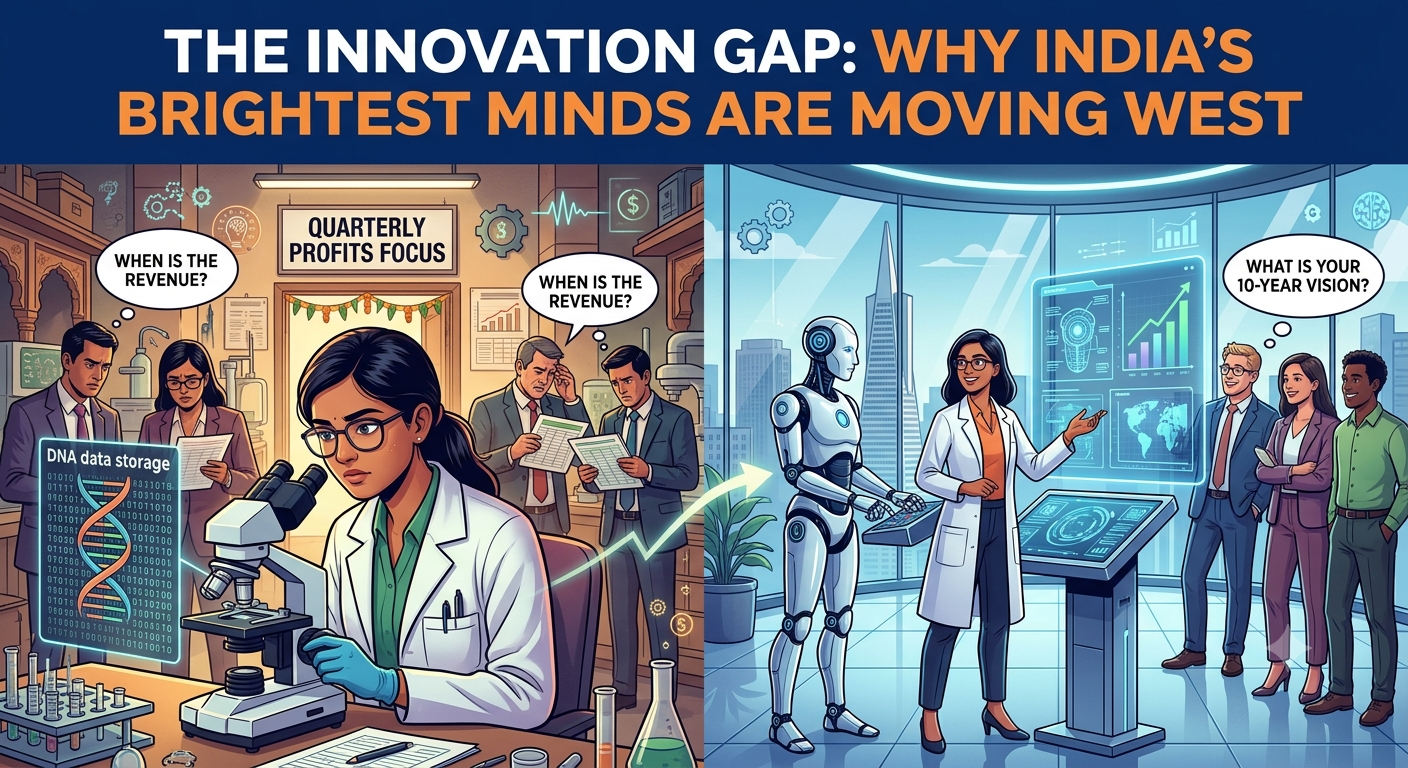
Anagha Rajesh, a 24-year-old Indian entrepreneur, recently built something that sounds like it is straight out of a sci-fi movie. Her Bengaluru-based startup figured out how to store standard digital data—like videos, photos, and documents—inside human DNA.
Why DNA? Because it is nature’s ultimate hard drive.
Massive Storage: A tiny amount of DNA can hold more information than massive, power-hungry data centers. Theoretically, all the digital data in the world could fit into a DNA pile weighing less than an average human.
Durability: While regular hard drives break down in a few years, DNA can safely hold information for thousands of years.
Anagha’s team didn’t just come up with the idea; they built a working model in India and managed to make the process thousands of times cheaper. Yet, despite this incredible success, she recently announced she is moving her entire company from Bengaluru to San Francisco.
The Problem: Patience vs. Quick Profits
Why would a successful Indian innovator leave? The answer is not a lack of local talent—India is full of brilliant scientists and engineers. The real issue is the funding “ecosystem.”
When tech founders pitch their ideas in America, investors usually ask, “Where will this technology be in 10 years?” They understand that groundbreaking tech takes time.
In India, the first question is often, “How much money will this make by next quarter?”
Building advanced technology (often called “deep tech”) takes years of trial and error, expensive research, and a lot of patience. In India, most funding historically comes from the government, and the private investors who do exist are often hesitant to gamble on long-term, highly risky scientific research. Because of this, India struggles with a massive “brain drain,” losing hundreds of thousands of highly skilled professionals to other countries, which costs the economy billions of dollars in potential growth.
How Other Nations Build the Future
To see the value of patient funding, look back at China. Years ago, they decided they wanted to lead the world in technology. They actively lured their overseas scientists back home by offering them massive resources, independent labs, and most importantly, the freedom and time to experiment.
That long-term patience is exactly why China is now producing billion-dollar robotics companies that can build machines capable of outrunning humans.
What’s Next for India?
India is actually fantastic at the early stages of invention. We are great at coming up with ideas, doing the basic research, and building the first test models. Our biggest weakness is taking that lab experiment and turning it into a commercial product you can actually buy and use.
There is some good news: private investment in Indian research is slowly starting to grow, and some state governments are creating programs to bring overseas talent back home.
However, the core lesson remains. The technology gap between India and the rest of the world has nothing to do with brainpower. It is simply a matter of patience and support. Until Indian investors and institutions learn to fund 10-year visions rather than 3-month profit cycles, our greatest ideas will continue to be born in India, but built for the rest of the world.