




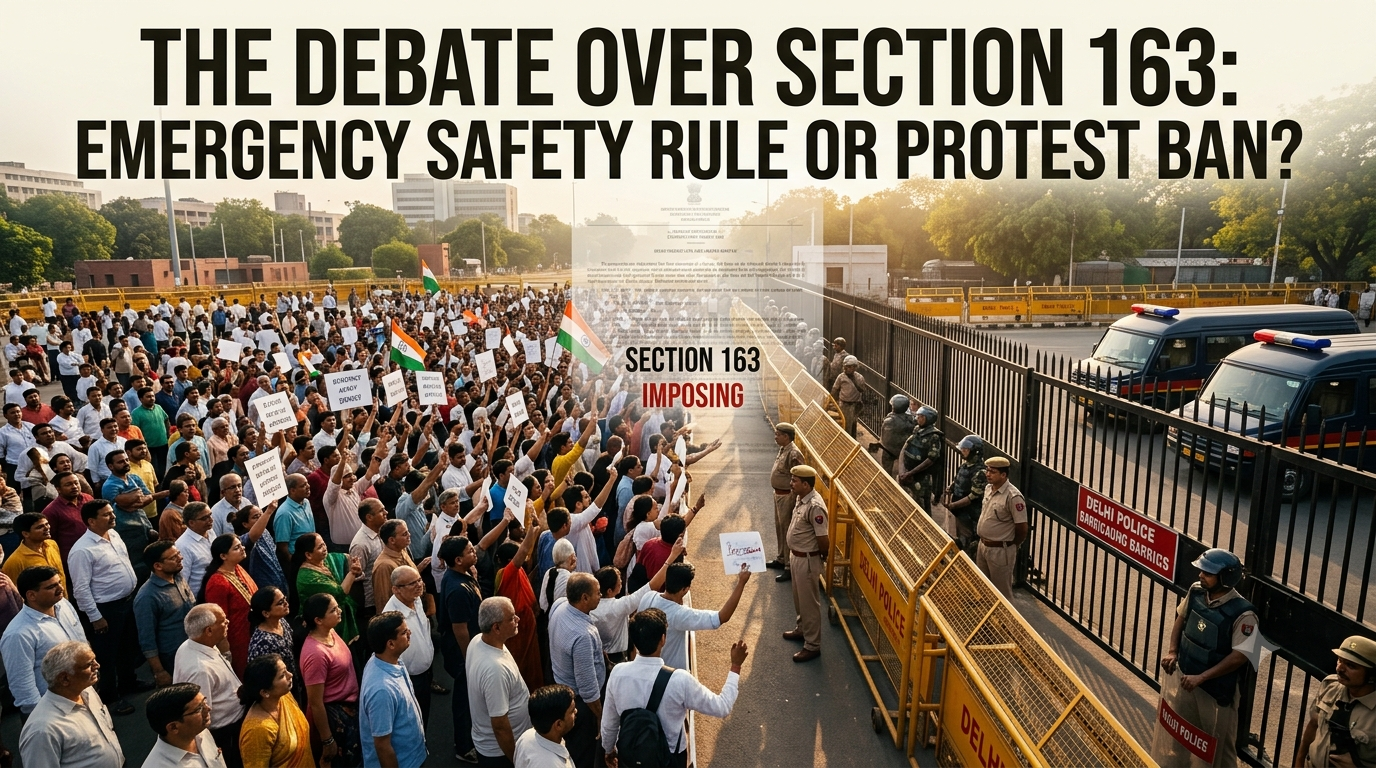
Recent protests in Delhi led to shut down metro stations, halted trains, and the enforcement of a strict law called Section 163 of the BNSS. Protesters were demanding answers over millions of missing names in voter lists, but police denied them permission to gather. This situation has sparked a major debate about why an emergency law is being used so frequently.
What is Section 163?
Section 163 has replaced what many used to know as Section 144. It is an emergency power given to local magistrates to maintain public order and stop riots or immediate threats to human life.
A common myth is that this law automatically makes it illegal for three or more people to gather. In reality, it only bans gatherings if the official order specifically says so. It is meant to be a rapid response to extreme, dangerous situations.
Is an “Emergency” Law Being Misused?
While the law is strictly for emergencies, data shows it is routinely used for everyday government tasks. A recent study of over 5,400 of these orders found surprising results:
Only 1.5% were actually used to stop illegal crowds.
25.6% were used to force businesses to install security cameras.
43% were used to make businesses keep logs of their customers or staff.
Furthermore, these orders are only supposed to last for 60 days, but authorities frequently renew them even after the original “emergency” has passed.
The Supreme Court’s Stance
Because this law affects democratic freedoms, the Supreme Court has set clear boundaries on how the government can use it:
Powers are not unlimited: Authorities cannot use this law just because they want to.
Actions must fit the threat: The government’s response must match the actual danger. A minor issue does not justify shutting down a city.
No blanket bans: The courts have ruled that completely banning all forms of peaceful protest is unfair and illegal.
Balancing Public Safety and Free Speech
Every democracy faces the challenge of keeping the public safe while allowing citizens to voice their anger. The Constitution grants everyone the right to speak freely and gather peacefully, but it also allows the government to step in if public safety is genuinely at risk.
To keep this balance fair, authorities must follow strict rules. Any restriction on protests must be absolutely necessary to stop a real threat, and it must be the least restrictive option available. The government must clearly explain its reasons and regularly review whether the ban is still needed. Instead of shutting down public transport and banning gatherings entirely, a healthy democracy focuses on providing safe, regulated spaces for citizens to be heard.