




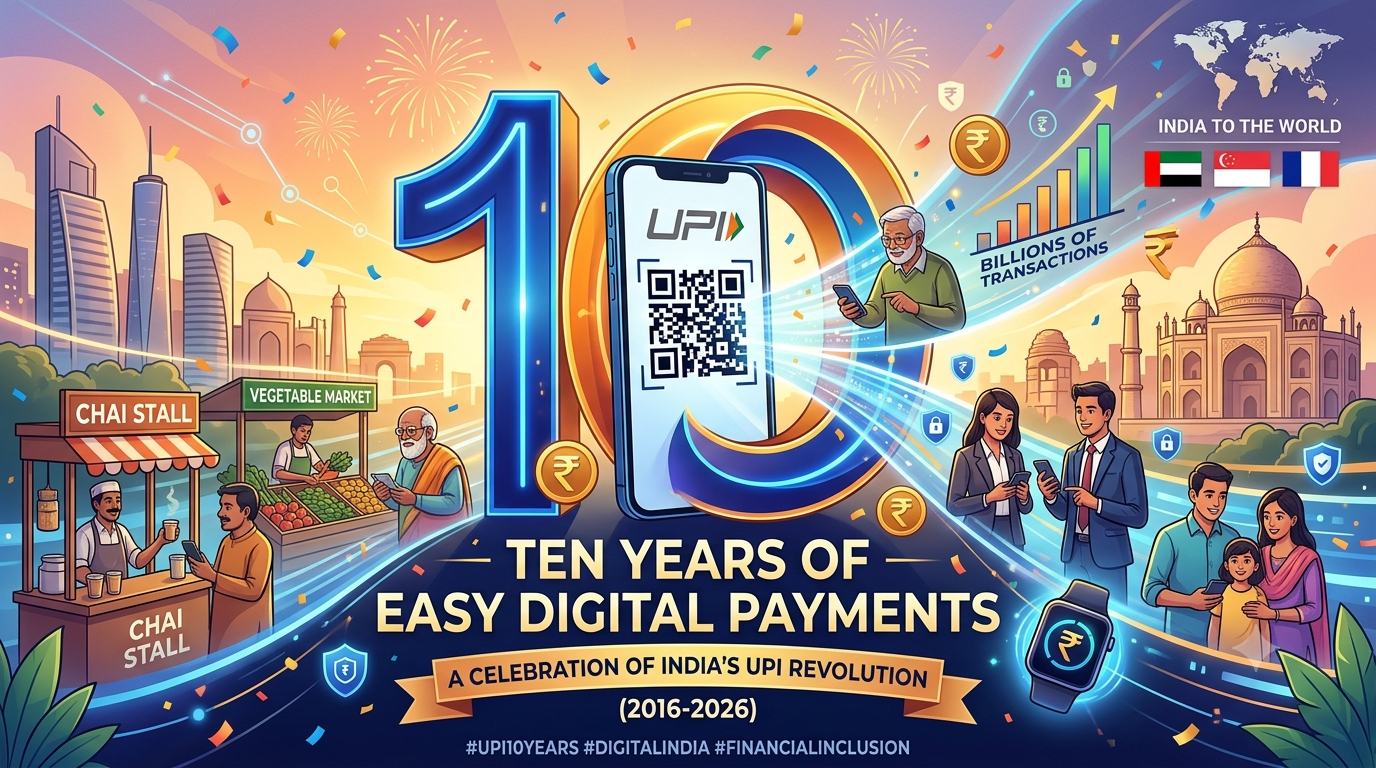
A decade ago, paying for a quick cup of tea meant digging through your pockets for cash. Today, India runs on the Unified Payments Interface (UPI). A simple scan of a QR code lets money move instantly from one bank to another. This system has completely changed daily life, making digital payments normal and accessible for everyone, from local street vendors to large businesses.
How Big Has It Grown?
The growth over the last ten years shows a massive shift in how people handle their finances:
Transactions skyrocketed from a few million in 2016 to billions today.
The country now processes millions of secure digital transfers every single day.
Impressively, India now handles nearly half of the entire world’s real-time payment volume.
Why Did It Work So Well?
The system became a huge success because it was designed smartly and focused on building public trust:
Reliable technology: It uses a shared network rather than a single central server, meaning it can handle massive usage without crashing.
Zero cost: The system was made free for everyday users, removing the worry of extra fees.
High security: Strong digital protection keeps user money safe, which helped people trust the platform after relying on cash for their entire lives.
Going Global and Looking Ahead
This payment technology is no longer limited to India. As we look to the future, the digital landscape will continue to evolve rapidly:
Over 11 countries, including France and the UAE, now accept these digital payments.
Developing nations are looking to India as a model to build their own digital public networks.
Soon, people might pay using smartwatches or other wearable devices instead of relying solely on smartphones.
Artificial Intelligence (AI) will be integrated to make the payment network even smarter and safer.
What new technology or gadget would make managing digital payments even easier for you in your daily life?