




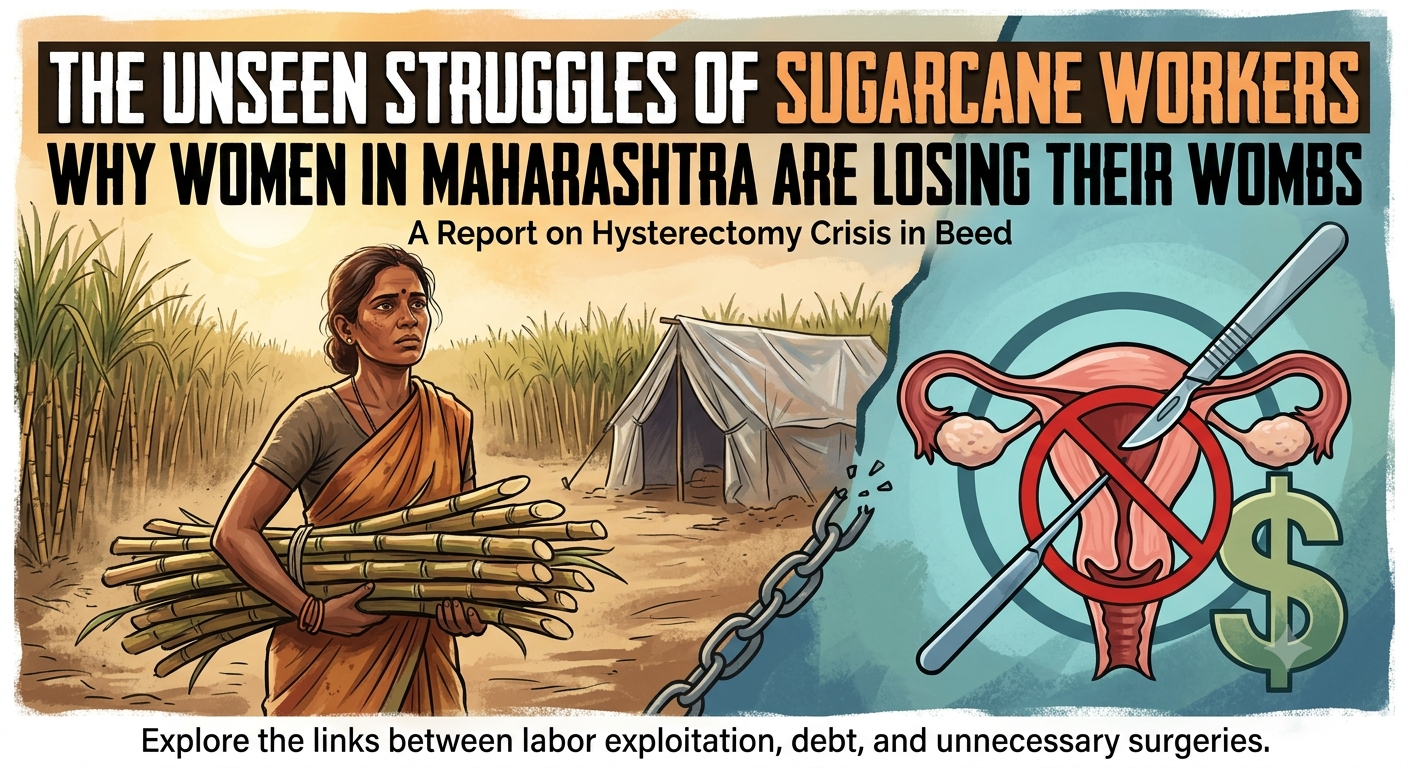
In the Beed district of Maharashtra, a heartbreaking crisis is quietly unfolding. Thousands of young women who work in sugarcane fields are having their wombs (uteruses) surgically removed. This is not happening because of a widespread disease, but because of extreme debt, poor working conditions, and an unfair labor system.
A Shocking Reality
Across India, only about 3% of women undergo a hysterectomy (the surgery to remove the womb). However, in the sugarcane farming communities of Beed, the numbers are frighteningly high. Government surveys show that anywhere from 17% to over 36% of these women have had the surgery. In some specific villages, the number reaches up to 50%. What makes this even sadder is that most of these women are very young, usually between 30 and 35 years old.
How the Trap Begins: Drought and Debt
To understand why this is happening, we have to look at how these families survive. Beed faces severe water shortages, making farming nearly impossible. To earn a living, families travel to other areas to cut sugarcane.
They are hired through a system where a husband and wife work together as a single unit. Before the work season begins, a contractor gives them an advance payment. This money instantly traps the couple in debt. To pay it off, they have to work up to 20 hours a day, cutting tons of sugarcane.
The Heavy Cost of Taking a Sick Day
The biggest problem is a strict rule set by the contractors: if either the husband or wife misses a single day of work, they are heavily fined, often around ₹500 per day.
For women, this rule becomes a nightmare during their menstrual periods. The workers live in temporary plastic tents near the fields with no toilets, electricity, or clean water. Because they cannot afford sanitary pads and have no water to wash themselves properly, many women are forced to reuse dirty cloths. This causes severe infections, heavy bleeding, and terrible stomach pain. Yet, because they are terrified of the ₹500 fine, they keep working through the pain.
Bad Medical Advice
When the pain becomes too much, these women go to local private doctors. Instead of simply treating the infection, many doctors advise the women to have their wombs removed entirely.
The surgery is very expensive, costing around ₹35,000. Because the women don’t have this kind of money, they are forced to take another loan from their contractor. They are trapped in a vicious cycle: they take a loan to work, work to pay off the surgery, and get the surgery just so they don’t miss work. Sadly, doctors rarely warn them about the permanent damage this surgery causes to a young body.
A Life of Weakness
The tragic truth is that this surgery ruins their health. Removing the womb at a young age causes early menopause. The women stop producing important hormones, leading to weak bones, severe joint pain, sudden weight gain, and constant exhaustion. The women get this surgery so they can work harder, but they end up too weak to carry heavy loads anyway.
How Can This Be Stopped?
The government has tried to help by giving out sanitary pads and health cards, but that doesn’t solve the real issue. The root cause is the unfair work contract. To truly protect these women, the following changes must happen:
Change the Work Rules: Husbands and wives should not be forced to work as a single unit where one person’s absence punishes the other.
Stop the Fines: It should be illegal to fine workers just because they are sick and need a day off.
Provide Basic Needs: Workplaces must give laborers access to clean drinking water, proper toilets, and safe living spaces.
Monitor Doctors: The government needs to keep a strict eye on private hospitals to make sure doctors aren’t doing unnecessary surgeries just to make money.
Educate Women: Women must be given full information about what happens to their bodies if they remove their wombs.
Final Thoughts
What is happening in Beed is not just a healthcare problem; it is an issue of basic human rights and fair labor. The surgeries don’t start in the hospital—they start the moment a contract says a woman will be heavily fined for simply having her period. Until these unfair work rules are completely changed, the women in the sugarcane fields will continue to suffer.