




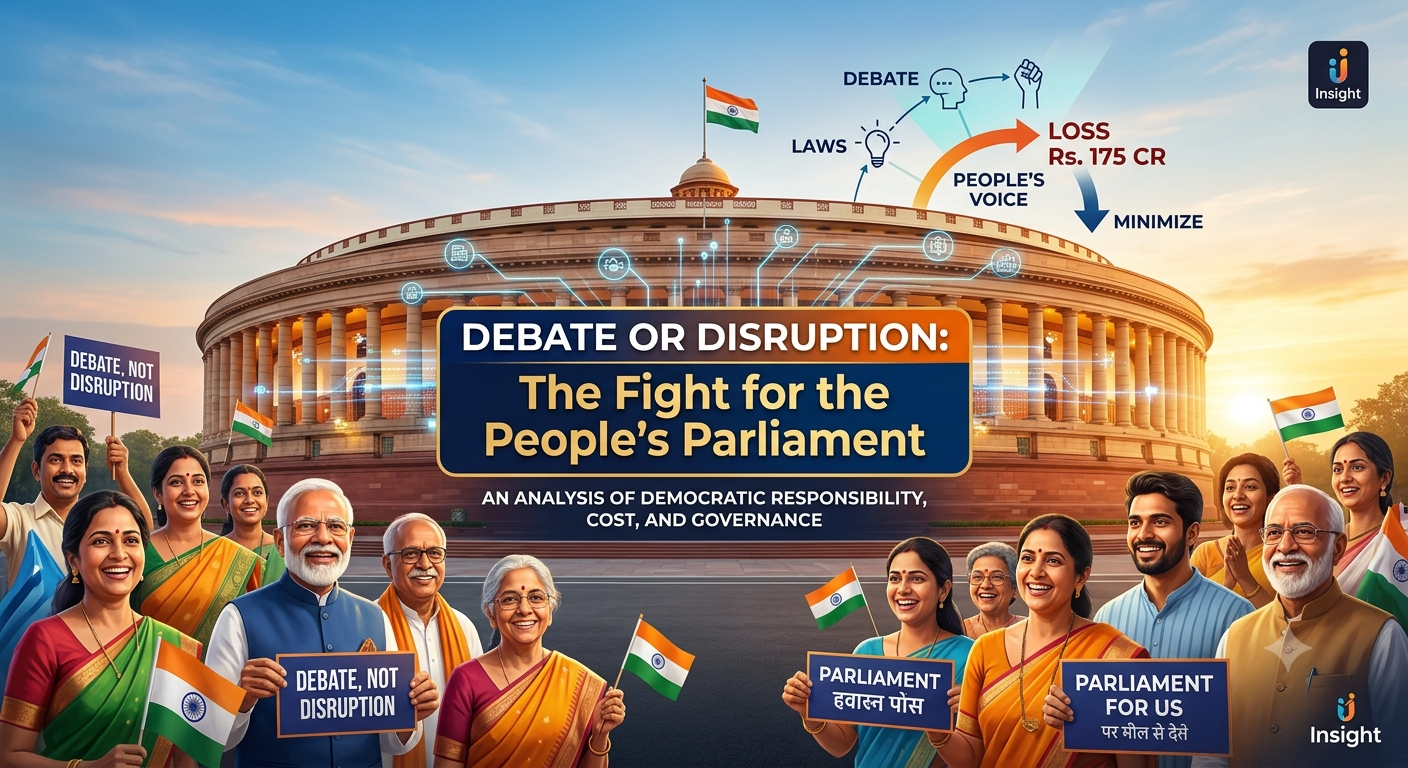
The Indian Parliament is meant to be a space for debate and problem-solving, not a battleground for political parties. A recent public discussion highlighted the shared responsibility of all lawmakers to keep democracy moving forward without constant disruptions.
The Heavy Price of Stalling
When lawmakers protest and stop Parliament from functioning, it hits the public purse hard.
Running the parliamentary sessions costs about ₹1.5 crore every single hour.
Recent protests wasted thousands of minutes, resulting in an estimated taxpayer loss of ₹175 crore in just one session.
Vital time meant for passing laws and solving national issues is lost completely.
Three Sides to the Deadlock
Different political leaders have very different views on why these blockages happen and who is to blame:
The Opposition’s View: They feel sidelined because the ruling party controls the daily agenda. Passing massive laws while opposition members are suspended hurts democracy. To fix this, they suggest dedicating one day a week exclusively to topics the opposition wants to discuss.
The Ruling Party’s View: They argue that the government is ready to debate, but the opposition chooses chaos because they lack real, factual arguments. By stopping proceedings, the opposition actually throws away their best chances to ask the government tough questions.
The Independent View: When major political parties fight, independent lawmakers and representatives from smaller regions suffer the most. Their local issues get entirely ignored in the noise.
Can Fewer Elections Help?
A major reason for this ongoing friction is India’s constant election cycle.
With state or local elections happening every few months, politicians often use Parliament for campaign stunts rather than serious lawmaking.
Many argue that a “One Nation, One Election” system could help fix this problem.
Syncing all elections would allow leaders to focus purely on governance for a full five-year term instead of constantly trying to score political points.
In the end, a democracy thrives on debate, not disruption. The ruling party must make genuine space for opposing voices, and the opposition must commit to debating instead of forcing the House to shut down.
Do you think setting aside a dedicated day purely for the opposition’s agenda would actually stop the constant disruptions?