




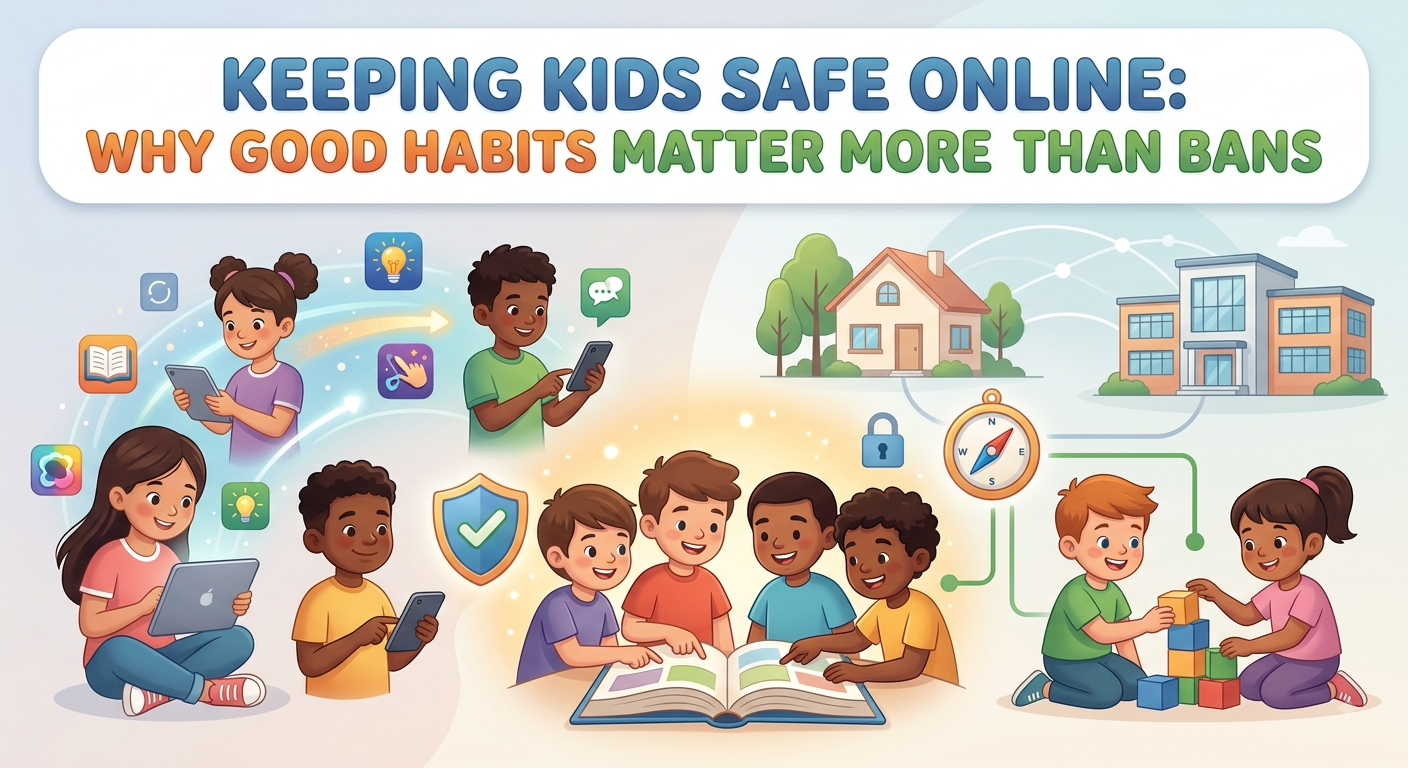
Kids today are growing up with screens in their hands. While the internet is great for learning and having fun, it also comes with hidden dangers. Recently, countries like Australia have tried to ban social media for children under 16, and India is paying close attention. But is a total ban really the best way to protect young minds?
Here is a simple breakdown of how we can keep children safe in the digital world.
Why Blanket Bans Don’t Always Work
Simply blocking apps usually isn’t enough. Kids are very good with technology and often find ways around age limits.
Kids are tech-smart, but not adults: A 10-year-old might know how to use an app perfectly, but they do not have the emotional maturity to handle online predators, scams, or hurtful content.
Better rules, not just blocks: Instead of completely isolating kids from the digital world, we need tech companies to take responsibility. They must build safer apps and protect children’s private data.
How Too Much Screen Time Harms Children
Spending hours online every day affects a child’s mind and body in several ways:
Mental Health: Social media shows a “perfect” version of people’s lives. When kids compare their real lives to these fake highlights, it can cause anxiety, sadness, and low self-esteem. They also face the very real risk of cyberbullying.
Physical Health: Staring at a phone for hours causes eye strain, back pain, thumb aches, and a lack of healthy exercise.
Fewer Real Connections: The more time kids spend glued to their screens, the less time they spend talking and bonding with their family and real-life friends.
The Role of Schools and Teachers
Since technology is a big part of learning today, schools need to step up and teach digital safety.
Teaching Online Safety: Schools should regularly teach students how to spot fake information, deal with online bullies, and use the internet responsibly.
Safer Homework Tools: Instead of sending homework over casual chat apps, schools should use secure, monitored educational platforms.
Updating Teachers: Teachers need to stay up-to-date with new technology, like Artificial Intelligence (AI), so they can guide their students properly.
What Parents Can Do at Home
Children learn by watching adults. If parents are always on their phones, kids will do the same. Here are a few simple habits parents can start right now:
Be a Good Role Model: Put your own phone down. Show your kids that life exists outside the screen.
Create Phone-Free Zones: Make a rule that no phones are allowed at the dinner table. This is a time for family conversation.
No Phones in the Bedroom: Keep devices out of the bedroom at night to ensure everyone gets a healthy, distraction-free sleep.
Don’t Use Phones as Pacifiers: It is tempting to hand a crying toddler a phone to calm them down, but this builds early screen addiction. Encourage them to play with physical toys instead.
Talk, Don’t Spy: Instead of secretly tracking everything your child does, have honest conversations with them about the dangers of the internet. Make sure they know they can come to you if they see something upsetting online.
Conclusion
Keeping children safe on the internet is a massive team effort. We cannot rely on the government to just pass a law and fix the problem. Tech companies need to make safer platforms, schools must teach digital smarts, and parents need to build healthy tech habits at home. By working together, we can help kids enjoy the best parts of technology without getting hurt.