
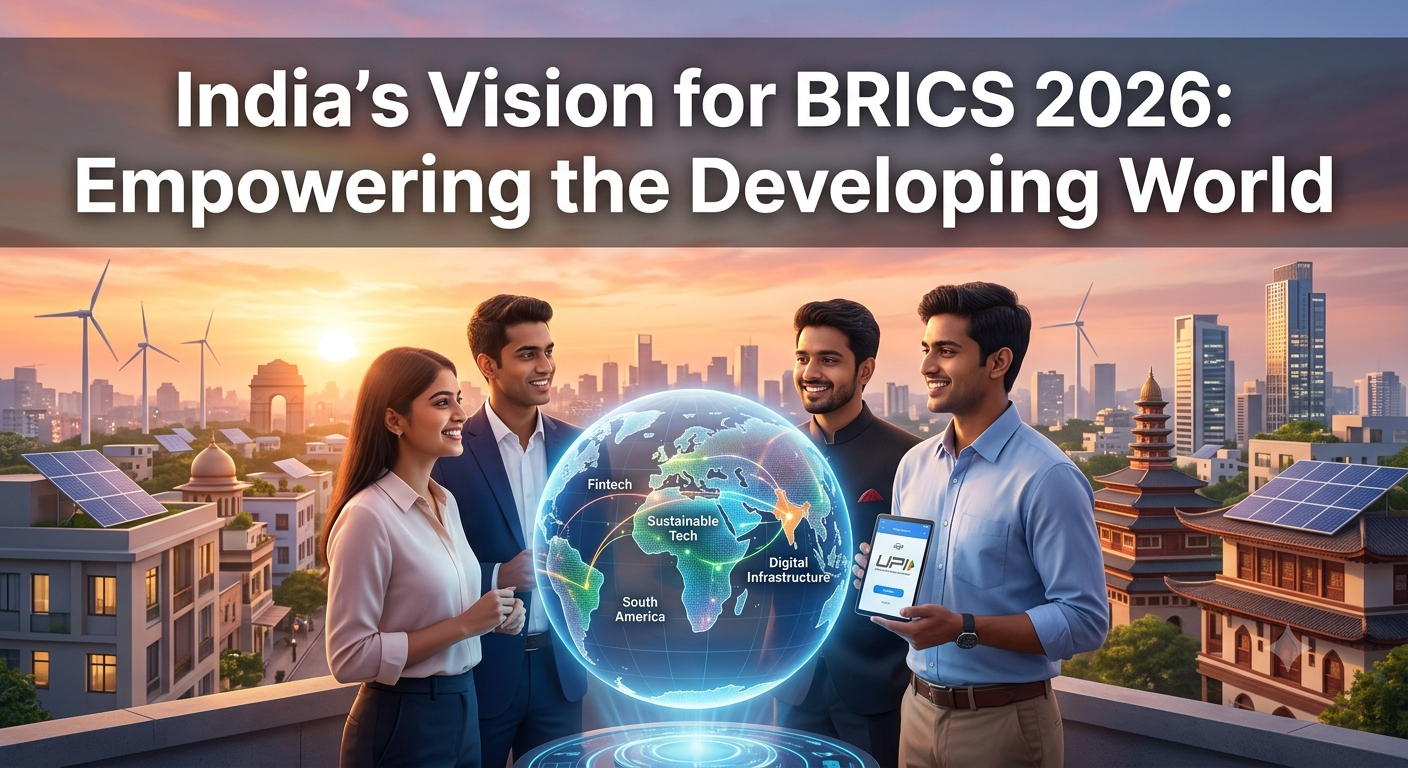
As New Delhi gets ready to host the 2026 BRICS Summit, the group is looking very different than it did in the past. Originally just five growing economies, BRICS has expanded into a massive team of 11 member nations and 10 partner countries.
Today, the group is no longer just a club for large economies. Instead, it has become a powerful voice for the “Global South”—a term used to describe developing nations around the world. As India finishes its year as the leader of BRICS, its main goal is to turn this growing influence into real, on-the-ground results based on four ideas: staying strong, being creative, working together, and protecting the environment.
Moving from Talk to Action
Experts agree that the biggest test for BRICS right now is proving it can actually solve problems, rather than just talking about them. Developing nations are looking to the group for help in a few key areas:
Fairer Global Rules: Many countries feel that older global groups, like the United Nations and the World Bank, are outdated. BRICS is pushing to change these systems so developing nations have a fair say in world decisions.
New Ways to Fund Growth: Developing countries need money to build roads, hospitals, and infrastructure. BRICS is trying to provide funding options that do not rely heavily on Western financial systems.
Stronger Local Economies: To protect themselves from global trade wars and sudden economic shocks, developing nations want to trade using their own local currencies and connect their digital payment systems.
Access to Technology: As Artificial Intelligence (AI) changes the world, developing nations need to ensure they have fair access to these new tools so they don’t fall behind.
India’s “People-First” Approach
During its time leading BRICS, India has promoted a “humanity first” approach. This means focusing on solutions that directly help everyday people.
Instead of just offering traditional financial aid, India is sharing its own successful tech solutions. For example, India is offering its digital payment systems (like UPI) as a free blueprint for other developing nations to copy and use. It’s a new way of cooperating—sharing ideas and technology rather than just signing business contracts.
Hurdles on the Horizon
Even with these big goals, BRICS faces some major challenges:
The Threat of AI: While AI can be helpful, it also threatens to replace jobs in developing countries. Experts warn that BRICS needs to create its own safety rules for AI, rather than just accepting American or European guidelines.
Internal Disagreements: Getting a massive group of countries to agree is difficult. For example, China’s habit of overproducing manufactured goods affects global markets in ways that sometimes clash with the interests of smaller developing economies.
The Legacy of 2026
As India prepares to pass the leadership baton, its main legacy is steering BRICS away from being simply an “anti-Western” group. Instead, India wants BRICS to be seen as a dedicated protector of the developing world. The ultimate goal is that, years from now, smaller nations will look back and say that BRICS truly helped improve their lives.
As BRICS continues to grow and add new member countries, which of these goals—reforming global groups, sharing technology, or creating new financial systems—do you think will be the most difficult to achieve?