



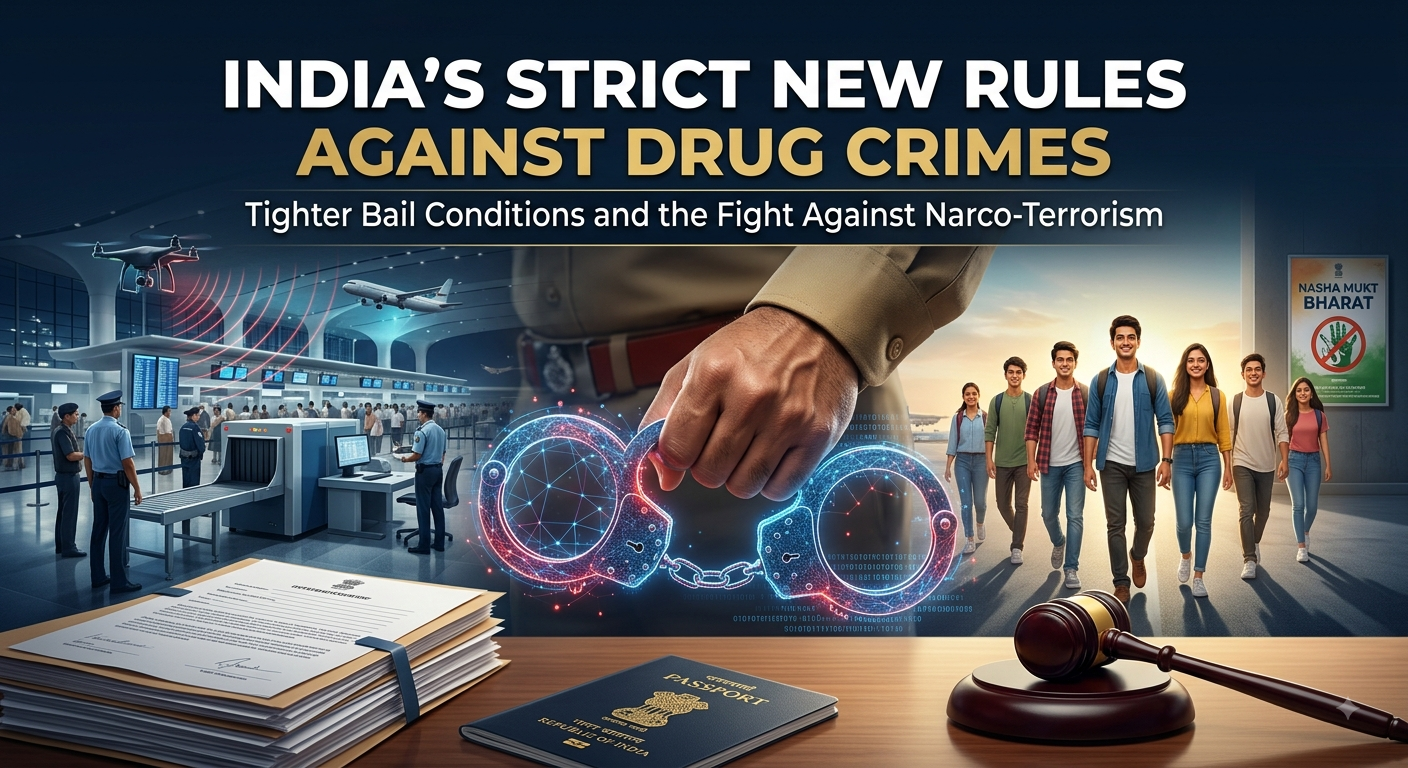
The Supreme Court of India recently made it much harder for foreign drug criminals to get out of jail on bail and flee the country. This step is a big part of India’s ongoing battle against drug smuggling and the growing threat of “narco-terrorism.”
Here is a simple breakdown of the new rules, the challenges India faces, and how the country is fighting back.
Stricter Rules for Bail
In the past, some foreign citizens arrested for dealing large amounts of drugs would use fake guarantors to get bail. Once out of jail, they would secretly leave the country. To stop this, the Supreme Court has created strict new rules:
Handing Over Passports: Accused individuals must surrender their passports to the authorities.
Mandatory Registration: They must officially register with the foreign registration office (FRRO).
Verified Guarantors: They need two reliable guarantors. The police must physically check the home addresses of these guarantors within a strict timeframe.
Holding Officials Accountable: If government officials do a bad job checking these guarantors or their bank accounts, the officials themselves will face strict punishment.
The goal is to ensure that anyone accused of ruining lives with drugs stays in the country to face a proper trial.
The Modern Drug Problem
Smuggling drugs has become a high-tech crime. Criminals are no longer just sneaking across borders on foot; they are using drones, artificial intelligence (AI), and digital networks. This makes it much harder for the police to track and catch them.
Another major worry is that drug dealers are targeting younger children. Sadly, kids as young as 10 to 12 years old are now falling into the trap of addiction, with dealers often trying to hook them right outside their schools and colleges.
How India is Fighting Back
Catching criminals is only half the battle. The country also needs to help people stop using drugs and prevent youth from starting in the first place.
National Campaigns: The government launched the “Drug-Free India Campaign” (Nasha Mukt Bharat Abhiyaan), which has reached millions of people and helped set up hundreds of treatment centers across the country.
The Role of Families: Experts say that families, especially mothers and parents, are the first line of defense. They are usually the first to notice if a child’s behavior is changing and can help them say no to drugs early on.
Community Help: Over 100 religious and community leaders have joined the cause to spread awareness and guide the youth away from harmful habits.
What Needs to Change Next?
Legal experts believe that because drug crimes destroy entire communities, the punishments should be even harsher, potentially including life in prison. Additionally, setting up special, fast-track courts dedicated only to drug cases would help finish trials quicker and ensure that guilty criminals are taken off the streets without long delays.