


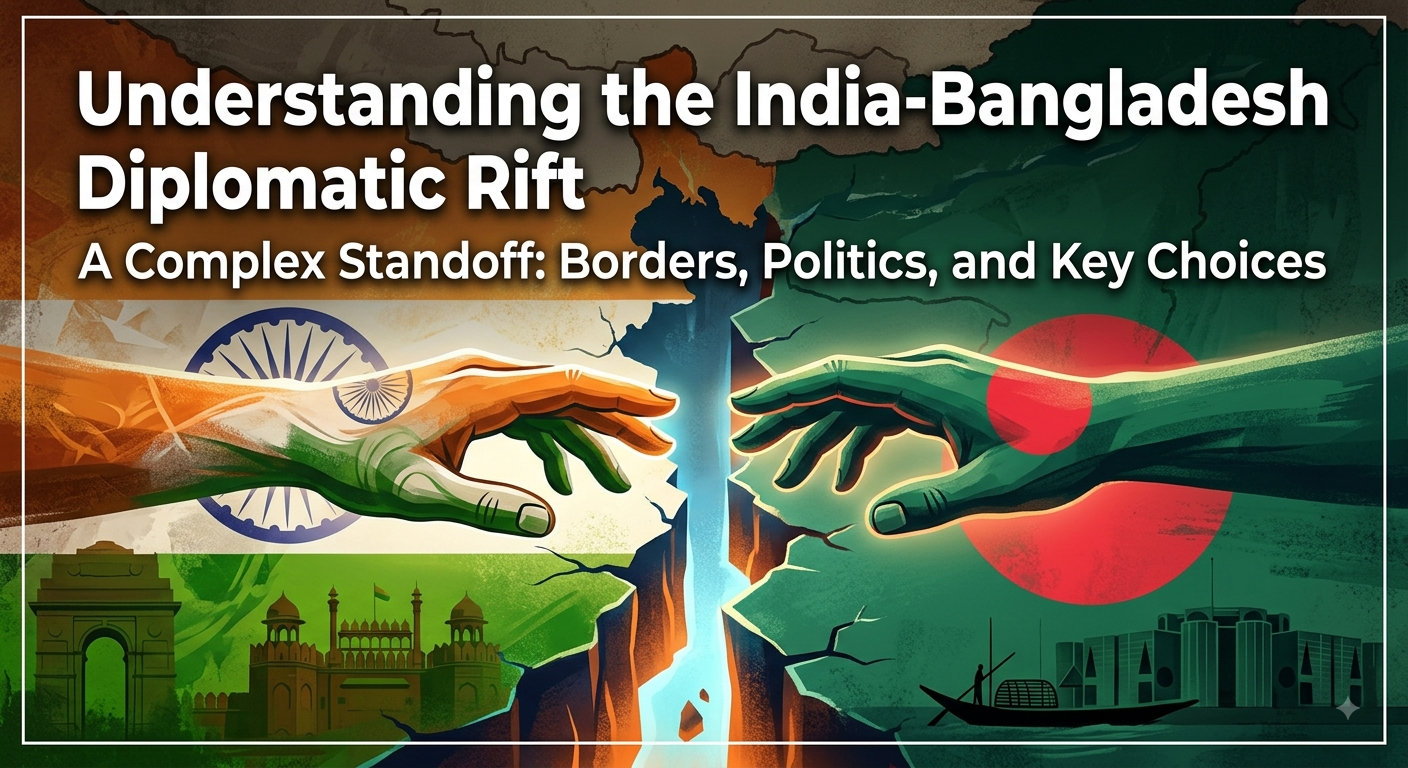
The relationship between India and Bangladesh is currently facing a major challenge. The new Bangladeshi government has stated that before relations can return to normal and diplomatic visits can resume, India must agree to certain strict conditions.
Here is a simplified breakdown of the situation, the history behind it, and why it matters.
How We Got Here
The current tension traces back to massive political shifts in Bangladesh.
The 2024 Protests: In August 2024, widespread national protests forced former Bangladeshi Prime Minister Sheikh Hasina to flee her country and seek safety in India.
The New Demands: Fast forward to 2026, and Bangladesh has a new government led by Prime Minister Tarique Rahman. This leadership has adopted a strong nationalist stance and is demanding that India return Sheikh Hasina to face trial.
A Second Condition: The new government is also demanding the return of the individuals accused of assassinating Osman Hadi, a key leader of the 2024 protests, who are believed to be hiding in India.
Why Bangladesh is Crucial for India
India is handling the situation carefully because Bangladesh is an incredibly important neighbor. A breakdown in relations would hurt India in several ways:
Geography and Security: India relies on Bangladesh’s cooperation for secure, alternate routes to its Northeastern states. Without it, India is entirely dependent on the narrow, vulnerable Siliguri Corridor (often called the “Chicken’s Neck”).
Trade and Economy: Bangladesh is India’s biggest trading partner in South Asia, with bilateral trade recently reaching $14 billion.
Energy Sharing: The two countries are deeply connected through infrastructure, with Bangladesh relying heavily on imported Indian electricity.
Global Rivals: If India’s relationship with Bangladesh sours, competing nations are ready to step in. China is already securing port deals and water management projects in Bangladesh, while countries like Turkey are building new defense partnerships in the region.
The Legal Tug-of-War
India is caught in a difficult legal and moral position regarding extradition—the formal process of sending a person back to another country to face legal charges.
The Treaty: India and Bangladesh do have a formal, signed extradition treaty that dictates how these requests should be handled.
The Catch: The treaty allows India to refuse a request if the charges appear to be politically motivated or if a fair trial is not guaranteed. Because Sheikh Hasina is a former allied leader facing the death penalty from a domestic tribunal, India is hesitant to approve the handover.
The Cost of Saying No
If India outright refuses to send Sheikh Hasina back, it risks permanently damaging a vital friendship. A diplomatic freeze could stall economic projects, create security issues along their massive shared border, and push Bangladesh closer to China. On the other hand, returning her could violate India’s humanitarian principles and historic loyalties.
Ultimately, India is walking a tightrope, trying to balance legal obligations, moral values, and the need to protect its strategic influence in South Asia.