




India is planning to expand its fleet of Russian S-400 missile systems. However, the real story isn’t just about buying new weapons. India is connecting these powerful missiles to its own homegrown technology, creating an advanced defense shield that makes the S-400 even more effective.
The Brain Behind the Missiles
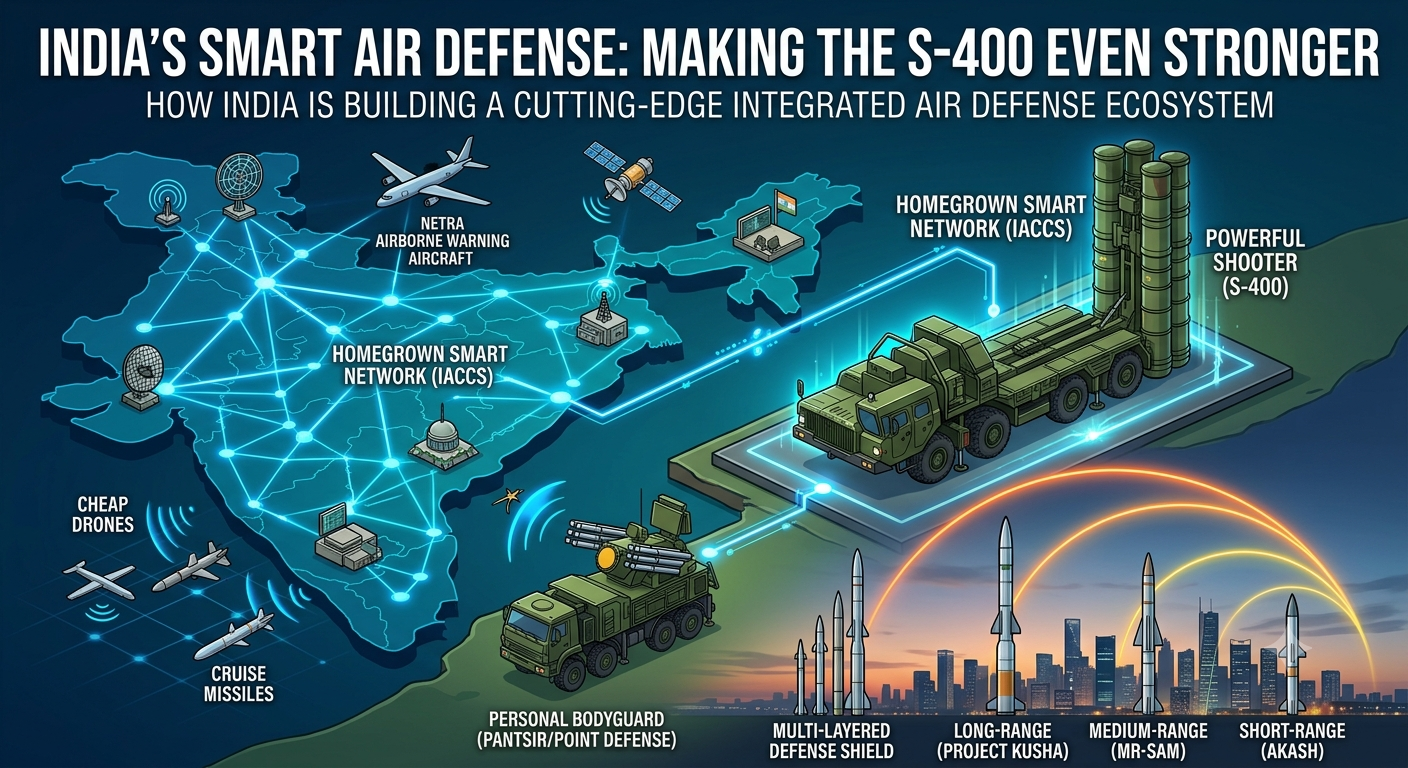
The secret weapon is an Indian network called the Integrated Air Command and Control System (IACCS). Think of the S-400 as the muscle and the IACCS as the brain.
The network collects information from radars, spy planes, and ground stations all across the country.
It combines all this data into one giant, real-time map of the sky.
Because of this smart network, the radar that spots an enemy plane doesn’t have to be the exact same one attached to the S-400. The whole country’s radar system acts as the “eyes” for the missile.
Guarding the Shield
Because the S-400 is very expensive and important, enemies might try to attack it using cheap, small drones. Firing a massive, costly S-400 missile at a tiny drone is a waste of money and resources.
To solve this, India is looking at short-range systems like the Pantsir S1. This system uses smaller missiles and guns to shoot down cheap drones. It acts like a personal bodyguard for the S-400 while India works on building its own short-range defenders.
Building a Multi-Layered Safety Net
India is not relying entirely on imported weapons for its safety. It is actively building a layered shield of its own, which includes:
Project Kusha: India’s own long-range defense system, which is currently being tested to hit targets up to 350 kilometers away.
Medium and Short-Range Missiles: Indian-made systems like the Akash missile to catch anything that slips through the longer-range nets.
The Ultimate Defense Strategy
India’s master plan is to move away from just buying individual weapons. Instead, it is creating an ecosystem where every radar and missile system communicates perfectly. In modern warfare, the winner isn’t always the one with the biggest missile. The advantage goes to the country with the smartest network that can spot danger, decide how to react, and fire the right weapon first.
What part of India’s multi-layered defense strategy do you find the most impressive?