




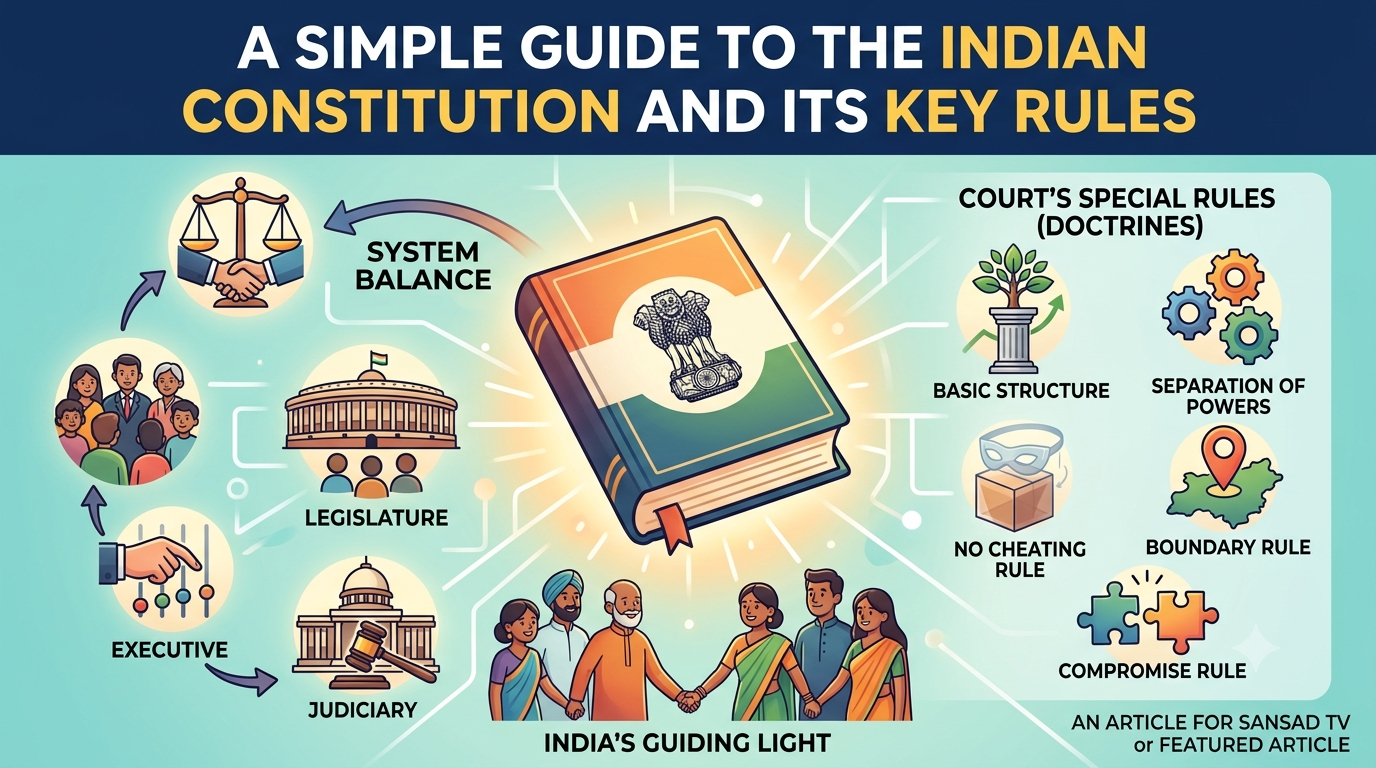
The Indian Constitution is the ultimate rulebook for the country. It sets the foundation for how the nation is governed, protects the rights of everyday citizens, and unites a deeply diverse society. Created by visionary leaders after India’s independence, this rulebook is designed to ensure justice, equality, and freedom for everyone.
How the System Stays Balanced
To keep power in check, the Constitution divides responsibilities among different parts of the government:
The Lawmakers (Legislature): Elected leaders who write the laws.
The Enforcers (Executive): The Prime Minister and ministers who put those laws into action.
The Watchdogs (Judiciary): The courts, led by the Supreme Court, which ensure everything follows the rules.
Instead of keeping these branches completely separate, the Constitution forces them to work together. They constantly check each other’s homework so that no single group becomes too powerful.
The Court’s Special Rules (Doctrines)
Because the world changes, the Constitution has to adapt. When laws are confusing or conflict with each other, the Supreme Court steps in. Over time, judges have created special guidelines—called doctrines—to solve these problems fairly:
The Basic Structure Rule: The government can update and change the Constitution, but it can never destroy its core identity (like democracy and basic human rights).
The Power-Sharing Rule (Separation of Powers): Power is strictly divided among different branches of government to prevent anyone from ruling like a dictator.
The Boundary Rule (Territorial Nexus): A state government can only make rules for things that actually happen in, or are deeply connected to, that specific state.
The “No Cheating” Rule (Colourable Legislation): If the government is not legally allowed to do something directly, it cannot sneakily do it through indirect or hidden ways.
The Employment Rule (Doctrine of Pleasure): While high-ranking officials can fire government workers, strict safeguards exist to make sure people aren’t fired unfairly or without cause.
The Compromise Rule (Harmonious Construction): If two laws seem to contradict each other, judges must interpret them in a way that allows both to work together smoothly, rather than ignoring one completely.
The Constitution Today
At its heart, the Indian Constitution is not just a piece of paper; it is an evolving guide. By combining strict boundaries with the flexibility to grow, it helps the nation face modern challenges while keeping the spirit of democracy alive.