




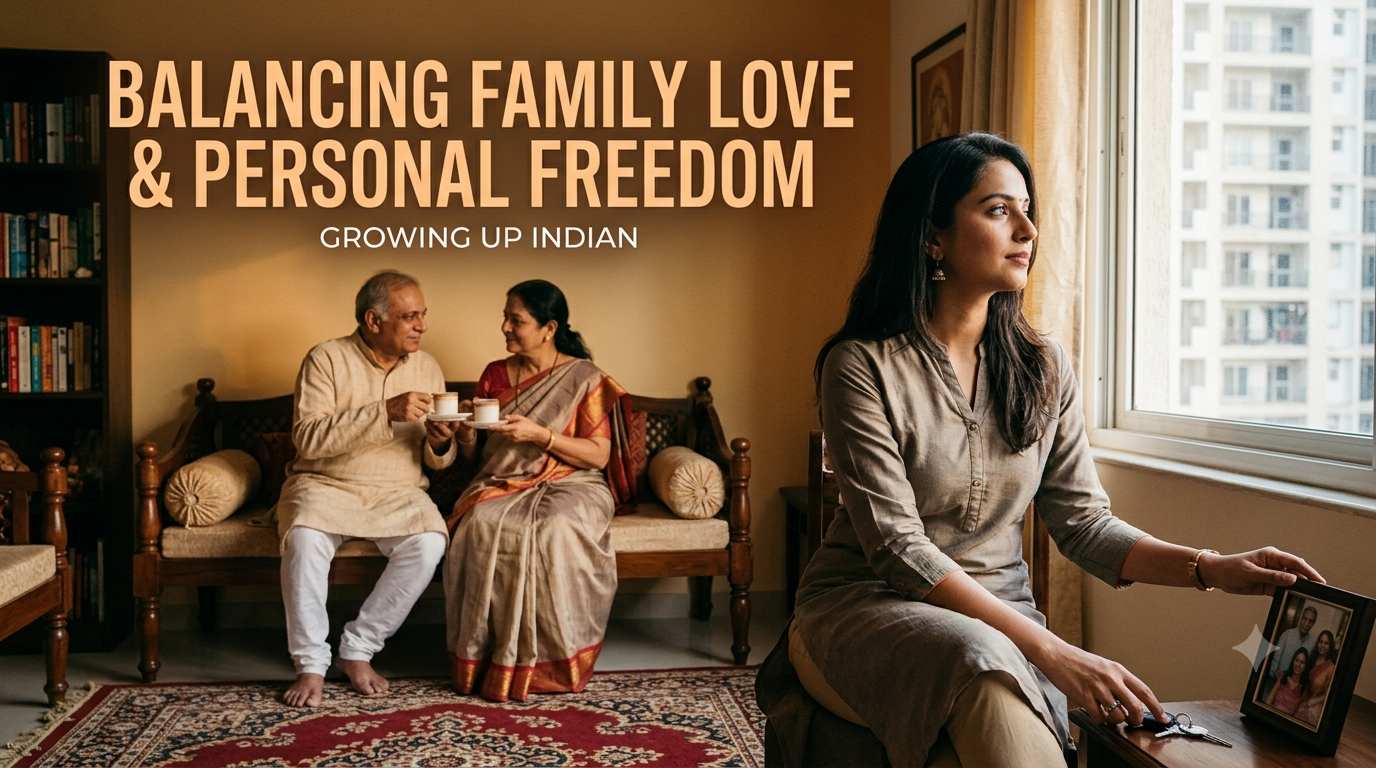
Families are our biggest support system, but sometimes the very people who protect us can also restrict us. For many young adults in India, a common struggle is trying to be independent while still respecting family traditions. This brings up an important question: does living with your parents mean you aren’t truly an independent adult?
Guidance vs. Control
It is perfectly normal to ask your parents for advice, whether it is about your career or personal relationships, even well into your 30s. Listening to the wisdom of the people who raised you does not make you weak or immature.
The problem begins when that advice turns into a strict rule—when caring for you turns into a demand that you obey them without question. Real independence isn’t about your physical address. Instead, it is about answering one simple question: Who gets to make the final decisions in your life?
The Need for Personal Space
Imagine a young, financially independent professional who decides to move out of their parents’ house into their own apartment in the exact same city. They aren’t moving for a better job or going abroad to study. They just want to avoid daily questions about their schedule, what time they will be home, and who they are meeting.
Often, this decision leads to massive emotional arguments. But the young adult isn’t asking to cut ties or abandon the family. They are simply asking for personal space and the freedom to manage their own daily life while still maintaining a loving relationship with their parents.
Why the Indian Family is Different
To understand why it is so hard to carve out personal space, we have to look at why Indians usually stay with their parents. It isn’t necessarily because we are more traditional or love our parents more than people in other countries.
In India, the family is the ultimate social safety net. We rely on our families for:
Childcare for the younger generation.
Healthcare and support for the elderly.
Financial backups during tough times.
Deep emotional support.
In many Western countries, the government or private institutions handle these needs. Because we rely on our families for so much security, the family naturally gains a lot of control over our lives. This creates a trap: the institution that keeps you the safest is also the one that makes it hardest to be your own person.
Redefining What It Means to Be an Adult
We often think of adulthood as a strict checklist: finish school, get a job, move out, and live completely alone. But true maturity doesn’t have to look like that.
You can still deeply love, need, and care for your parents without needing their permission to make your own life choices. The greatest strength of the Indian family is the unspoken promise that you will always have a safe home to return to if life gets tough. But a truly healthy family must also add one more promise: you are free to carve your own path without feeling like you are abandoning them.
Conclusion: Love Without Permission
Being close to your family does not mean you have to blindly obey them, and being independent does not mean you have to be completely alone.
The ideal family of the future—whether everyone lives under one roof or in separate homes—is one that offers practical help and emotional closeness, but also respects your personal freedom. True adulthood begins when staying home is a personal choice, leaving home isn’t seen as a betrayal, and love doesn’t require permission.