



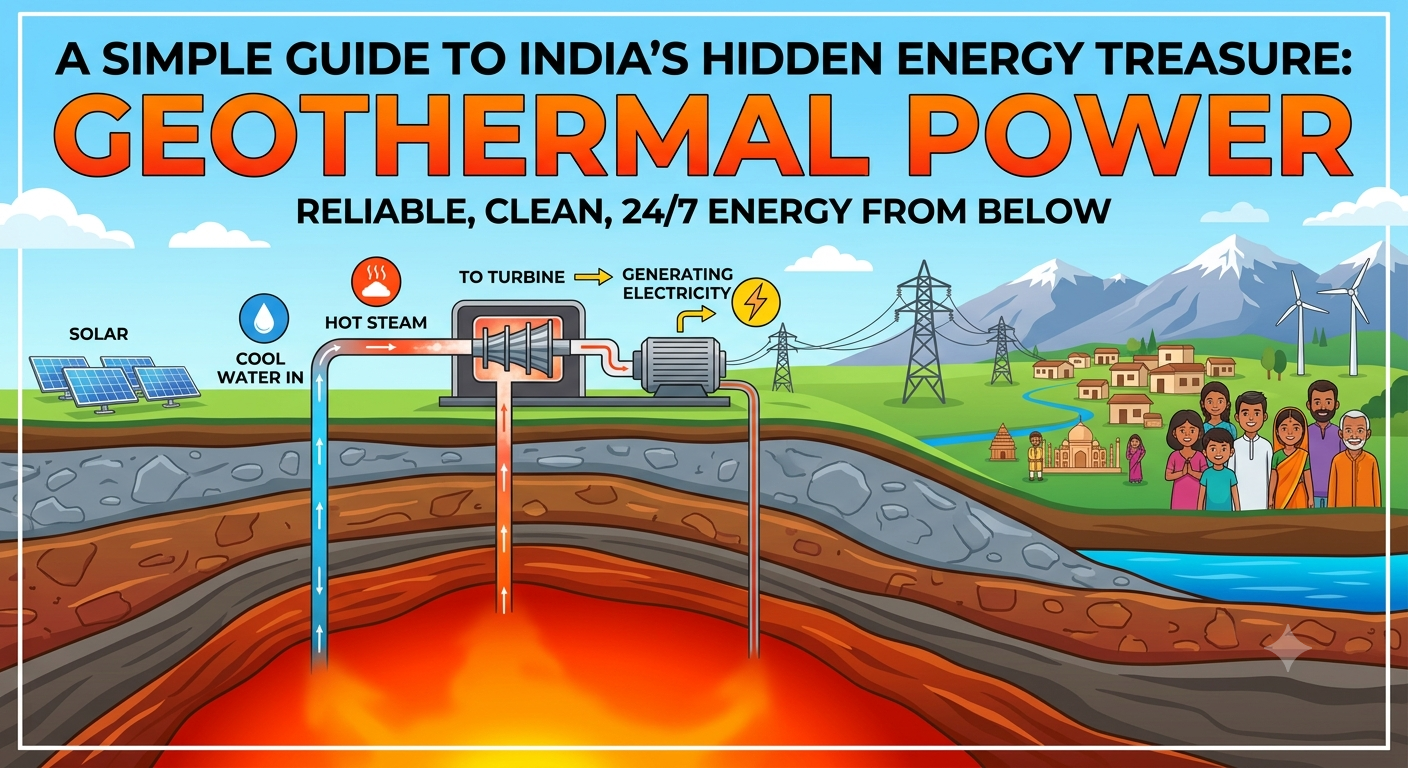
For a long time, India has relied on the sun, wind, and water to create clean electricity. Now, experts are looking straight down into the ground to tap into geothermal energy—the natural heat stored inside the Earth. Instead of just studying this heat, India is finally taking real steps to use it.
The First Big Step in Ladakh
In July 2026, a major milestone was reached when India opened its first two geothermal wells in the Puga Valley of Ladakh. Located high up in the mountains, these wells drill deep into the earth. Scientists are currently testing them to see if the area can successfully support a new, small-scale power plant.
Why is Earth’s Heat So Useful?
The biggest advantage of geothermal power is that it never sleeps. While solar panels need sunlight and wind turbines need a breeze, the Earth’s heat is available 24 hours a day, 7 days a week.
India has a massive amount of this untapped energy. Beyond simply keeping the lights on, this underground heat can be used for several everyday needs:
Running heating and cooling systems for buildings.
Assisting with agricultural and farming tasks.
Powering cold storage facilities to keep food fresh.
Supporting heavy industrial work.
The Path Forward and Challenges
To support this new energy source, the Indian government introduced a special geothermal policy in 2025. This plan encourages research, partners the government with private businesses, and even looks into reusing old, empty oil wells.
However, pulling heat from the earth isn’t easy. It involves complex and expensive drilling, managing environmental safety, and dealing with unpredictable underground rocks. By overcoming these hurdles, geothermal energy isn’t meant to replace solar or wind power. Instead, it will team up with them to give India a stronger, more reliable clean energy future.