




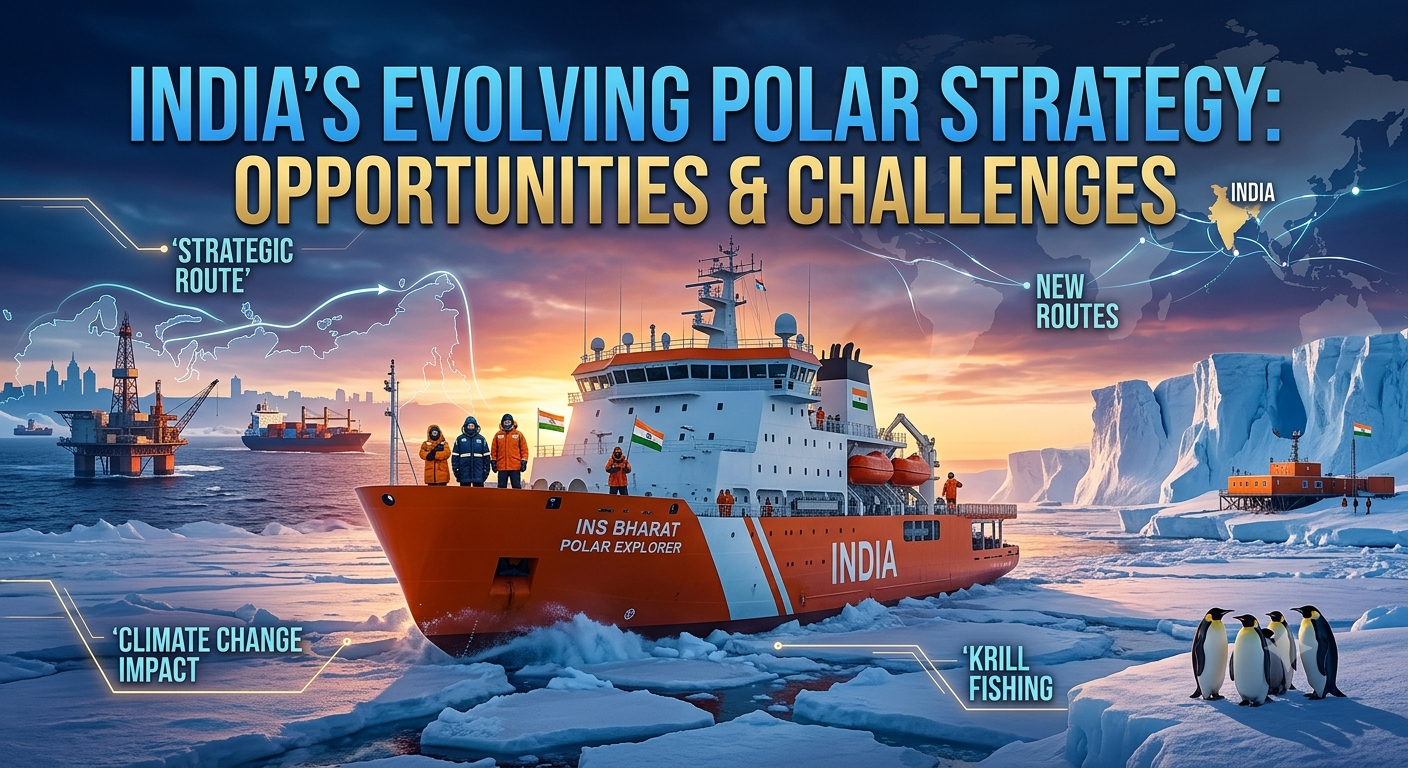
The icy landscapes of the North and South Poles might seem disconnected from everyday life in India, but they actually hold massive importance for the country’s weather, economy, and global standing. Recently, a parliamentary committee led by Dr. Shashi Tharoor shared a detailed report highlighting why India must step up its game in these polar regions.
The main takeaway is simple: India needs to act quickly and stop treating these areas as an afterthought.
How Melting Ice Affects Weather and Trade
The most direct link between India and the poles is the climate. What happens in the frozen parts of the world heavily influences India’s weather.
- The Monsoon Connection: Melting Arctic snow changes weather patterns, directly impacting the Indian monsoon and increasing the chances of extreme events like heatwaves and cyclones.
- New Shipping Routes: As global warming causes polar ice to melt, new ocean paths are opening up. India has already tested a faster shipping route from Chennai to Russia, cutting travel time by over two weeks.
- Safer Trade: Traditional trade routes (like the Suez Canal) are currently facing threats from conflicts and pirates. A new Arctic route could give India a safer, alternative way to trade with Europe.
Strengthening India’s Voice in the World
To make sure India’s interests are protected, the committee suggested some major diplomatic moves:
- A Special Envoy: India should appoint a dedicated “Polar Ambassador” to handle international negotiations, just like China, Japan, and South Korea have already done.
- Upgrading Memberships: India is currently an observer in the Arctic Council, but it should push to become a full member if the rules ever change.
- Forming New Partnerships: To prevent being left behind by other nations, India should team up with friendly Asian countries like Japan, South Korea, and Singapore to discuss polar issues together.
The Need for Better Ships and More Scientists
India is currently facing big challenges when it comes to the tools and people needed for polar research.
- Building an Ice-Breaker: Instead of renting expensive foreign ships every year, India needs to build its own polar research vessel. The government planned to build one for ₹400 crore, but severe delays have caused the price to jump to ₹2,400 crore. The committee urged the government to start building it immediately before it gets even more expensive.
- Training New Experts: India only has about 54 experts working on polar research. The report says the country needs to nearly triple that number. By offering more grants to university students, India can train a whole new generation of scientists.
Protecting Nature and Future Resources
As more countries visit the poles, the risk to the environment grows.
- Responsible Tourism and Fishing: The committee warned against dirty tourism that pollutes polar waters. They also highlighted the danger of overfishing tiny creatures called krill, which are the main food source for whales and other marine life in Antarctica.
- Hidden Minerals: There are valuable minerals buried beneath the ice. While digging for them in Antarctica is currently banned globally, the rules in the Arctic are different. By staying involved now, India ensures it will have a say if these resources are ever legally mined in the future.
Summary
For India, the next decade is about balancing scientific research, protecting the environment, and securing alternative trade routes. From building its own ships to training new scientists, India must invest properly in its polar strategy today so it isn’t left out in the cold tomorrow.
Do you have a specific interest in the environmental impact of these regions, or are you more curious about the geopolitical trade routes?