




We usually think of joblessness as a personal struggle. However, it is truly a family problem. As families, we spend our hard-earned money and sacrifice our own needs to educate our children, hoping they will eventually find good jobs and support the household. When they cannot find work, we all carry the burden together.
The Hidden Truth Behind the Numbers
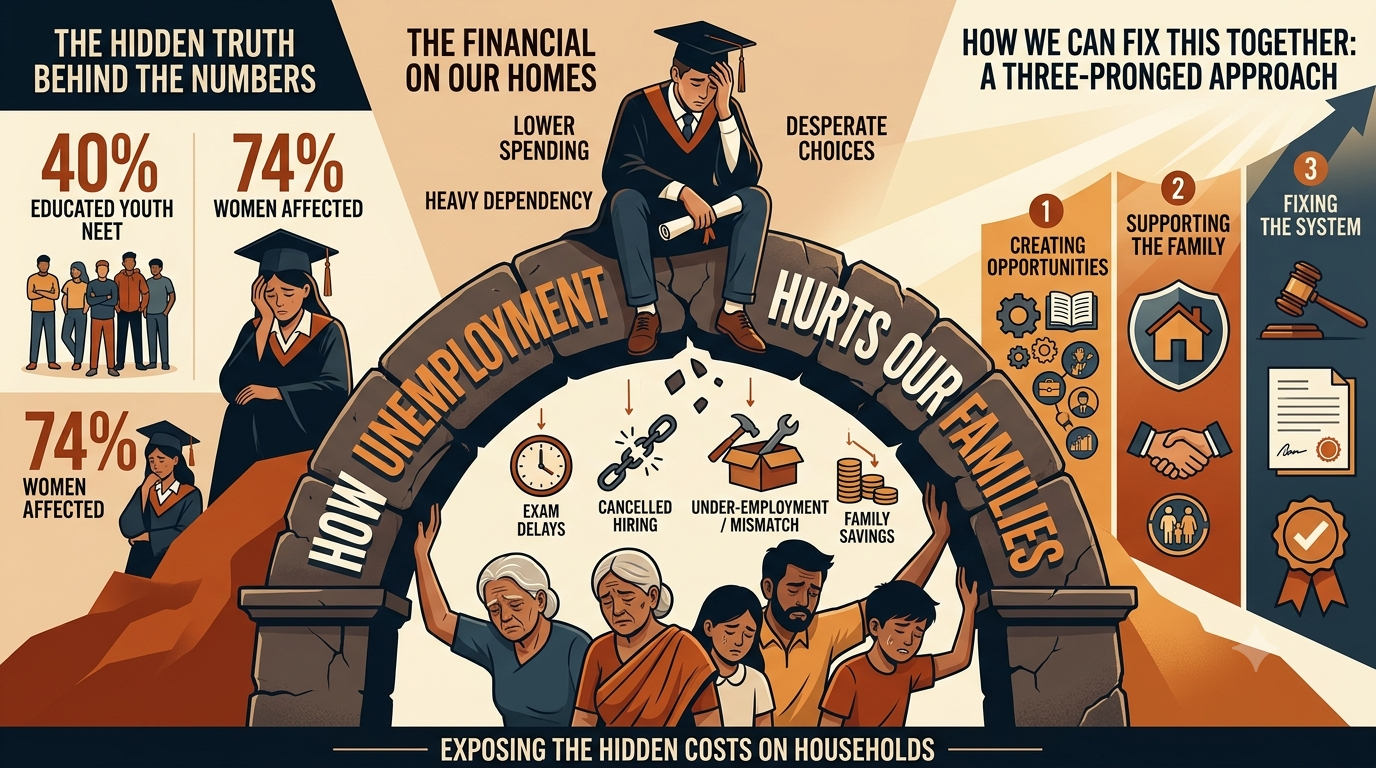
When we look at the official numbers, youth unemployment seems to be around 15%, while graduate unemployment is roughly 29%. But the real picture is much more worrying because it hides a group we call “NEET” (Neither in Employment, Education, nor Training).
A Wasted Generation: About 40% of our highly educated youth belong to this NEET category, meaning they are simply sitting idle at home.
The Gender Gap: This issue hits our daughters and sisters even harder. Nearly 74% of our educated women find themselves without a job, further education, or training.
The Financial Burden on Our Homes
Having an unemployed graduate at home directly damages our family’s financial health. We see the impact every day in how we manage our households:
Lower Spending: Families with unemployed youth are forced to spend significantly less on their daily needs and groceries compared to families where people are actively working.
Heavy Dependency: Many of our households rely entirely on just one earning member, putting immense stress and pressure on that single person.
Desperate Choices: Because government exams are often delayed or canceled, our youth wait years for a job. As our family savings dry up, our young people are forced to take lower-level jobs they are completely overqualified for, just to survive.
How We Can Fix This Together
If we want to solve this crisis, we need a fresh approach that looks beyond just the individual. We must focus on three main areas:
Creating Opportunities: We must continue to build better job prospects and teach practical skills to our young people so they are ready for the workforce.
Supporting the Family: Our leaders need to design policies that recognize the financial strain on the whole family, treating household welfare as a core priority.
Fixing the System: We have to eliminate the long administrative delays, paper leaks, and court battles in the hiring process so our youth can start earning sooner.
When we understand that a jobless youth means a struggling family, we can finally start making changes that matter.
How has the delay in job opportunities affected the young people in your own community?