




In the state of Bihar, the Kosi River is famous for all the wrong reasons. While it might look calm on a normal day, the river is feared because it frequently changes its path and causes massive, destructive floods. Because of the constant damage it brings to homes and farms, it has earned the sad nickname, the “Sorrow of Bihar.”
But why does this specific river act so unpredictably? The answer comes down to the journey the water takes from the mountains to the flatlands.
A Sudden Drop: From Mountains to Plains
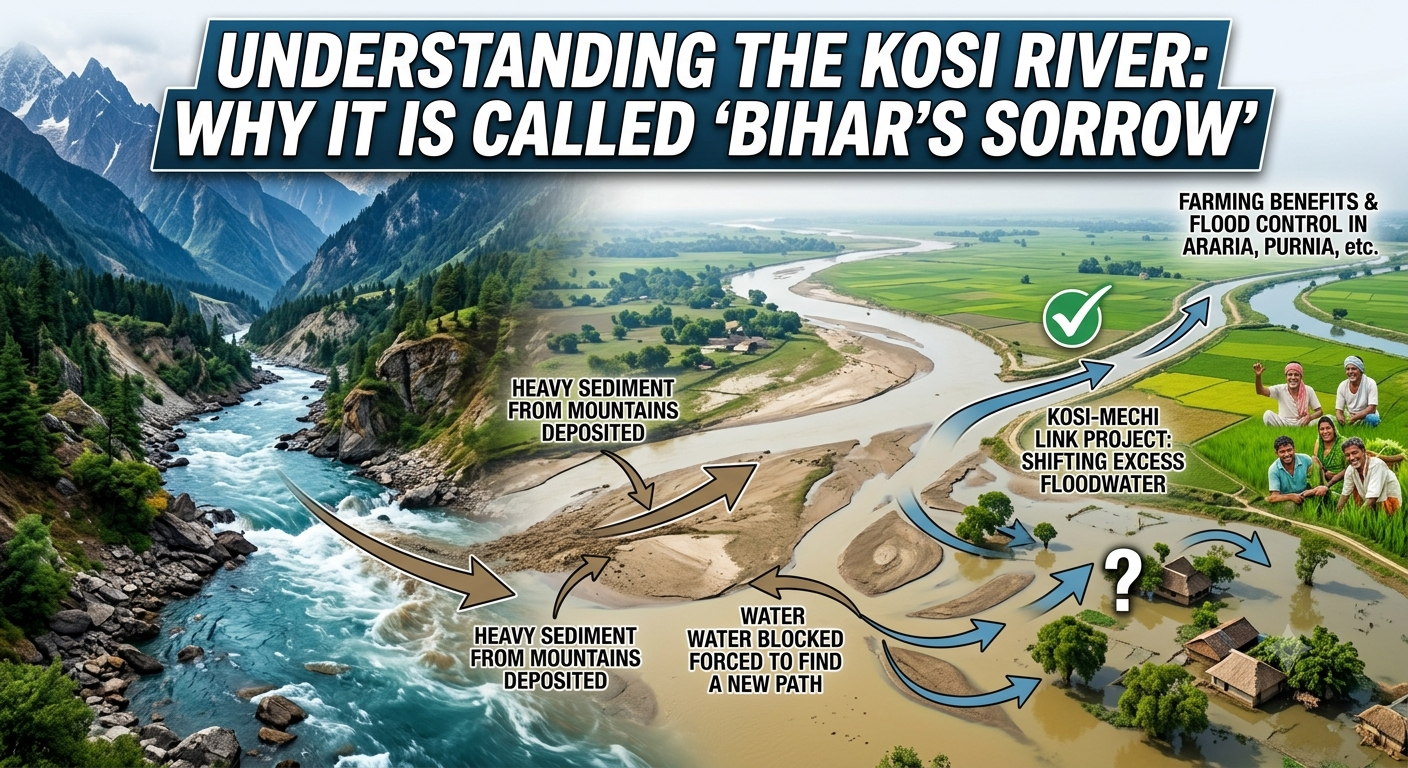
The Kosi River starts high up in the mountains of Nepal. As water rushes down these steep, mountainous slopes, it travels very fast. This fast-moving water picks up huge amounts of rocks, dirt, and sand (known as sediment) along the way.
The main problem happens when the river leaves the mountains and suddenly hits the flat plains of North Bihar. The ground goes from being very steep to almost completely flat in a very short distance.
The Problem with Sand and Dirt
When the river reaches the flat plains, the water slows down drastically. Because it is moving much slower, it loses the power to carry all the heavy rocks and dirt it brought down from the mountains.
As a result, the river starts dropping this debris onto the riverbed. Over time, these massive piles of dirt and sand act like a natural dam, blocking the river’s original path. Since the water can no longer move forward, it is forced to break out and find a new route. This sudden shift in direction causes severe flooding in nearby villages and farming areas, especially during the heavy rains of the monsoon season.
Why River Walls Aren’t a Perfect Fix
To try and stop the floods, people have built tall walls, called embankments, along the sides of the river to keep the water trapped in its path. However, this has not solved the problem permanently.
Because the river is trapped between these walls, the heavy dirt and sand cannot spread out over the land. Instead, it just keeps piling up inside the river’s channel. This raises the bottom of the river higher and higher, which puts a lot of dangerous pressure on the walls. If the pressure gets too high, the walls can break, leading to even worse flooding.
A Smart Solution: Sharing the Water
While stopping the river completely is nearly impossible, a new plan called the Kosi-Mechi Link Project offers a lot of hope.
This project aims to take the extra, dangerous floodwater from the Kosi River and send it over to the Mechi River instead. Moving this extra water helps in two big ways:
Stops Flooding: It lowers the amount of water in the Kosi River during the rainy season, which reduces the chance of floods.
Helps Farmers: It moves that extra water to areas that actually need it for farming, specifically helping the Bihar districts of Purnia, Katihar, Araria, and Kishanganj.
Summary
The Kosi River is a powerful force of nature, driven by the unique landscape of the Himalayas and the flatlands of Bihar. While the massive amount of dirt and sand it carries makes it incredibly hard to control, new ideas like moving its extra water to other rivers offer hope. With the right projects, Bihar can manage these dangerous floods and turn a long-time “sorrow” into a helpful resource.