




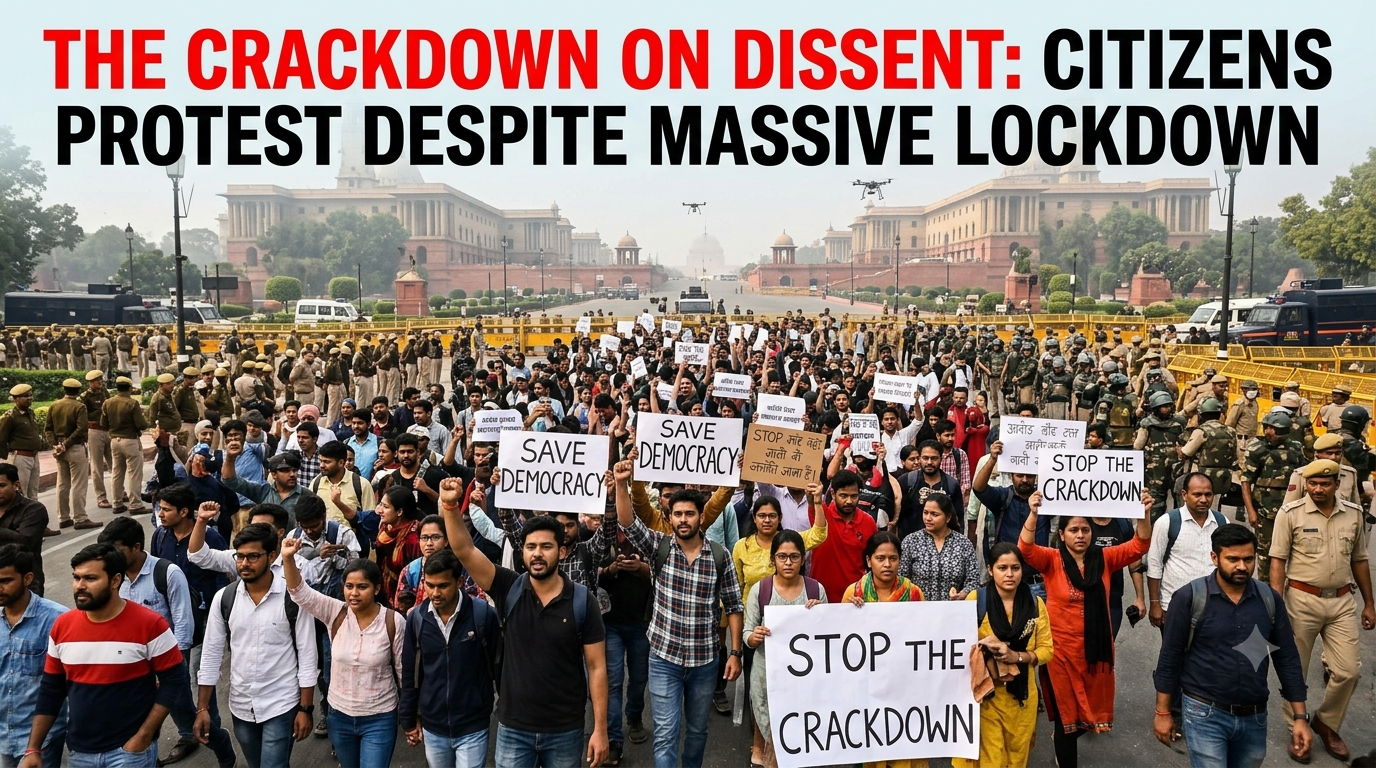
Delhi recently saw massive protests over alleged election manipulation, prompting the government to respond with an unusually heavy security crackdown. Despite the intense efforts to stop people from gathering, citizens still took to the streets, highlighting growing public anger and raising concerns about democratic freedoms.
Heavy Security and Lockdowns
The authorities locked down the capital using drones, facial recognition cameras, and thousands of police and paramilitary forces. Travel was severely restricted as hundreds of trains were canceled, metro stations were closed, and internet services were blocked in key areas. Reports suggest that up to 12,000 security personnel were flown in specifically to control the crowds. This sparked criticism from those who remembered times when the government claimed it lacked the resources to airlift soldiers in sensitive border zones.
Wide-Scale Detentions
Police did not just stop regular protesters; they detained a wide range of public figures:
Politicians: Top leaders from various opposition parties, including Arvind Kejriwal and Mamata Banerjee, were taken into custody to prevent them from marching.
Journalists: Reporters and digital creators covering the events were detained and pushed around by police, even when displaying valid press ID cards.
Lawyers: In a rare move, police detained around 100 Supreme Court lawyers. They were only released after the Chief Justice of India personally intervened.
The Reason for the Protests
The public anger is largely directed at Election Commissioner Gyanesh Kumar, with protesters demanding his removal over claims of stolen votes. Opposition leaders, including Rahul Gandhi, have actively joined the street protests. Following a meeting with the President, Gandhi stated that she did not deny the vote-stealing allegations, which has only fueled further outrage.
The Government’s Defense
The ruling party has dismissed the protests, claiming they are funded by foreign entities aiming to weaken the country. Critics responded by saying that if foreign interference is truly happening, the Home Ministry should take responsibility for the security failure instead of just blaming the opposition.
The heavy barricades, internet blackouts, and mass detentions have led many to compare the current situation to an unofficial state of emergency. However, the events showed that instead of silencing the public, aggressive police tactics often bring even more attention to the government’s actions and unite the opposition further.