




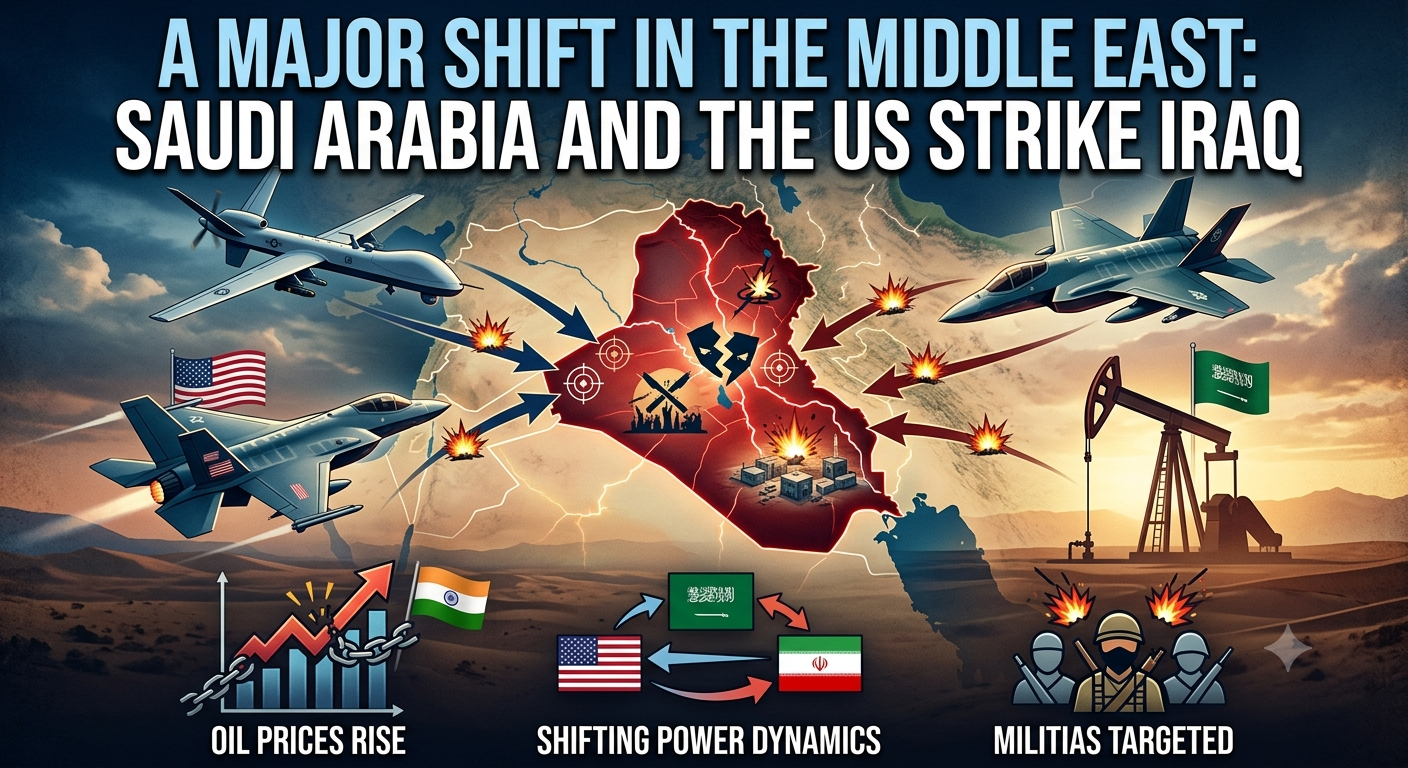
The conflict in the Middle East is entering a dangerous new chapter. Instead of just fighting through smaller rebel groups, major countries are now getting directly involved. Recently, Saudi Arabia teamed up with the United States to carry out airstrikes in Iraq.
A Spreading Conflict
Before this, the main fights were mostly between Israel, Iran, and the US. Gulf countries like Saudi Arabia were getting hit by rebel groups funded by Iran, but they avoided fighting back directly.
Now, that strategy has changed. By attacking targets in Iraq alongside the US, Saudi Arabia has shown that the conflict is spreading. It is quickly turning into a larger regional war that involves Iraq, Jordan, Yemen, and others.
The Two Main Sides
To understand the conflict, it helps to look at the two main alliances in the region:
The US and its Allies: This group includes the US, Israel, Saudi Arabia, the UAE, Bahrain, and Jordan. Their goal is to stop Iran from gaining too much power, protect important oil supplies, and keep trade routes on the ocean safe.
The “Axis of Resistance”: Led by Iran, this network includes armed groups spread across different countries. It features the Houthis in Yemen, Hezbollah in Lebanon, Hamas in Gaza, and certain armed militias in Iraq.
Because Iran cannot easily attack the US directly, it uses these allied groups to attack American bases and its Gulf partners instead.
Why Did They Attack Iraq?
Saudi Arabia and the US launched these strikes because their troops and businesses were in immediate danger.
Saudi Arabia reported that armed Iraqi groups (backed by Iran) were constantly attacking its oil pipelines, fields, and refineries using drones and missiles. The US also needed to protect its own soldiers stationed in the region.
The airstrikes specifically targeted an umbrella group of fighters in Iraq called the Popular Mobilization Forces (PMF). The PMF was originally created years ago to fight the terrorist group ISIS. However, after ISIS lost power, some of these fighters began taking money, weapons, and training from Iran. Because of this, the US and Saudi Arabia now see these specific groups as serious threats.
Why is Iraq Always the Battleground?
Iraq is unfortunately stuck right in the middle. Geographically, it sits directly between Iran and the Gulf countries.
Because of its location, Iraq is currently home to American military bases, Iraqi government forces, and Iran-backed militias all at the same time. Whenever tensions rise between the US and Iran, they almost always end up fighting it out on Iraqi soil.
How This Affects the Global Economy
Iran quickly responded to the strikes. They reportedly fired missiles at US military posts in Jordan (though the US claims they stopped them in the air) and seized commercial oil ships in the sea.
For Saudi Arabia, jumping directly into the fight is a big deal. They had been trying to avoid a direct war with Iran because wars are incredibly expensive and draining. However, protecting their oil was too important to ignore.
This growing violence is bad news for the whole world. When the fighting paused briefly, the price of crude oil dropped to around $70 a barrel. Now that the strikes have happened, prices are climbing back toward $90. If the conflict continues, it will make fuel, shipping, and everyday goods much more expensive for countries all over the globe, including India.