




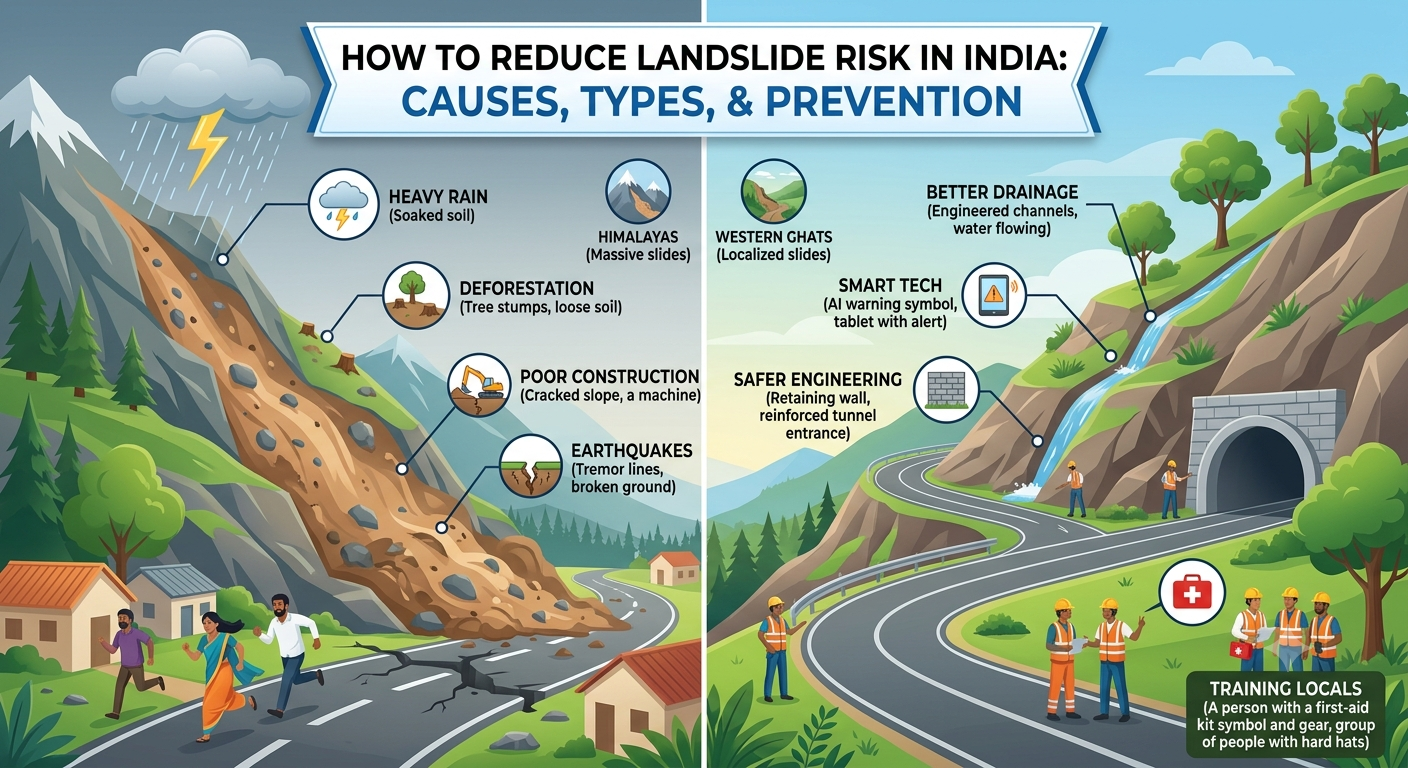
A landslide is simply the sudden downward fall of rocks, dirt, and mud from a mountain or hill. Gravity naturally pulls things down, but certain triggers cause the ground to lose its grip and collapse.
Heavy Rain: Continuous downpours soak the soil. When the water gets trapped above hard rock layers, the ground becomes muddy, heavy, and slippery, eventually sliding down.
Deforestation: Tree roots act like an underground net that tightly holds the soil together. When trees are cut down, the soil becomes loose and easily washes away.
Poor Construction: Blasting and cutting deep into mountains to build roads or buildings weakens the natural slope.
Earthquakes: Underground tremors crack the mountain rocks, breaking their natural hold and causing sudden collapses.
India’s Vulnerable Regions
India has specific areas that are highly prone to landslides. The two most affected mountain ranges experience these disasters very differently based on their geography:
The Himalayas & North-East: These mountains are made of young, weak, and still-forming rock. Because the ground is less stable, triggers like earthquakes, heavy rain, and cloudbursts can cause massive damage, sometimes shifting entire mountain sides.
The Western Ghats: In contrast, this mountain range is made of very old, hard, and stable stone. The main trigger here is extremely heavy monsoon rainfall. Because the rocks are harder, landslides tend to be smaller and result in more localized rock or mud falls rather than massive mountain collapses.
Types of Ground Movements
Not all earth movements happen the same way or at the same speed. They can be broken down by how fast they move and how wet the soil is:
Soil Creep: A very slow, dry movement over months or years. You can often notice it when fences or trees on a hill slowly tilt forward.
Mudflows: Fast-moving rivers of watery mud that rush down valleys, usually after intense rainstorms.
Rockfalls: Quick and dry events where loose boulders and stones suddenly detach and tumble down steep cliffs.
How to Stay Safe and Prepare
Managing mountain disasters is tough because bad weather and blocked roads make rescue missions very difficult. However, smart planning can save lives:
Better Water Drainage: Building proper water channels along mountain roads ensures rainwater flows away safely instead of soaking into the rocks.
Smart Technology: We can use Artificial Intelligence (AI) to study weather patterns and warn people before a landslide happens.
Safer Tunneling: Using modern, gentle drilling techniques and spraying concrete to hold rocks in place is much safer than using explosives.
Training Locals: Because outside rescue teams take time to reach blocked-off areas, teaching mountain communities basic first aid and emergency response is the most effective way to save lives quickly.
Have you ever traveled to a mountainous region during the rainy season and noticed any of these safety measures in place?