

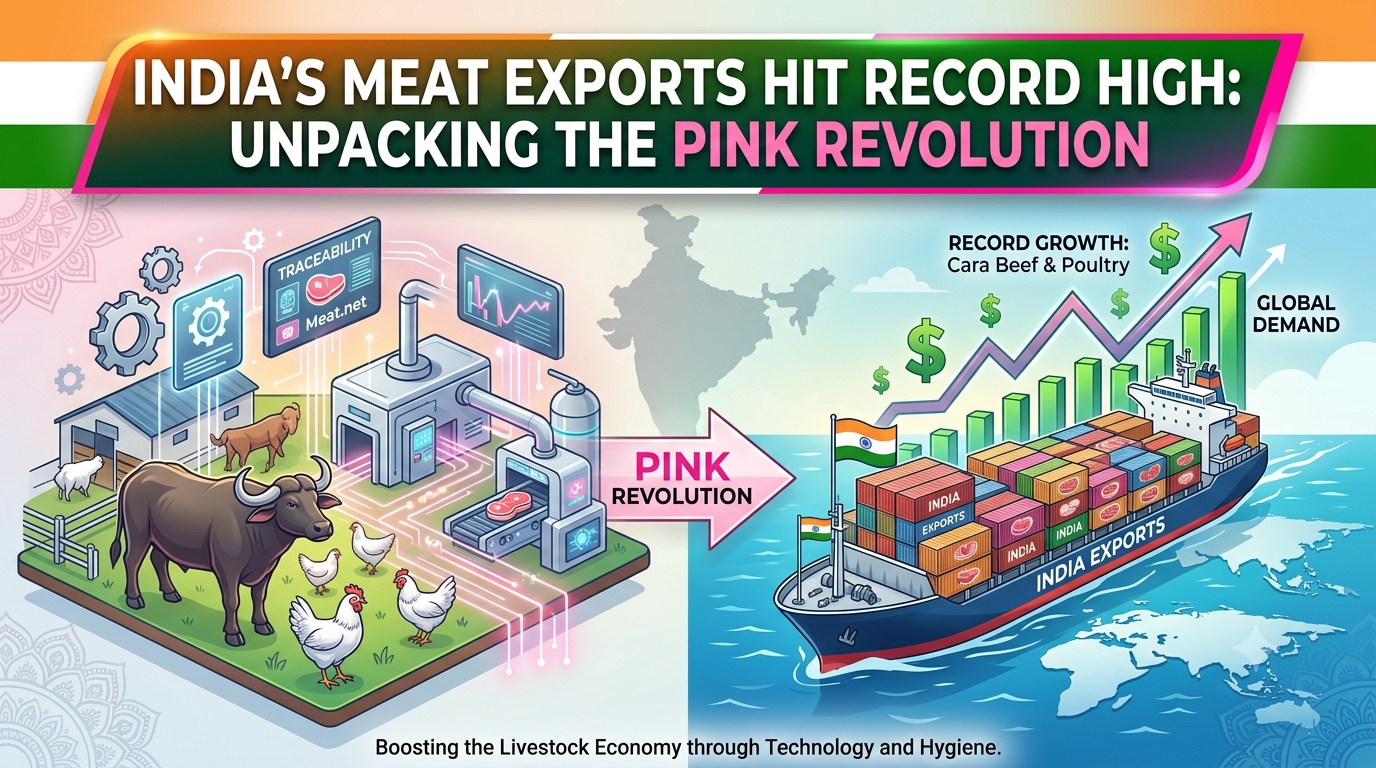
Agriculture has always been the heart of India’s economy. Recently, however, there has been a massive boom in a specific area: selling meat to other countries. This rapid growth and modernization of the meat industry is called the “Pink Revolution.”
Here is a simple breakdown of what this revolution is, the hurdles it faces, and what the future holds.
What exactly is the Pink Revolution?
In the past, India’s meat industry relied on manual labor and often lacked proper hygiene. The Pink Revolution aims to change this by bringing in modern technology, better machinery, and strict cleanliness rules to meat processing plants.
Because cows are culturally and religiously protected in India, the country’s meat exports focus almost entirely on buffalo meat, which is known globally as Cara beef. Farmers are allowed to sell older buffaloes that can no longer produce milk or work the fields. This actually helps farmers, as they can use the money from selling the older animals to buy new, healthy livestock.
How Big is India’s Meat Industry?
India is a global powerhouse when it comes to livestock:
Most Buffaloes: India has the largest buffalo population in the world (over 110 million).
Huge Earnings: Buffalo meat is one of India’s fastest-growing exports. It brings in over $5 billion a year and is growing fast.
Top States: Most of this meat comes from states like Uttar Pradesh, West Bengal, Maharashtra, Telangana, and Andhra Pradesh.
Global Rank: India is currently the third-largest producer of meat in the world, just behind Brazil and Australia.
What Problems Does the Industry Face?
Even with this massive growth, the industry struggles with a few big issues:
Lower Prices: In the global market, buffalo meat (Cara beef) is often seen as less premium than regular beef. Because of this, it sells for a lower price.
Strict Health Rules: Countries in North America and Europe have very strict health and safety rules for imported food. India often struggles to meet these high standards.
Animal Diseases: A major roadblock is Foot and Mouth Disease (FMD), which is common in Indian livestock. Many wealthy countries refuse to buy meat from places where FMD exists.
High Costs: India has a huge animal population but very little grazing land. This makes buying animal feed very expensive for farmers, which lowers their profits.
Illegal Slaughterhouses: Unregistered meat shops often ignore safety and hygiene rules, which hurts the reputation of the whole industry.
How is the Government Fixing This?
To help the industry grow safely, the Indian government has launched several helpful programs:
Upgrading Facilities: The government is helping fund modern, clean slaughterhouses that feature proper cold storage so the meat stays fresh longer.
Fighting Disease: India has launched a massive health campaign with the goal of completely wiping out Foot and Mouth Disease by the year 2030.
Meat.net: To build trust with foreign buyers, the government created a digital tracking system called Meat.net. This allows buyers to track the meat’s journey all the way from the farm to their doorstep, proving that it was handled cleanly and safely.
Export Funds: Special funds have been set up to advertise Indian meat in new countries and train workers on better hygiene practices.
Looking Ahead
These efforts are already showing great results. India is starting to sell meat to new markets like Russia, Oman, and Uzbekistan.
To keep this success going, experts suggest a few key steps. First, instead of just selling raw meat in bulk, India should start selling branded, ready-to-eat packaged products, which sell for much higher prices. Second, the industry should adopt a “zero-waste” approach—using leftover animal parts like bones or leather for other industries, and turning biological waste into biogas for energy.
By balancing fast economic growth with strict health standards and smart business practices, the Pink Revolution will continue to be a massive win for Indian farmers and the economy.