




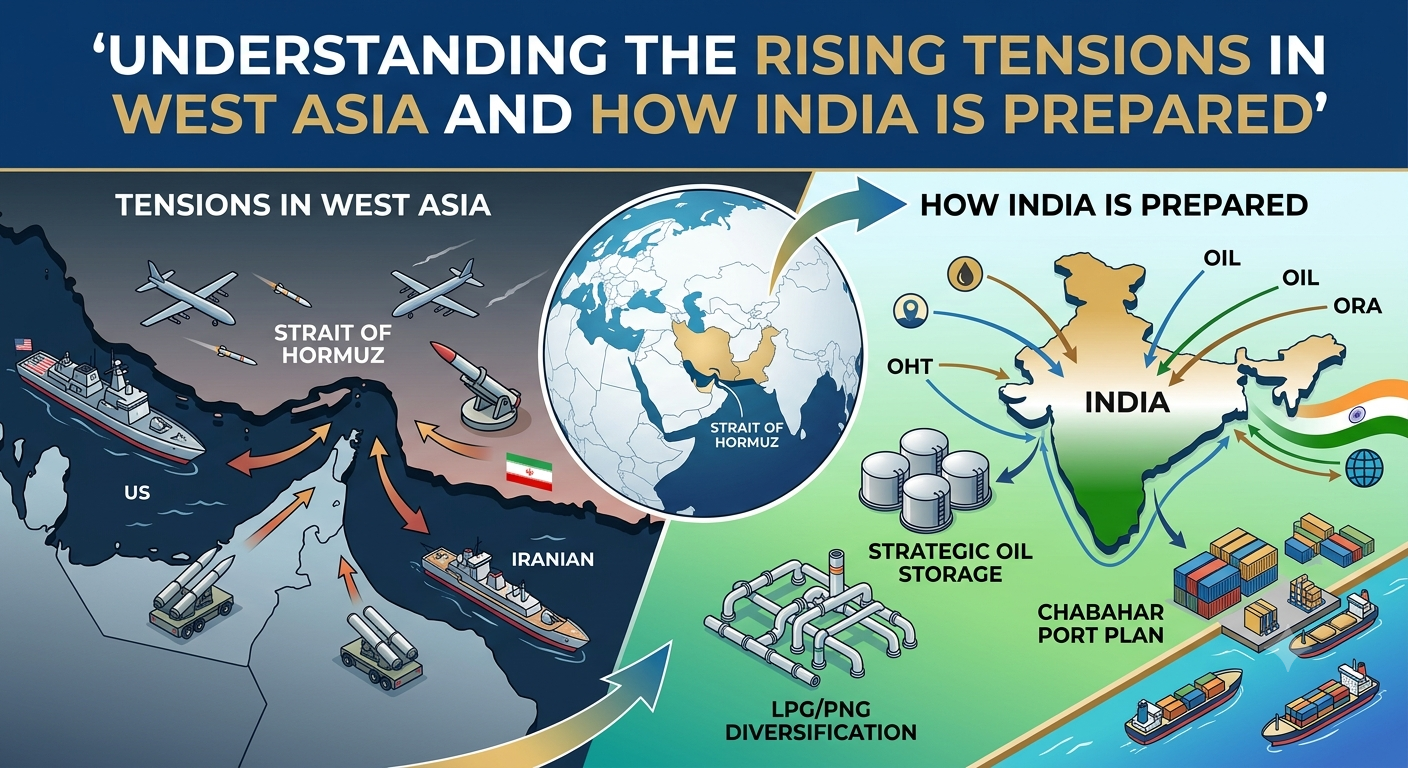
Things are getting tense again in West Asia. Recently, there have been attacks on cargo ships in a very important body of water called the Strait of Hormuz. The United States and Iran are exchanging military strikes, which is making people worry about the safety of global trade and the world’s oil supply. However, experts believe that while the situation is serious, we might not be heading for a full-scale war just yet.
The Fight Over the Waterway
In the past, the main arguments between the US and Iran were about nuclear weapons or changing the government. Now, the main fight is about who controls the Strait of Hormuz.
Iran knows its military is not as big as America’s, so they are using a different strategy. By trying to control this crucial waterway, Iran wants to prove that no ship can pass without its permission. When a few British and French cargo ships used a route Iran didn’t approve of, Iran attacked them to show its power.
Strikes and Politics
To answer Iran’s attacks, the US military bombed several Iranian bases near the coast. The goal was to destroy Iran’s drones and missiles so they couldn’t attack more ships.
Even though this sounds scary, experts say neither side actually wants a big war. The US has elections coming up soon, and the American public does not want another conflict. Right now, both countries are mostly just trying to look tough and gain an advantage before they eventually sit down to talk things out.
Two Different Views Inside Iran
To understand what might happen next, it helps to know that Iran’s leaders are divided into two main groups:
- The Strict Military: The military group (known as the IRGC) wants to stay tough and keep blocking the waterway to pressure the US.
- The Politicians: On the other hand, the country’s politicians want to solve the problem peacefully. Iran is facing high prices and a lack of jobs because of strict global rules (sanctions) against them. The politicians want to make a deal so they can sell oil normally, get their frozen money back, and fix their economy.
How India is Staying Safe
India buys a lot of oil and gas from the Middle East, so this tension could be a problem. Fortunately, the Indian government has planned ahead:
- Buying from Many Places: Instead of depending on just 24 locations for oil, India now buys from 41 different places. India is even refining so much oil that it is selling some to Russia!
- Managing Cooking Gas: Since India gets a lot of its cooking gas (LPG) from the Gulf, the government is increasing local production. They are also encouraging people in cities to use piped gas (PNG) instead.
- Keeping Prices Low: While fuel prices jumped by 20% to 25% in countries like Australia and Japan because of this crisis, India managed to keep its price increase to just 5% to 7%.
- Saving for the Future: Right now, India has enough stored oil to last about two months. The new goal is to build up a backup supply that can last for six whole months.
The Concern Over Chabahar Port
One thing India is worried about is the Chabahar Port in Iran. India has spent a lot of money on this port because it is a key trade route to Central Asia. Unfortunately, some of the recent US airstrikes accidentally damaged the area around it. Because of this, India is quietly talking to the US to make sure its business investments are kept safe in the future.
Conclusion
The situation between the US and Iran is still very bumpy, and it might take a while for them to agree on anything. However, by making smart choices—like buying oil from many different countries and increasing local gas production—India has successfully protected its people and its economy from the worst parts of this global crisis.