




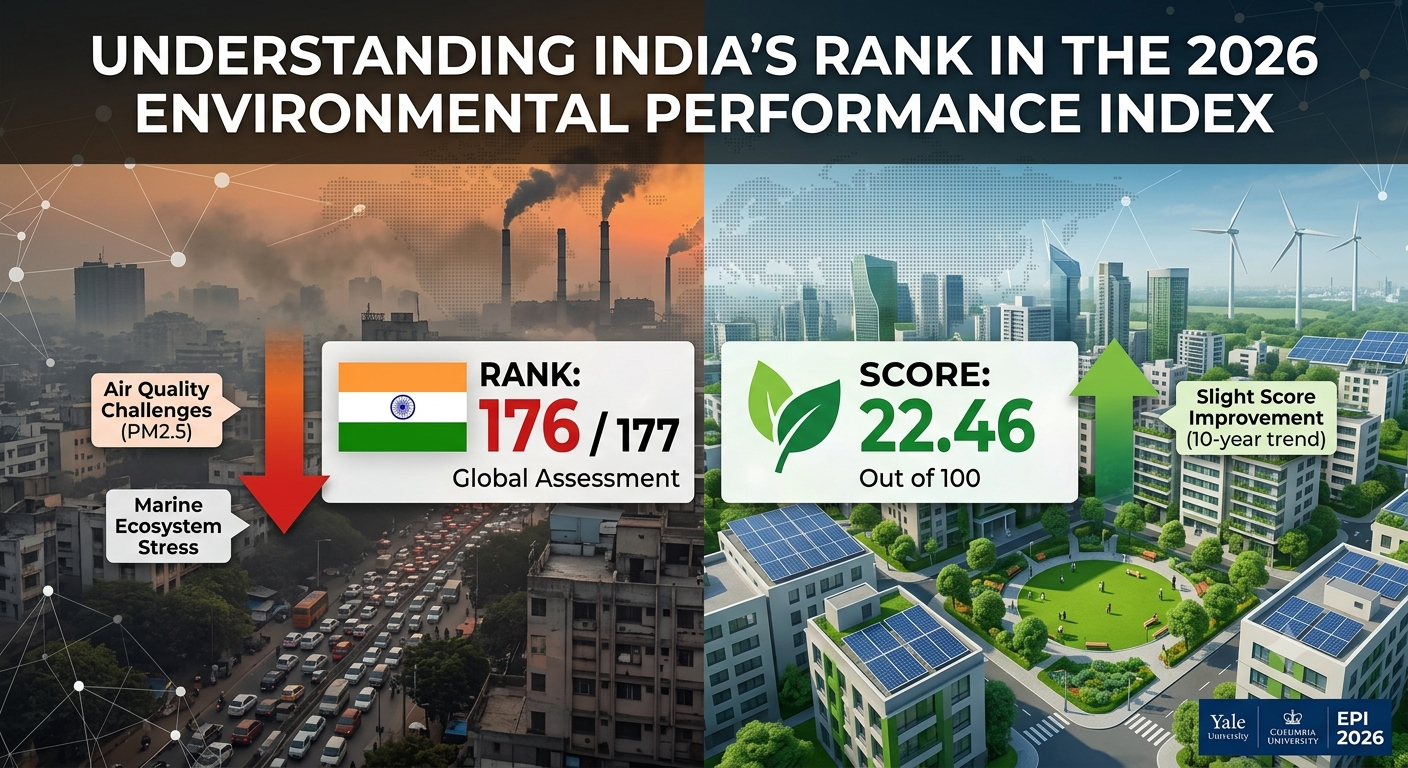
The latest Environmental Performance Index (EPI) for 2026 has been published, offering a global snapshot of how well countries are protecting the environment. Created by researchers at Yale and Columbia Universities, this index ranks nations based on their efforts in sustainability and climate action.
Here is a closer look at where India stands, why it received its current rank, and what the numbers actually mean.
Where Does India Stand in 2026?
In the 2026 report, India ranks 176th out of 177 countries, placing it near the very bottom.
The Score: India received a score of 22.46 out of 100.
Regional Context: Out of the eight South Asian countries measured, India came in last.
The Bottom Rank: The only country ranking lower than India this year is Laos.
While these figures might sound alarming, they actually represent a small step forward. In 2022, India was ranked dead last at 180th. Over the past ten years, India has managed to slightly improve its overall score. Furthermore, while the country is still producing greenhouse gases, the speed at which these emissions are growing has started to slow down.
Breaking Down the Performance
The EPI grades countries on a few major categories. Here is how India scored in the key areas:
Environmental Health: Ranks 174th.
Ecosystem Vitality: Ranks 171st (showing some gradual improvement).
Climate Change Mitigation: Ranks 130th, which is India’s strongest category in the index.
Why is the Ranking So Low?
A few major challenges keep India at the bottom of the list:
Growing Pains: As a rapidly developing country, India is constantly balancing economic growth with environmental protection. Building new industries and infrastructure naturally leads to higher pollution levels.
Air Quality: Over the last decade, there has been a concerning increase in public exposure to harmful air pollutants, such as carbon monoxide and sulfur dioxide.
Marine Issues: India’s marine ecosystems are struggling. The protection of marine areas has declined, and overfishing has disrupted the food chain, which in turn harms the ocean’s ability to naturally absorb carbon.
How Did the Government React?
When India ranked last in 2022, the government strongly pushed back, arguing that the report was unscientific and unfairly punished developing nations that are still building their economies. The scientists behind the EPI defended their methods, stating that the index is designed to measure current, real-world environmental health. Today, there is a general acceptance that while different reports use different measuring sticks, India has significant work to do to improve its environmental footprint.
Who Are the Top Performers?
To understand what it takes to score well, here is a look at the countries leading the 2026 index:
Estonia: Took the number one spot by drastically cutting emissions after shutting down heavy fossil fuel plants.
Luxembourg: Scored high for doing an excellent job protecting its natural biodiversity.
United Kingdom: Ranked near the top by moving toward eco-friendly farming and reducing indoor air pollution.
Finland & Netherlands: Both stood out for their clean energy use, strict water safety rules, and investments in carbon-capture technology.