

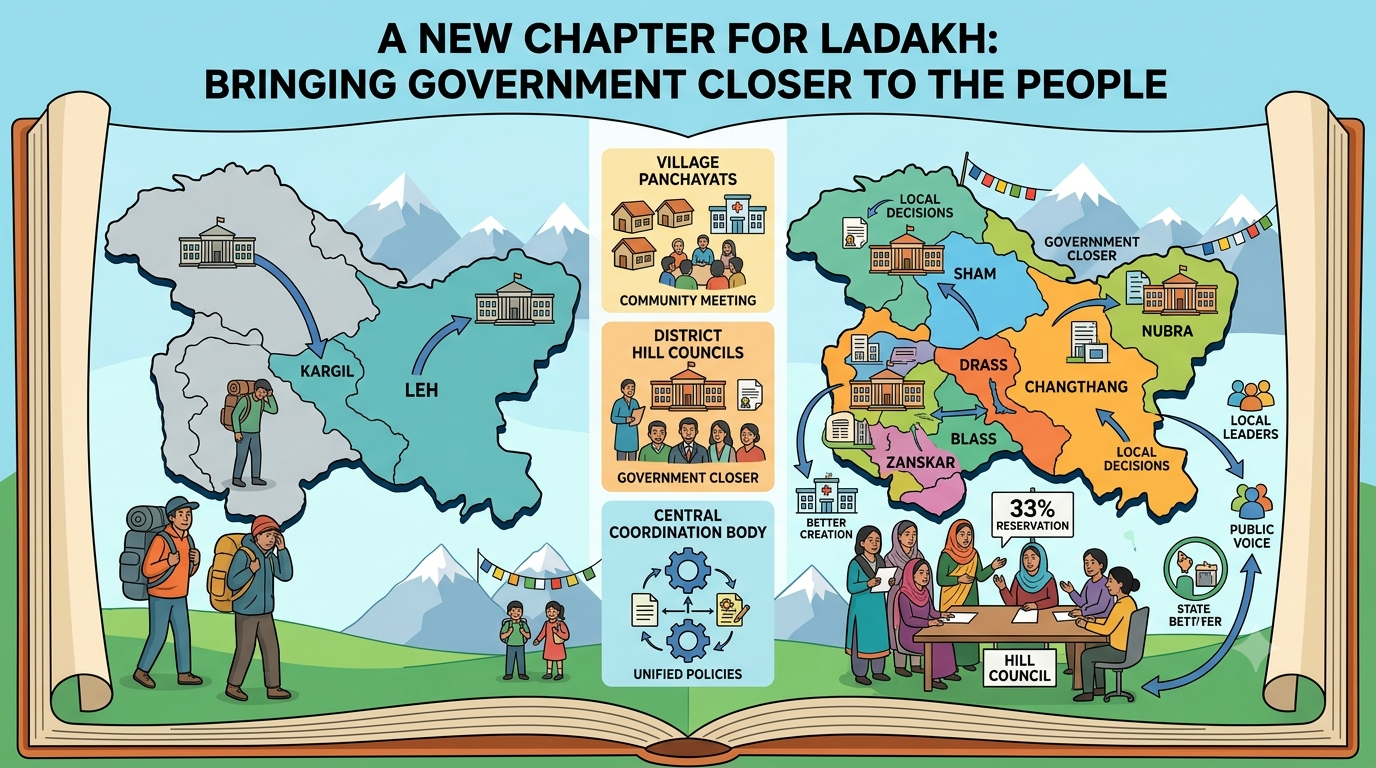
Ladakh is going through a massive and exciting change. For a long time, this huge and culturally rich region only had two main districts. Now, it is being expanded into seven districts. Even more importantly, each of these seven areas will get its own local decision-making body, known as a Hill Council.
This means that people living in newly formed districts—like Zanskar, Nubra, and Drass—will finally have the power to make choices about their own local development, schools, hospitals, and jobs.
Power to the Grassroots
In the past, the lack of local government offices was a huge burden. A person living in a remote village might have had to travel an entire day just to submit a basic application at a government office in Kargil or Leh.
With the creation of these new districts and councils, government services will now be right at the people’s doorstep. Instead of relying on officials who are far away, local communities will elect their own representatives. These local leaders will know exactly what their specific towns and villages need and can spend budgets on the right projects.
A Historic Win for Women
One of the most powerful changes in this new setup is a strict rule that reserves 33% of council seats for women.
Historically, women in Ladakh have not had much representation when it comes to high-level political decisions. This new rule guarantees that women will finally have a strong, clear voice in shaping the future of their communities. Experts believe this will deeply empower minority groups and ensure that local policies are fair and balanced.
How the New System Will Work
To make sure these seven districts work together without any confusion, a smart three-level system is being put in place:
Village Panchayats: These will handle everyday, highly local village matters.
District Hill Councils: These elected groups will handle the budget, infrastructure, and specific planning for their individual districts.
A Central Coordination Body: To prevent a situation where every district has completely different rules, a top-level committee will be formed. This group will create unified policies for big issues like land management and employment across all of Ladakh.
What to Expect in the Coming Years
Experts and local leaders are very hopeful about what this means for Ladakh’s future.
Because local areas will soon be able to manage their own development, towns are expected to see better schools, improved roads, and more local jobs. This means young people will no longer be forced to move away from their home villages just to find a good education or a decent paycheck. Ultimately, this new system is a major step toward a more developed, self-reliant, and thriving Ladakh.