




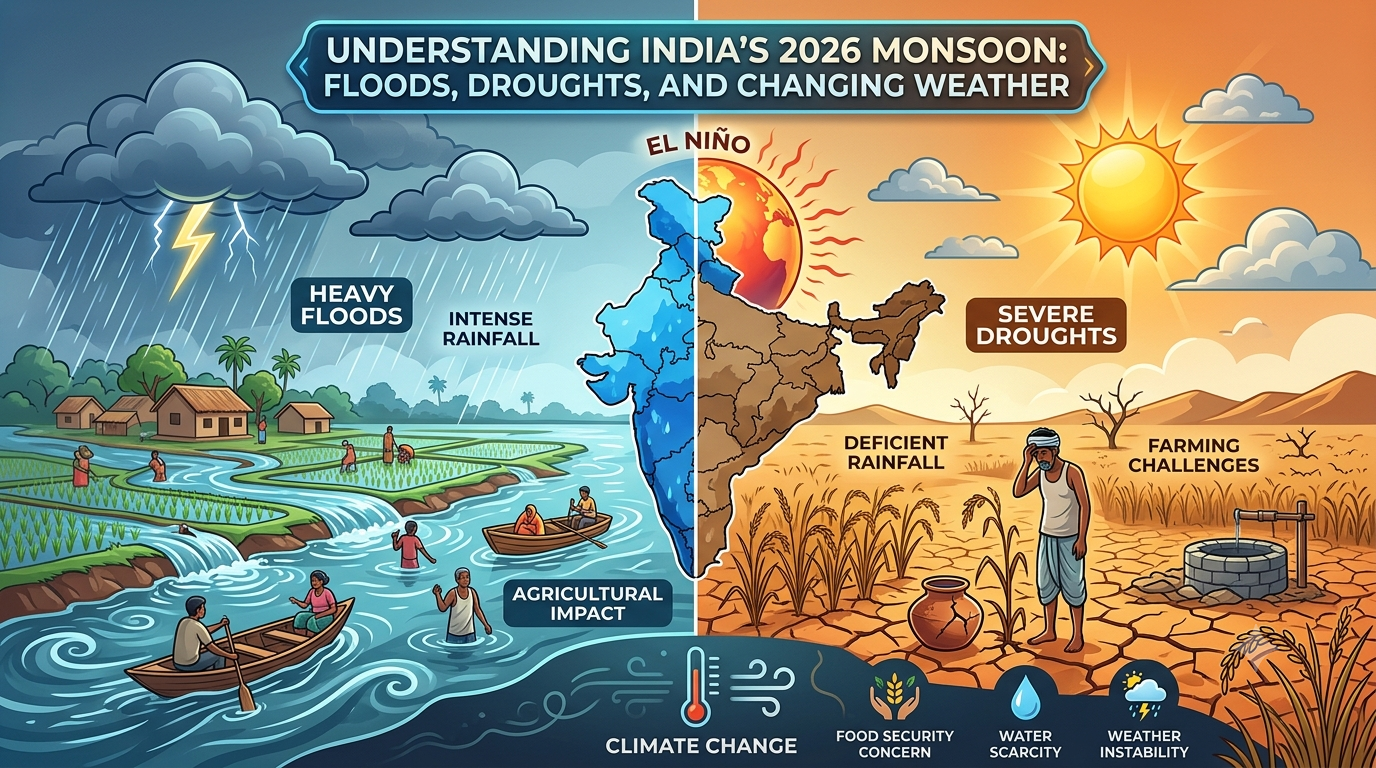
The 2026 summer monsoon in India was a season of extremes. While some parts of the country dealt with heavy floods, others faced dry, drought-like conditions. By the time the season ended in September, India had received 13% less rain than it normally does.
According to weather experts and scientists, this unpredictable weather is the result of global climate patterns mixing with long-term climate change.
Where Did It Rain?
Normally, India expects about 868 mm of rain during the summer monsoon, but this year it only received around 759 mm. However, this shortage was not the same everywhere:
The South and Northeast: These areas suffered the most. Southern states got 24% less rain than usual, and the Northeast was short by 26%.
Central and Northwest India: These regions had a much better season, missing only 3% to 6% of their normal rain. Some northwestern areas even experienced sudden, heavy downpours that led to localized flooding.
This means that while half the country was struggling with dry fields, the other half was managing excess water.
The Reasons Behind the Dry Spell
Experts point to two main reasons for this year’s strange weather:
The El Niño Effect
El Niño is a weather event where the water in the Pacific Ocean gets unusually warm. This warming messes with the wind patterns that carry rain clouds to India. Whenever an El Niño happens, India usually gets less rain. While it did cause a 13% shortage this year, experts note that it could have been much worse.
Global Warming
The earth is getting warmer, and this is permanently changing how the monsoon behaves. Instead of arriving on time and raining steadily over a few months, the rain is becoming unpredictable. This year, the monsoon arrived late, took a long break in August, and then dumped heavy rain at the very end of September. The rain now tends to fall in short, intense bursts rather than spreading out evenly.
How This Affects Food and Farming
Millions of farmers in India rely entirely on rainwater to grow their crops. The June-to-September season is especially critical for growing rice. Because the southern and eastern parts of the country—where a lot of rice is grown—missed out on so much rain, the rice harvest might be much smaller this year. While other crops like wheat might be fine, a drop in rice production could make it harder to feed everyone.
What Happens Next?
Even though the main summer monsoon is over, coastal areas like Tamil Nadu and Kerala rely on winter rains that fall between October and December. Unfortunately, weather experts believe the El Niño effect will stick around until early 2027. This means the winter rains might also be weak and unpredictable.
As strange and extreme weather becomes a normal part of life, the country will need to find better ways to save water and help farmers adapt to these sudden changes.