




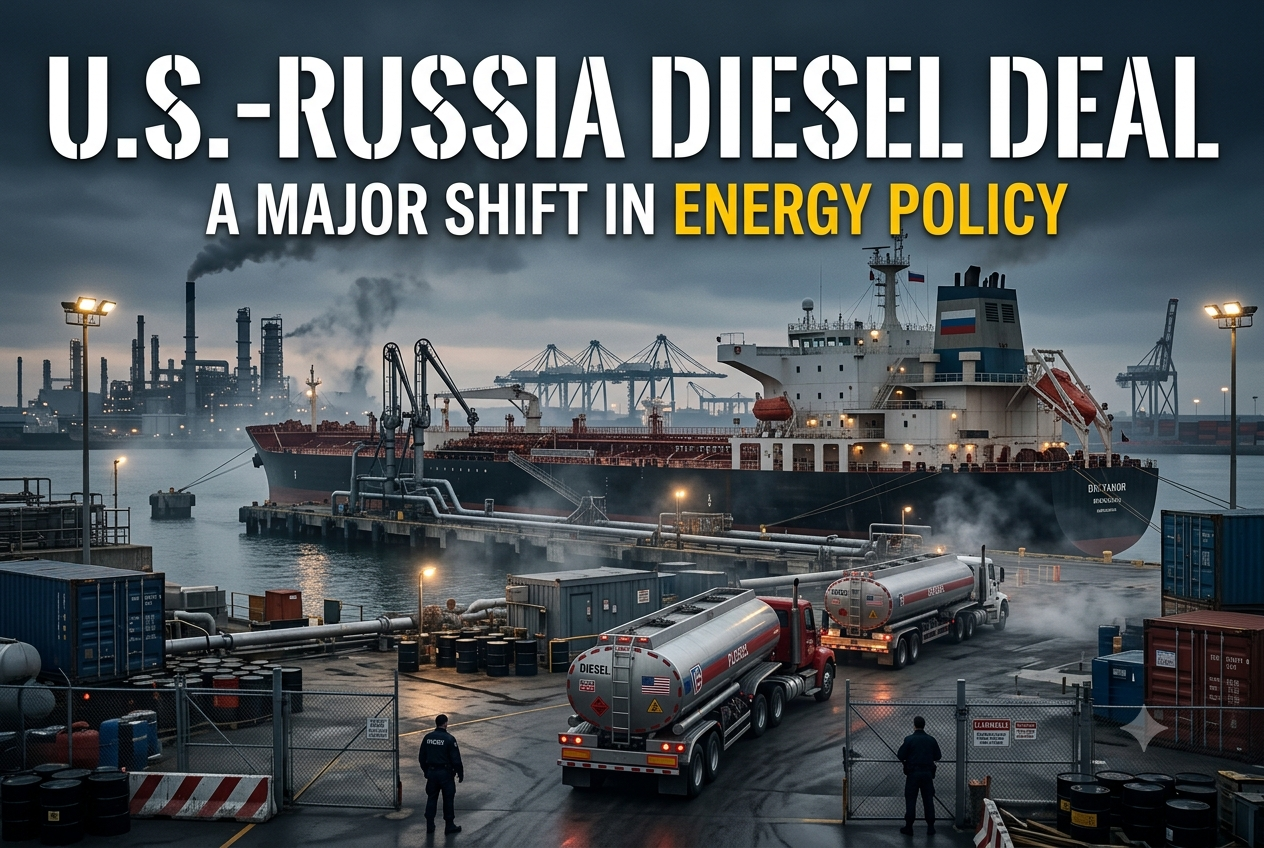
In a surprising reversal of years of U.S. policy, President Donald Trump has struck a deal to obtain diesel directly from Russia. The United States has not imported Russian oil or gas since 2022, making this new agreement a significant shift in international trade and diplomacy. Under the terms of the deal, Russia will immediately supply more than 300,000 tons of diesel, followed by 500,000 tons in November and millions more shortly after.
The Global Diesel Shortage and Economic Pressures
Despite being a top crude oil producer, the United States is facing a severe diesel shortage exacerbated by the ongoing war with Iran. This conflict has caused fuel prices to soar, with the average price of a gallon of diesel recently reaching $6.28. High diesel costs drive up the price of everyday goods, putting immense financial pressure on consumers, farmers, and the trucking industry. With U.S. midterm elections approaching, the administration is pushing to lower these skyrocketing costs to satisfy voters.
International Backlash and Global Impact
The decision to bypass current sanctions and resume trade with Moscow has sparked immediate international criticism, particularly from Ukraine.
Ukrainian leadership strongly condemned the deal, describing it as an investment in the war that will allow the conflict to be prolonged.
Officials argued that easing these trade restrictions plays directly into Russia’s hands, providing funds that will be repaid with “further terror”.
Meanwhile, countries like India are navigating this complex global market by buying raw Russian crude, refining it themselves, and selling the much-needed diesel to Europe and other regions facing shortages.