


The United States and Saudi Arabia have recently agreed on a historic civil nuclear energy deal. This is a massive event that will change global politics and energy markets. But why does an oil-rich nation want nuclear power, and why did the US finally agree to help them?
Here is a simple breakdown of the situation.
Why Does Saudi Arabia Want Nuclear Power?
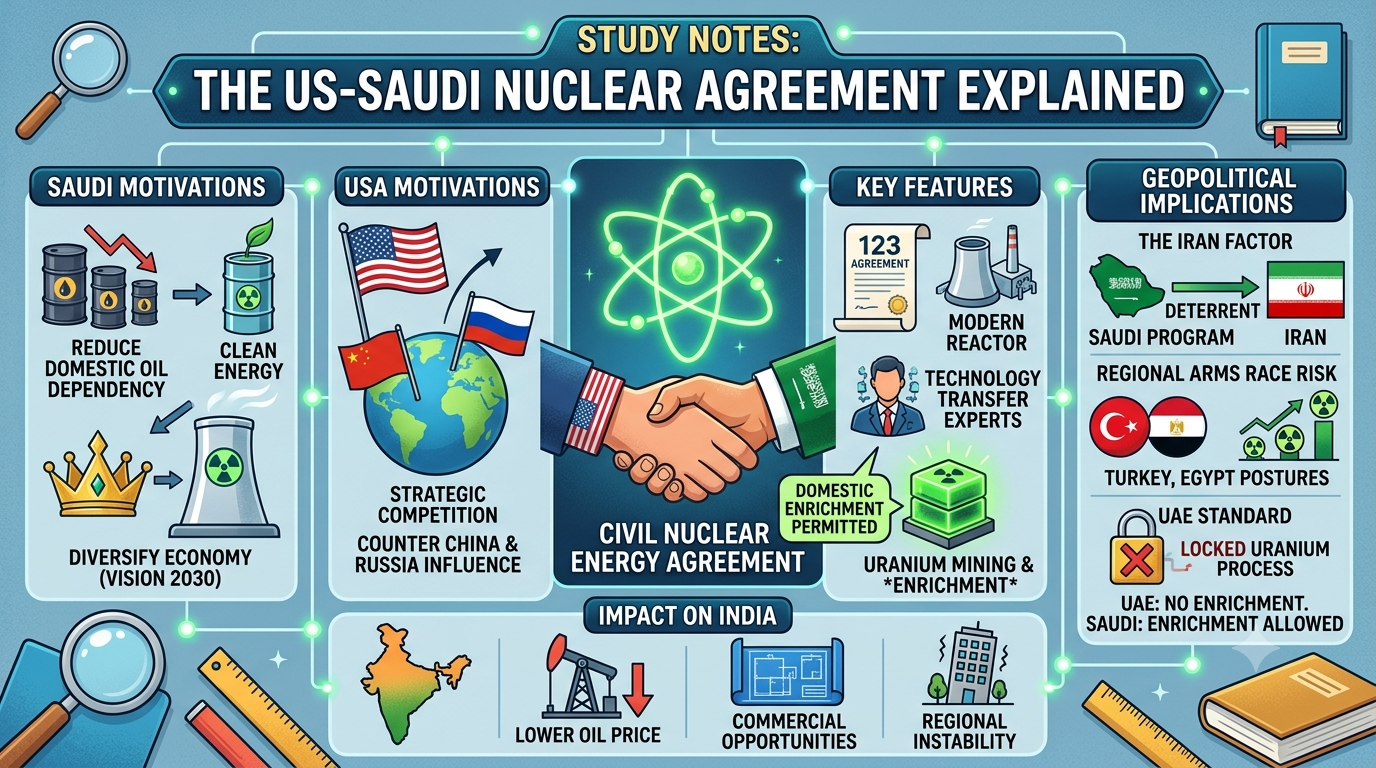
It might seem strange that a country famous for its vast oil reserves wants nuclear energy. The main reason is a long-term economic plan called Vision 2030.
Currently, Saudi Arabia burns a huge amount of its own oil and gas to create electricity for its citizens and industries. By switching to nuclear and renewable energy for domestic use, Saudi Arabia can:
Save its oil to sell to other countries, which brings in more money.
Reduce its heavy reliance on oil as its only source of income.
Use the extra money to grow new industries, like manufacturing and technology.
Why Did the US Delay This Deal for So Long?
Saudi Arabia has wanted nuclear technology for years, but the US kept saying no. The main roadblock was uranium enrichment.
To create nuclear energy, uranium must be processed, or “enriched.”
A low level of enrichment (around 3% to 5%) is used safely for electricity.
A very high level of enrichment (around 90%) is used to build nuclear weapons.
The US wanted Saudi Arabia to promise they would only buy pre-processed fuel from other countries and never enrich uranium themselves. Saudi Arabia refused, stating that as a sovereign nation, they had the right to process their own resources. This disagreement paused the deal for years.
Why Did the US Finally Agree?
The US changed its mind because of growing competition from China and Russia.
China has become a massive trading partner in the Middle East, and Russia is currently one of the world’s top sellers of nuclear reactors. The US government realized that if they refused to work with Saudi Arabia, the Saudis would simply buy nuclear technology from Russia or China instead. To keep their strong relationship and influence in the Middle East, the US decided to make the deal.
What is in the Agreement?
Under standard American laws (known as a 123 Agreement), the US will provide:
Safe Reactors: American companies will help build advanced, highly safe nuclear reactors in Saudi Arabia.
Knowledge Sharing: The US will share engineering skills, design plans, and safety training.
Mining Help: Saudi Arabia recently discovered its own uranium deposits; the US will help them mine and process it.
The Big Exception: The most debated part of this deal is that the US may actually allow Saudi Arabia to enrich uranium on its own soil, stepping away from its past strict rules.
How Will This Affect the World?
This deal will have a huge impact on global security:
The Iran Factor: Iran has been developing its own nuclear program for years. Many experts believe the US is allowing this deal so that Saudi Arabia has a strong defense plan in place just in case Iran ever builds a nuclear weapon.
A Regional Ripple Effect: Other countries in the region, like Turkey and Egypt, might now want their own nuclear technology, which could spark an arms race.
Breaking the Standard: Previously, the United Arab Emirates (UAE) signed a US nuclear deal where they legally promised never to enrich uranium. Saudi Arabia is not making that same promise, which changes the rules of the game in the Middle East.
What Does This Mean for India?
For India, there are both positives and negatives:
Cheaper Oil: If Saudi Arabia uses less oil at home and exports more of it, the global supply of oil goes up. This could lead to lower fuel prices for countries like India.
Business Growth: India has decades of experience in building and running nuclear plants. Indian engineers and companies could get lucrative contracts to help build Saudi Arabia’s new energy infrastructure.
Security Risks: India relies heavily on the Middle East for energy and jobs for its citizens. Any new tension or “arms race” in the region is a serious concern for Indian diplomacy.
Understanding these global shifts helps make sense of international relations and the future of the world’s economy. As always, remember to read the quality and write the article to know the world about you and your knowledge.