




Toys have always been a big part of human history. Even thousands of years ago, children in the Indus Valley Civilization played with small toy carts made of clay and wood. For a long time, the type of toy a child had depended on their family’s wealth—rich kids played with gold and silver toys, while others played with wooden or clay ones.
Today, India’s toy market is writing a completely different story. The country has transformed from a place that heavily imported foreign toys into a booming global manufacturing hub.
A Massive Boom in Toy Making
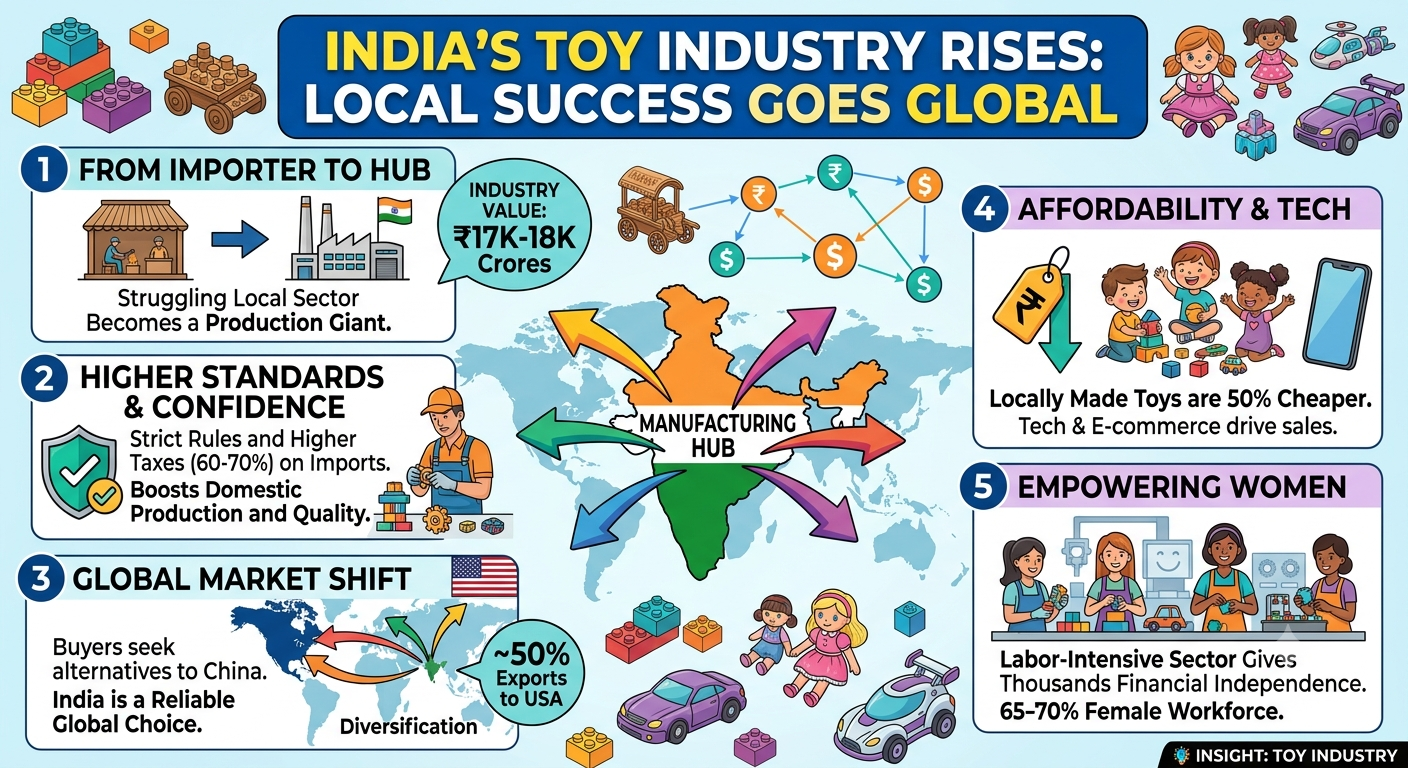
The Indian toy market is growing incredibly fast. Today, the entire industry is worth between ₹17,000 and ₹18,000 crores. Over the last seven to eight years, India’s toy exports have been growing at a steady rate of 11.5% every year, which is much faster than the rest of the world.
Instead of buying toys from other countries, India is now selling them to the world. In fact, nearly half of the toys exported from India end up in the hands of children in the United States.
Why Is the Indian Toy Market Growing So Fast?
This sudden explosion in toy manufacturing happened because of a few major changes:
1. Stricter Rules and Quality Checks
Around 2019-2020, the Indian government made a massive change by setting up strict quality rules for imported toys. They also raised import taxes by 60% to 70%. This stopped cheap, low-quality toys from flooding the market and gave local Indian businesses the confidence to make their own.
2. Global Buyers Looking for Options
For a long time, China made almost all the world’s toys. However, due to global political tensions, international companies are trying to diversify and find alternatives to China. Because India is politically stable and has a large workforce, global buyers (especially from the US) are increasingly choosing India to make their products.
3. Toys Becoming Much Cheaper
By making toys locally instead of importing them, prices have dropped significantly for regular families. For example, a battery-powered toy car that used to be imported from China and sold for ₹7,000 is now made in India with better quality for less than ₹4,000. Since families have more spending money, this drop in price has boosted sales.
4. Smart Phones and E-commerce
As more families move to cities, children have less space to play outside, increasing the need for toys at home. On top of that, smartphones and shopping apps make it incredibly easy for kids to see a toy and for parents to buy it instantly, leading to a huge boost in sales.
Empowering Women Workers
One of the best parts of the toy industry is how much it helps women. Toy factories require a lot of hands-on work, but the skills needed can be taught very quickly.
Major toy manufacturers report that between 65% and 70% of their factory workers are women. This industry has given thousands of women a steady job and financial independence.
The Future: What’s Next?
The progress so far has been historic, but the industry wants to double in size over the next five years. To do that, experts say Indian toy makers need to focus on three things:
More Creativity and Design (R&D): Companies need to spend more time inventing brand-new toy concepts, fabric choices, and designs.
Modern Technology: Factories must start using robotics and advanced machinery to keep production costs low and quality high.
Embracing Tech Toys: Since modern kids love electronics, blending traditional toys with digital elements will be key to future success.
Thanks to government support, local pride, and a focus on high standards, India’s toy story is just getting started.