




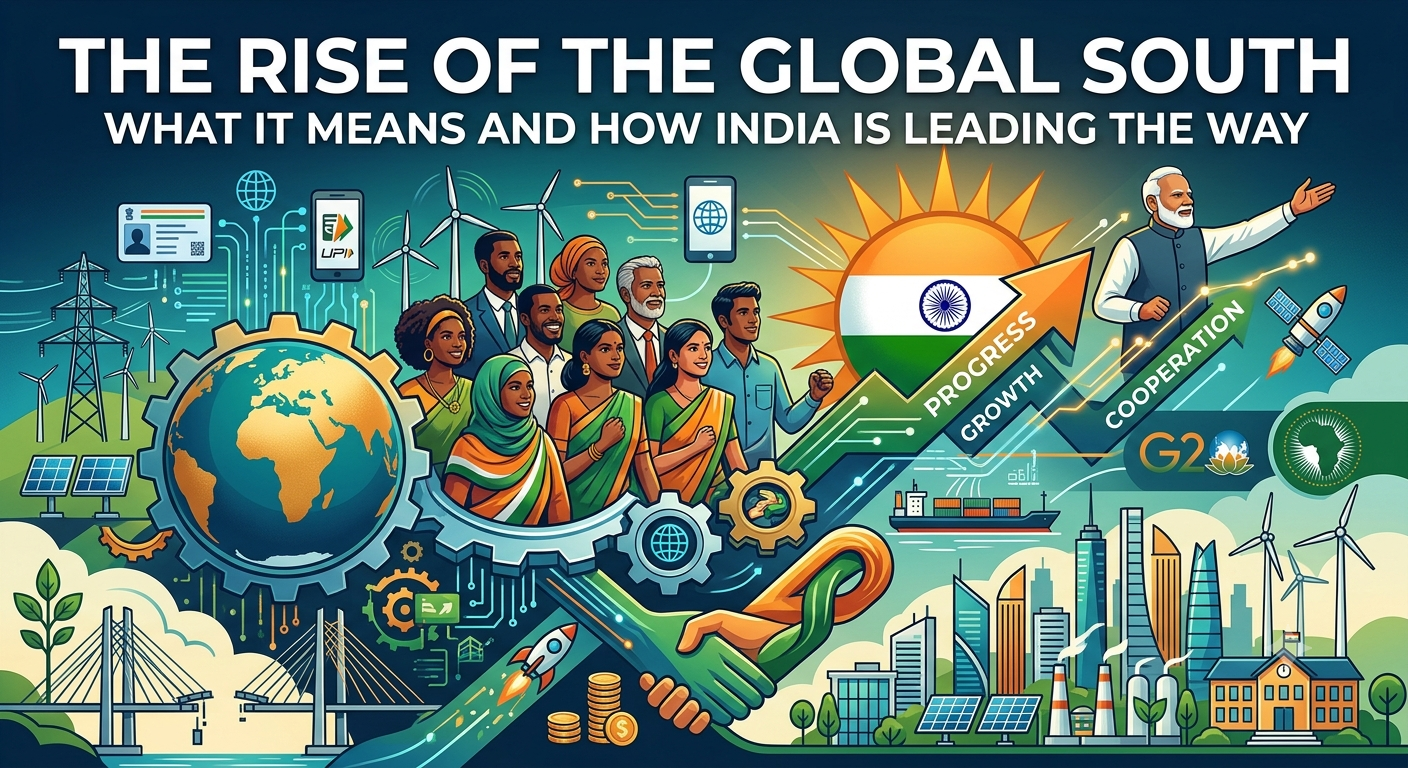
In recent years, you might have heard the term “Global South” popping up in international news, at the United Nations, and during big global meetings like the G20. But what exactly does it mean, what problems does this group face, and why is India playing such a big role in it?
What is the “Global South”?
Despite how it sounds, the Global South isn’t just about geography. For example, India is in the Northern Hemisphere but is a major voice for the Global South.
Instead, it is a term used to describe developing and emerging countries across Asia, Africa, Latin America, and island nations. While these countries are located in different parts of the world, they share a common history and face similar struggles as they try to grow their economies. However, their needs aren’t all exactly the same—a massive country like Brazil has very different daily challenges than a tiny island nation.
The Big Challenges They Face
Even though these countries produce a lot of the world’s goods and have huge populations, they are dealing with several major hurdles:
Need for Funds: To grow, these nations need to build basic things like roads, schools, hospitals, and power plants. But borrowing money is often too expensive, leaving them in heavy debt.
Climate Change: Global warming is a huge threat to their farming and cities. They want to switch to clean energy, but they need the technology and money to do it without hurting their economic growth.
The Tech Gap: While rich countries are moving fast with Artificial Intelligence (AI) and advanced computers, many developing nations are still trying to get basic, reliable internet to their people.
How India is Helping
India has a long history of standing up for developing nations, but today, it is doing more than just talking—it is taking real action.
Building Infrastructure: India has provided billions of dollars in affordable loans to over 60 countries. This money helps build railways, hospitals, and disaster relief centers.
Sharing Digital Success: India has built amazing digital systems for its own citizens, like digital IDs (Aadhaar) and easy online payments (UPI). Now, India has set up a special fund to help other developing countries build their own digital systems safely and cheaply.
Gathering Leaders: In 2023, India hosted a massive online event called the “Voice of Global South Summit,” inviting over 120 countries to share their problems so India could take their message to the rest of the world.
Making Real Changes at the G20
A big complaint from the Global South is that the world’s biggest organizations make rules without listening to them. When India hosted the G20 (a group of the world’s biggest economies) in 2023, it made sure the developing world was heard.
The biggest victory during this time was convincing the G20 to accept the African Union as a permanent member. This finally gave the continent of Africa a powerful seat at the table where global economic rules are made.
What Comes Next?
The Global South is no longer just waiting for help from rich countries; they are doing business with each other. Trade between these developing nations has skyrocketed from around $600 billion in the 1990s to over $5 trillion today.
Looking to the future, India’s plan to help the Global South focuses on a few simple goals:
Fair Trade: Doing more business that benefits everyone involved.
Technology: Sharing computer and internet skills so no one is left behind.
Healthcare: Providing affordable medicines and medical training.
Clean Energy: Helping countries grow their economies without destroying the environment.
A Fair World: Continuing to fight for rules that treat developing countries fairly.
The Bottom Line
The story of the Global South is about a changing world. It is the sound of developing nations demanding that their voices, problems, and ideas be treated with respect. As this group becomes more powerful, India is acting as a friend, a guide, and a loud voice making sure the rest of the world listens.