



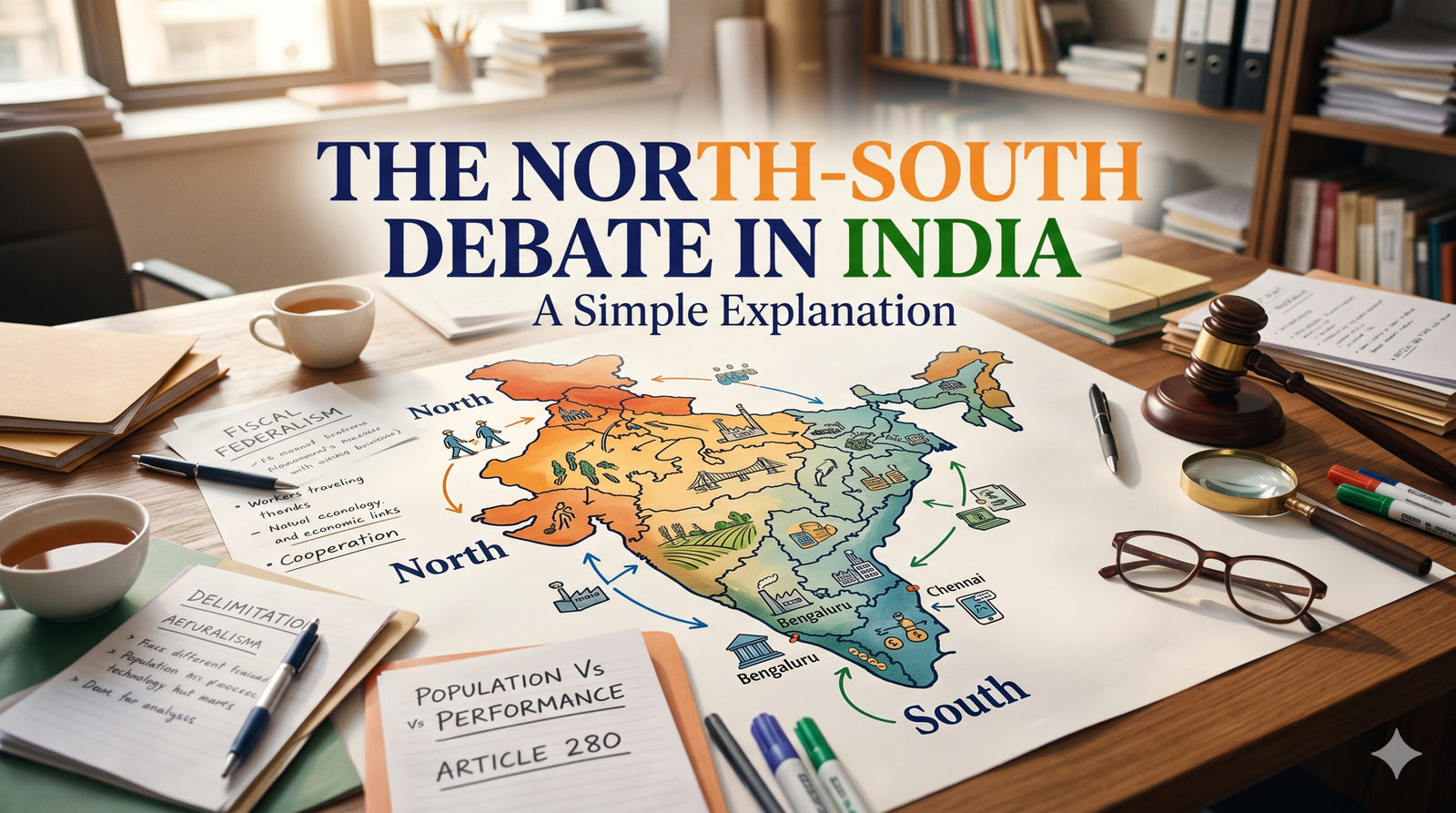
India is a massive country where life changes drastically depending on where you live. For decades, the government asked all states to improve healthcare, educate their citizens, and control population growth. States in Southern India largely succeeded at these goals. However, this success has sparked a very complicated debate. Some successful states feel they are being punished for doing a good job, while highly populated Northern states argue they urgently need more national resources to help their people.
This divide is about much more than which region has better roads or more money. It comes down to a struggle over political power, tax money, and fairness.
The Fight Over Political Power
In a democracy, the number of politicians a state sends to Parliament is based on its population. Because Southern states successfully followed government advice to control their population growth, their populations are now much smaller compared to Northern states like Uttar Pradesh or Bihar.
The government regularly updates political boundaries and seat numbers in a process called “delimitation.” If the number of Parliament seats is updated based on today’s population numbers, the South will lose political power, and the North will gain it. This creates a difficult situation. Southern states ask why they should lose their political voice as a reward for controlling their population. At the same time, Northern states ask why their millions of citizens should be denied equal representation just because they live in a crowded state.
The Fight Over Tax Money
The central government collects taxes from all over the country and shares a portion of that money back with the states. Southern states have strong industries—like technology and automobile manufacturing—and contribute a massive amount of money to the national economy.
However, when the government gives money back, a larger share goes to the Northern states. The reason is simple: the North has more people and greater poverty, meaning they desperately need funds to build basic necessities like schools, hospitals, and roads. While it makes sense for a country to use its wealth to help poorer areas develop, Southern states feel frustrated. They want their hard work and massive economic contributions to be recognized and rewarded, rather than feeling like their money is simply being given away.
Workers and Local Languages
This debate also affects everyday people through jobs and language. Millions of workers from Northern India travel to the South to find work in factories, hotels, and construction. This is a mutually beneficial relationship. Southern businesses desperately need the workers to keep their economies running, and Northern workers need the jobs to support their families back home.
Language is another deeply personal part of this divide. India is home to dozens of distinct languages. Southern states are incredibly proud of their native languages—like Tamil, Telugu, Malayalam, and Kannada. They want to protect their local cultures and often push back against national education policies out of fear that Hindi is being forced upon them.
India is far too complex to just split into a “rich South” and a “poor North.” Every state has its own unique strengths and struggles. The real challenge for the country is finding a fair balance. The government must figure out how to give poorer, heavily populated states the financial help they need to improve, without making the successful states feel like their achievements are a disadvantage. True unity in India means respecting the different needs, languages, and histories of every state while building a system everyone can trust.