




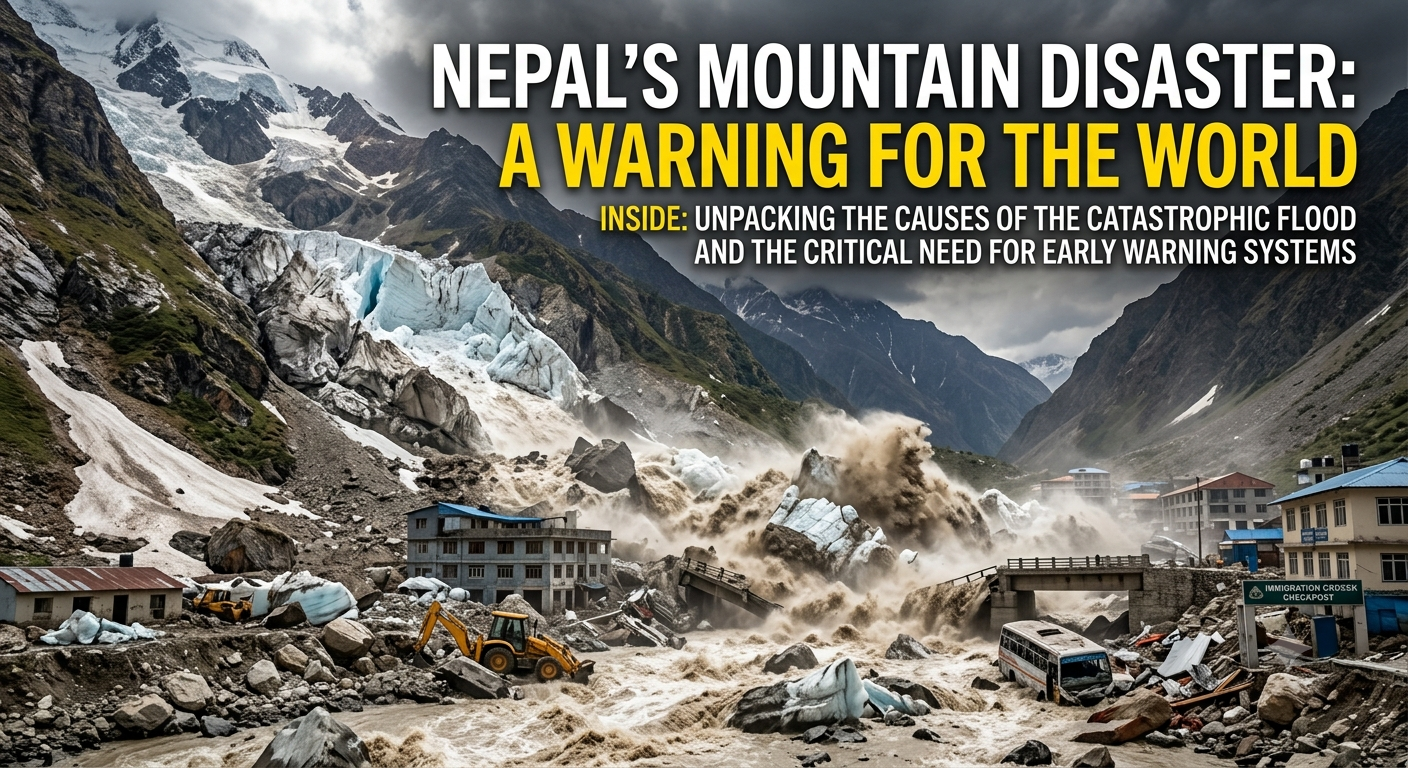
Recently, a terrifying disaster struck Nepal, looking much like a scene from an action movie. A massive flood of water and mud destroyed a major immigration checkpoint near the Nepal-China border. This area is the main entry point for people traveling to Kailash Mansarovar. Sadly, many tourists, including dozens of Indians, lost their lives when the building was washed away.
The Heavy Losses
The damage to human life and property has been huge. Thousands of people are reported missing across Nepal and neighboring Tibet, and the confirmed death toll continues to rise as rescue teams search the rivers. Tourists from countries all over the world were caught in the disaster.
The rushing water also changed the shape of the land. Satellite pictures show that the river’s path is completely different now. Dozens of bridges were wiped out, kilometers of roads vanished, and many hydropower plants were destroyed, leaving a large part of Nepal without electricity.
What Really Caused It?
At first, machines recorded shaking in the ground, making people think an earthquake had caused the flood. However, scientists later discovered that the shaking was actually caused by a giant landslide.
Because the Earth is getting warmer (global warming), the deep ice holding the high mountains together is slowly melting. A massive piece of a glacier broke off from a height of about 17,000 feet and crashed down the mountain. The sheer force of this falling rock and ice created a 30-meter-high wave of mud and debris. Moving incredibly fast down the narrow river valleys, it swallowed everything in its path. Experts say this wasn’t caused by heavy rain, but directly by rising temperatures melting the mountain’s ice.
The Problem with No Warning
One of the most heartbreaking parts of this tragedy is that people did not know it was coming. Even though we have advanced technology today, there was no alert system set up between the higher mountain regions and the towns below. By the time local police realized what was happening and tried to warn people, it was too late.
The Ripple Effect in India
Water flows downhill, which means the danger didn’t stop in Nepal. The floodwaters rushed into rivers that flow into India, causing water levels to spike in states like Bihar and Uttar Pradesh. To manage the massive amount of water, authorities had to open dam gates, and several Indian districts were put on high alert.
India immediately stepped up to help its neighbor, sending rescue teams, air force planes, and tons of relief supplies to Nepal.
A Lesson We Must Learn
This disaster is a loud warning bell for the future. There are dozens of dangerous, melting glacial lakes in the Himalayas across China, Nepal, and India.
We can no longer ignore climate change. When we blindly build big projects like dams in fragile mountain areas without thinking about the environment, we put thousands of lives at risk. Going forward, countries need to work together to protect nature and build fast early-warning systems. If we don’t, these types of disasters will only happen more often.