




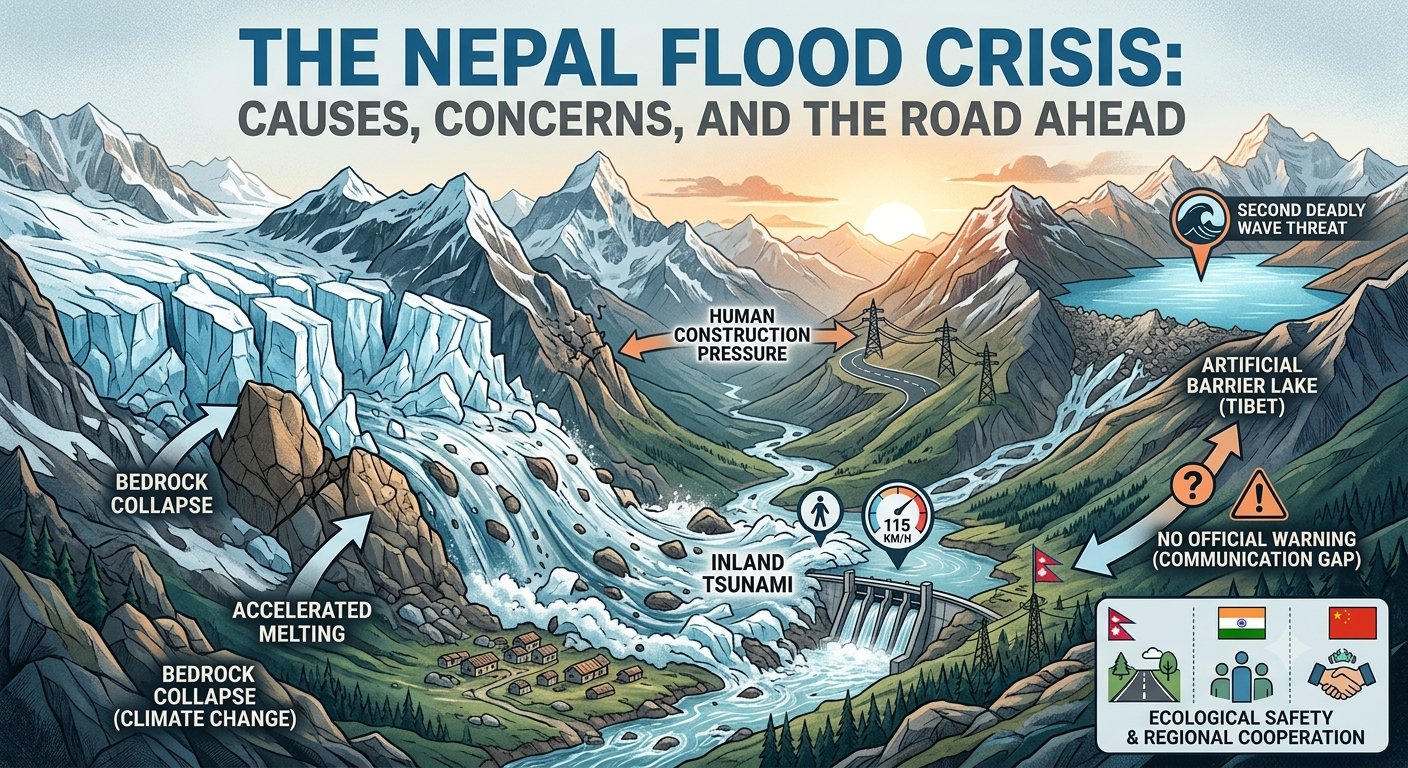
Nepal is currently facing a massive environmental and human tragedy. Recent floods have wiped out entire villages, border posts, and power stations. However, this is not just a standard natural disaster. It raises serious questions about climate change, dangerous construction in the mountains, and international cooperation.
Here is a simple breakdown of what happened, why it matters, and the looming risks for the region.
1. What Exactly Happened?
Experts believe the disaster started when the rock underneath a high-altitude glacier suddenly collapsed. This triggered a massive avalanche of ice, rock, and water that crashed into the valleys below.
The Speed and Size: The water moved like an inland tsunami at speeds up to 115 km/h. In some places, the water level rose over 100 meters, giving people in its path almost no time to run.
The Toll: Over 500 people have tragically lost their lives, and more than 1,000 remain missing across Nepal and Tibet. The financial damage is already estimated at over $1.3 billion.
2. The Threat of a Second Wave
The danger is not over. High up in Tibet, debris from the disaster has blocked rivers, creating a massive artificial lake. This temporary lake is currently holding millions of cubic meters of water and is starting to overflow. If this barrier breaks suddenly, it could send a second deadly wave of water crashing down into Nepal.
3. Why Are These Disasters Happening?
This tragedy is the result of three dangerous factors combining:
Shifting Mountains: The Himalayas are young mountains that are constantly moving, which naturally causes earthquakes and instability.
Climate Change: Ice in this region is melting 65% faster than in previous decades. As the permanently frozen ground thaws, the mountainsides become weak and prone to collapsing.
Human Construction: Building large dams, roads, and tunnels in these fragile, high-altitude zones puts immense stress on the environment.
4. The Dispute with China
The source of the flood was in Tibet, which is controlled by China. Reports suggest that the floodwaters took about 45 minutes to reach Nepal, but Nepal never received an official warning. While China denies ignoring the threat, they have tightly controlled the flow of information and censored images of the disaster online. This situation highlights the urgent need for a shared, automated early-warning system between neighboring countries to save lives.
5. A Warning for the Future
This disaster is a massive red flag for future projects. China is currently planning to build the Medog Dam—expected to be the world’s largest—on the Brahmaputra River. Building a massive dam in an area heavily prone to earthquakes and landslides is incredibly risky. If a failure were to happen there, it could endanger millions of lives downstream in both India and Nepal.
Summary
The devastating floods in Nepal are a tragic reminder that nature cannot be forced to adapt to human ambitions. Countries sharing the Himalayas must prioritize ecological safety and work together on warning systems, rather than competing over aggressive infrastructure projects.
Would you like to know more about how automated flood early-warning systems work?