




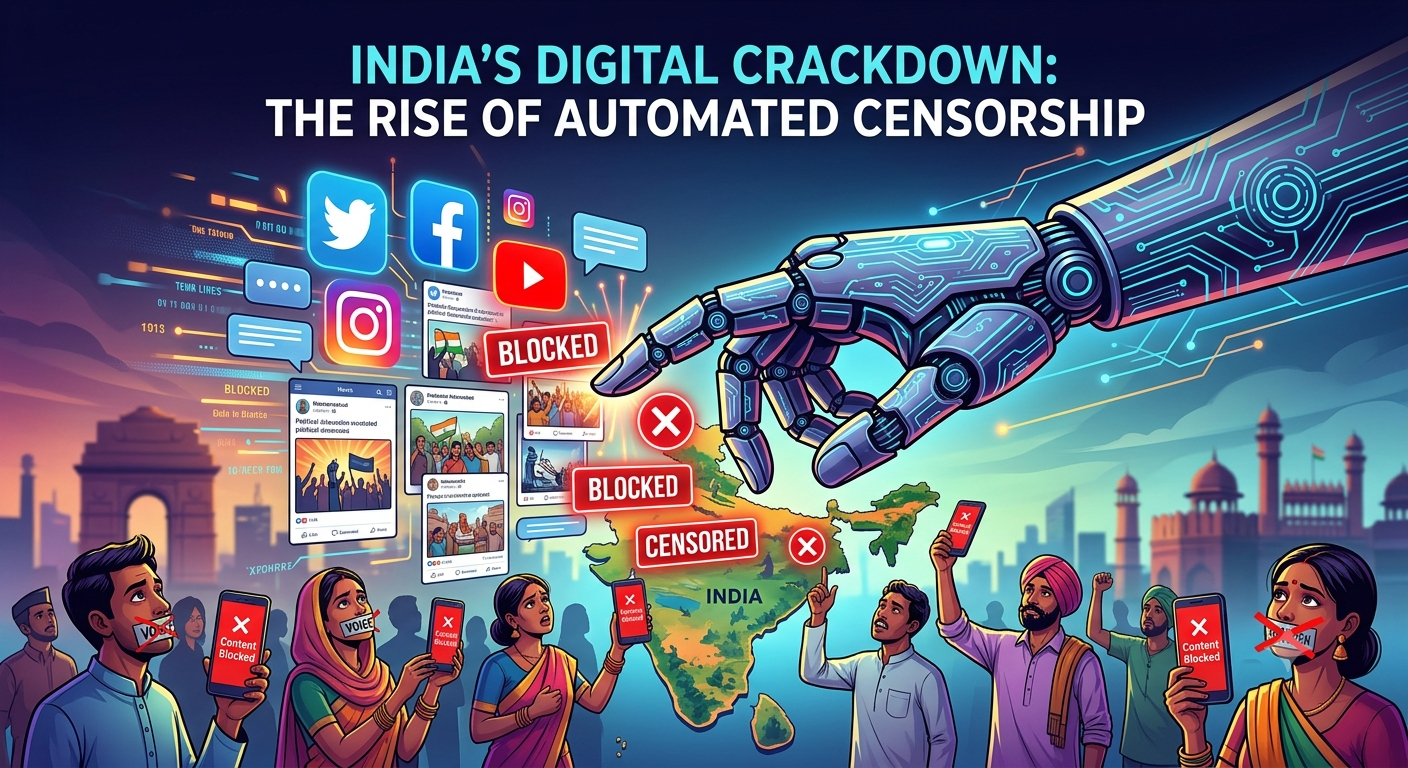
The sheer number of posts being hidden or removed has exploded recently. To put it in perspective: a year or so ago, the government issued only about 200 orders to block content over an entire year. Recently, over a span of just five months, that number skyrocketed to almost 200,000.
That means platforms are seeing over 1,000 takedown requests every single day. Instagram is taking the biggest hit, handling about half of these complaints. Much of the content being targeted involves people disagreeing with policies, political discussions, or student protests.
The Two Rules Driving the Blockdowns
To understand why companies are deleting so much content, we have to look at two main internet laws in India:
1. The “Safety Net” Rule (Section 79): Normally, social media companies aren’t legally blamed for what you or I post. This is their legal “safety net.” However, the rule says that if the government tells them a post is illegal, the platform must take it down almost immediately. If they don’t, they lose their safety net and can be sued or punished.
2. The Government’s Power (Section 69A): The government is allowed to order content to be blocked if it threatens national security, defense, or public peace. But, the law also says there is supposed to be a proper review and a hearing before something is permanently removed.
Why Computers Took Over
Because social media platforms are suddenly getting thousands of takedown requests a day, they don’t have enough human workers to read, review, and hold hearings for every single post. Because they are terrified of losing their legal “safety net,” they have handed the job over to automated computer algorithms.
The Problem with Robot Censors
The biggest issue with having a computer delete posts is that computers do not understand “context.”
For example, a teacher might post an educational article explaining a “student protest.” A human would see it’s just a lesson. But an automated system looking for the words “student protest” will just delete it automatically.
This creates a culture of fear. When people see harmless posts disappearing without explanation, they become afraid to share their honest opinions. Over ten years ago, the Supreme Court ruled that removing content requires careful human review to protect free speech. Today, this automated system is bypassing those safety checks.
How Other Countries Handle It
Other places around the world also make social media companies take down bad posts quickly, but their rules are much clearer:
The European Union forces companies to take down posts in just 1 hour—but only if it is proven terrorist content.
Germany gives platforms 24 hours to remove content, but only if it is clearly and obviously illegal.
In India, the reasons for taking down a post are much broader. When the rules are broad and computers are in charge, a lot of innocent posts get caught in the crossfire.
The Good vs. The Bad
Why this system is helpful:
Using fast computer algorithms means authorities can instantly delete truly dangerous things, like fake videos (deepfakes), fast-spreading lies, and cybercrimes. It forces big tech companies to finally take local laws seriously.
Why this system is harmful:
Relying entirely on machines leads to unfair censorship. It secretly silences political disagreements and takes away our basic right to express ourselves without any transparent explanation.
How Do We Fix It?
We don’t need to stop using technology, but we need to use it fairly. To protect the internet, a few simple changes are needed:
Bring back humans: Important decisions about free speech shouldn’t be left to algorithms. Real people need to review these posts to understand their context.
The right to argue back: If someone’s post is deleted, they should have a clear and easy way to appeal the decision.
Match the speed to the danger: Only the absolute worst content (like severe threats) should be deleted instantly by machines. Everything else should be reviewed normally.
Be open about it: Authorities and tech companies need to publish clear reports showing exactly what is being blocked and why.
Keeping the internet safe is important, but it shouldn’t come at the cost of our right to speak our minds freely.