


South Asia and the Middle East are experiencing a significant geopolitical realignment. During recent escalations between the United States and Iran, Pakistan stepped into a surprising new role: international mediator. Long accused by neighbors and the international community of harboring extremist elements, Islamabad has successfully reshaped its global image into that of a peacemaker. This sudden transformation has prompted deep reflection within Indian diplomatic circles regarding their own strategic trajectory.
Here is an analysis of how Pakistan engineered its return to global prominence and the subsequent implications for India.
From Isolation to Mediation
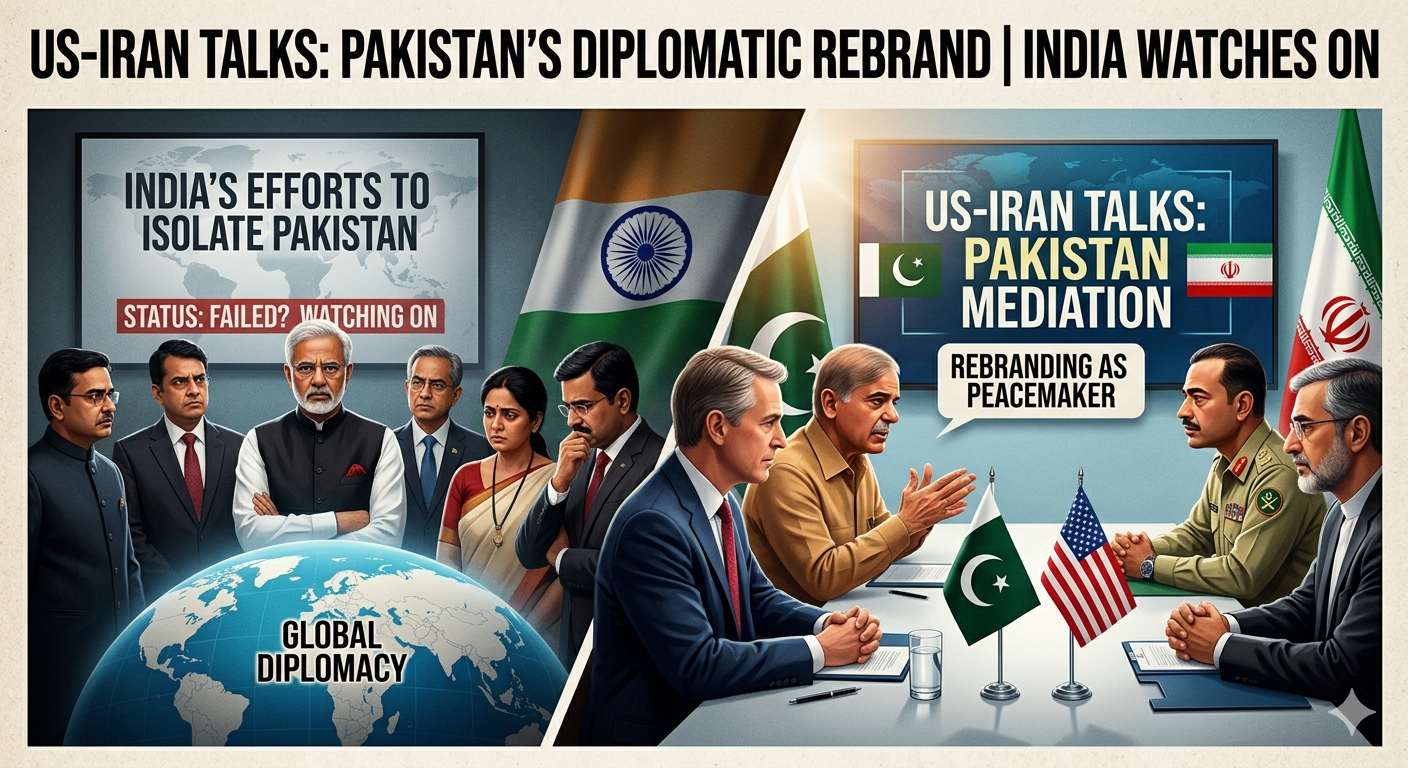
Following a period of intense threats, the US recently extended its ceasefire with Iran indefinitely, with the US administration explicitly acknowledging Islamabad’s role in facilitating this pause. Pakistani leadership—namely Prime Minister Shehbaz Sharif and Army Chief Asim Munir—have effectively positioned themselves as essential bridges between Tehran and Washington.
Although Indian officials have publicly downplayed this development as mere brokering, the undeniable reality is that Pakistan has navigated its way out of diplomatic isolation. This achievement is especially notable given that it occurred roughly a year following the devastating 2025 Pahalgam terror incident.
The Aftermath of the Pahalgam Incident
The April 2025 attack in Pahalgam, Jammu & Kashmir, resulted in the tragic loss of 26 civilian lives. The Indian government retaliated swiftly with “Operation Sindoor” in early May, neutralizing multiple terror training facilities across the border in under half an hour.
Accompanying this military action was a vast diplomatic offensive; New Delhi dispatched dozens of envoys globally to highlight the threat posed by Pakistan’s state apparatus and to push for its total isolation. However, despite these extensive efforts, Islamabad currently finds itself welcomed at the highest levels of the US government rather than being shunned.
The “Three C” Playbook for Rebranding
Pakistan’s rapid transition from a marginalized state to an influential diplomatic player was driven by a meticulously executed strategy focused on three key areas:
Cryptocurrency Initiatives: Through aggressive lobbying, Pakistani entities secured agreements with digital finance organizations heavily linked to US political leadership. By adopting a US-dollar-backed stablecoin ecosystem, Pakistan successfully intertwined its economic infrastructure with the financial interests of influential political figures in Washington.
Critical Mineral Supply: Taking advantage of Western efforts to diversify away from China’s dominance in rare earth elements, Pakistan finalized a massive $500 million agreement with American mining interests. By supplying crucial resources like antimony and copper, with prospects for lithium and cobalt exploration, Islamabad has made itself indispensable to US supply chains.
Counter-Terrorism Cooperation: Islamabad earned significant goodwill in the US by handing over more than two dozen individuals linked to the deadly 2021 Kabul airport attack.
Supported by a multi-million dollar lobbying push in Washington, these three pillars have granted Pakistan’s military and civilian leadership unparalleled access to Western corridors of power.
Cultivating a Diversified Alliance Network
While improving ties with the West, Pakistan has simultaneously maintained robust alternative partnerships to hedge its bets. It continues to depend on Beijing for economic investment, military hardware, and intelligence sharing. Additionally, Islamabad has strengthened its ties in the Middle East, recently entering into a mutual defense agreement with Saudi Arabia. By offering its military capabilities to Gulf nations increasingly skeptical of unconditional US support for other regional powers, Pakistan has positioned itself as a critical security partner in the Islamic world.
Challenges for India’s Foreign Policy
As Pakistan expands its diplomatic footprint, New Delhi faces growing hurdles on the international stage:
The West: Frictions over trade tariffs and India’s ongoing energy trade with Russia have introduced complexities into its relationship with the United States.
The Middle East: A distinctly pro-Israel diplomatic posture has strained India’s historical goodwill with several Gulf nations. Concurrently, relationships with nations like Iran have deteriorated due to abandoned infrastructure and energy projects under Western pressure.
Regional Neighbours: Navigating these global headwinds has forced India into an uncomfortable position of having to recalibrate ties with an assertive Beijing.
Ultimately, Pakistan’s effective exploitation of the US-Iran crisis demonstrates a highly adaptable foreign policy. For India, the inability to sustain diplomatic pressure on its neighbor suggests that a strategic reassessment is necessary. Moving forward, a pivot toward discreet, results-oriented diplomacy may be required to protect the nation’s long-term geopolitical interests.