



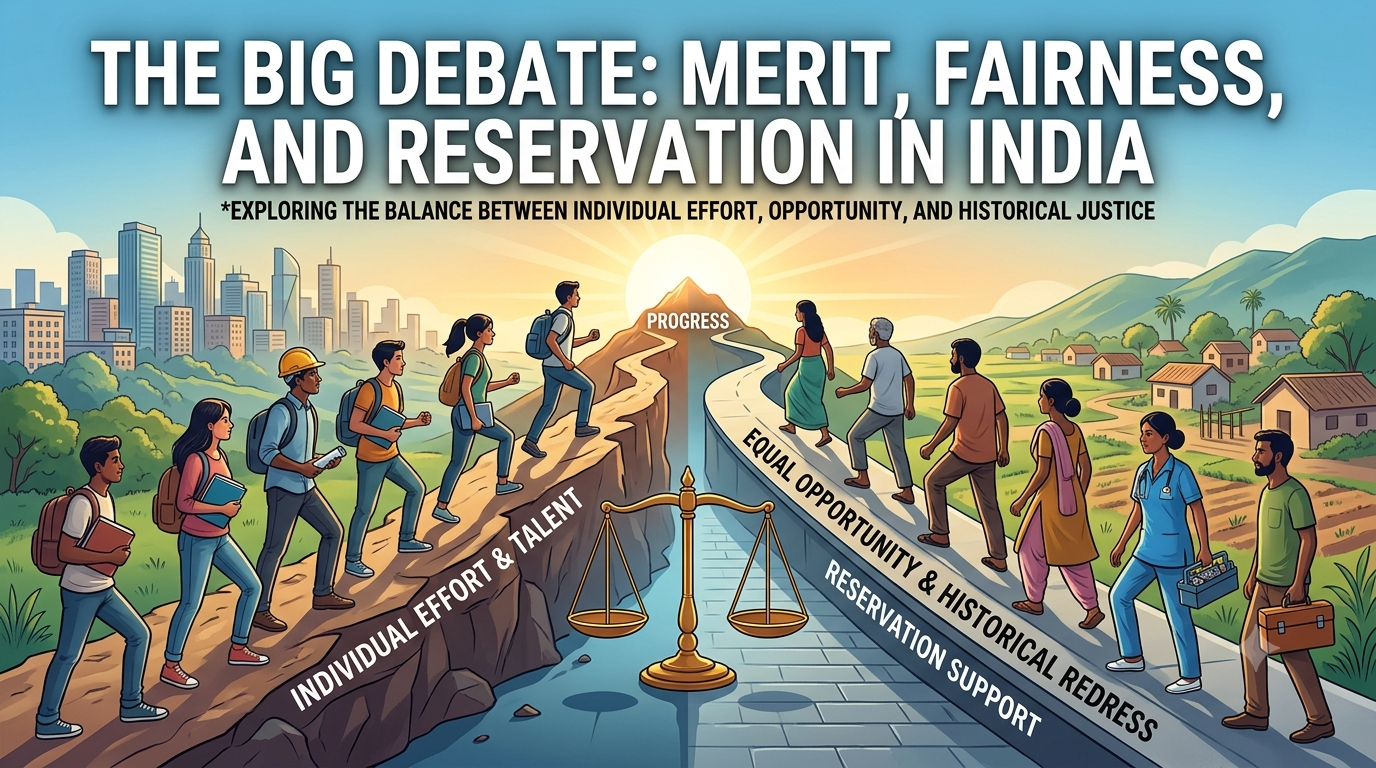
The topic of reservation in India always sparks strong emotions. People generally fall into two camps: those who see it as a necessary way to help historically oppressed groups succeed, and those who feel it punishes hardworking students and ignores actual talent. Rather than a simple fight between “caste and merit,” this debate is actually about two very different ideas of what is fair.
Why Exam Marks Don’t Tell the Whole Story
We often think that getting the highest marks means a person is the most deserving. But imagine two students. Student A grows up in a wealthy family with internet access, private tutors, and a quiet place to study. Student B lives in a village, attends an underfunded school, and is the first in their family to ever read a book.
If they take the exact same test, can we really judge their abilities using the same measuring stick? Experts argue that success is made of two things: personal effort and life circumstances. Ignoring a person’s background makes it impossible to judge their true merit.
The Historical Reason for Quotas
In the past, a person’s caste strictly decided their job, their wealth, and how society treated them. When India became independent, the creators of the Constitution knew that simply passing a law saying “everyone is equal” wouldn’t magically erase centuries of deep-rooted inequality.
Treating unequal people equally doesn’t make things fair. To create a truly level playing field, they introduced special support systems (affirmative action) to actively lift up those who had been pushed down for generations.
The Valid Frustrations of Unreserved Students
Even with good intentions, the system creates real pain. When a student from a general category studies hard and scores high, but loses a college seat to someone with lower marks, they feel cheated. This frustration is even worse if the unreserved student is poor, while the reserved student comes from a rich background. Many rightly ask: Why should today’s youth be punished for the unfair things their ancestors did?
Clearing Up Common Misconceptions
It’s not just about caste: The government uses quotas to fix different problems. SC and ST quotas aim to heal historical oppression, OBC quotas focus on educational and social backwardness, and the newer EWS quota is strictly for fixing economic poverty.
The 50% limit is gone: Many believe reservations cannot legally cross 50% of total seats. However, with the addition of the EWS quota, central government reservations now sit around 59.5%. Some states have pushed this number even higher.
Are the Right People Getting Help?
A major flaw in the system is that the benefits don’t always reach the most desperate. To fix this, wealthy OBC families (the “creamy layer”) are not allowed to use quotas. Furthermore, the Supreme Court recently ruled that SC and ST categories can be broken down into smaller sub-groups. This ensures that the most heavily marginalized communities within those groups finally get their fair share, rather than wealthier individuals taking all the seats.
The Data Problem
India has a major blind spot: the country hasn’t done a full caste census since 1931. Right now, the government is handing out quotas based on old estimates. You cannot create a fair, modern system without accurate numbers. Only with fresh data can the government know exactly who still needs help.
The Danger of Vote-Bank Politics
There is a strange trap built into the system. To destroy caste discrimination, the government has to keep grouping people by their caste. While the original goal was to heal society, many politicians today use these caste identities just to secure votes. This keeps society divided and fuels anger between different communities.
A Roadmap for the Future
To build a truly fair India, experts suggest a simple three-step approach:
Keep Quotas Targeted: Continue offering reservations, but strictly for those who suffer from deep, historical disadvantages.
Fix Basic Education First: The government must provide world-class, free schooling and basic nutrition to every child for at least their first 12 years of life.
Use Hard Data: The government must regularly review census data to update who gets quotas and who no longer needs them.
The Ultimate Goal
Reservation shouldn’t be seen as the enemy of merit. True merit respects hard work while also acknowledging the hurdles a person had to jump over to get to the finish line. The ultimate goal of the reservation system should be to create a society where the family you are born into completely stops dictating your future.