




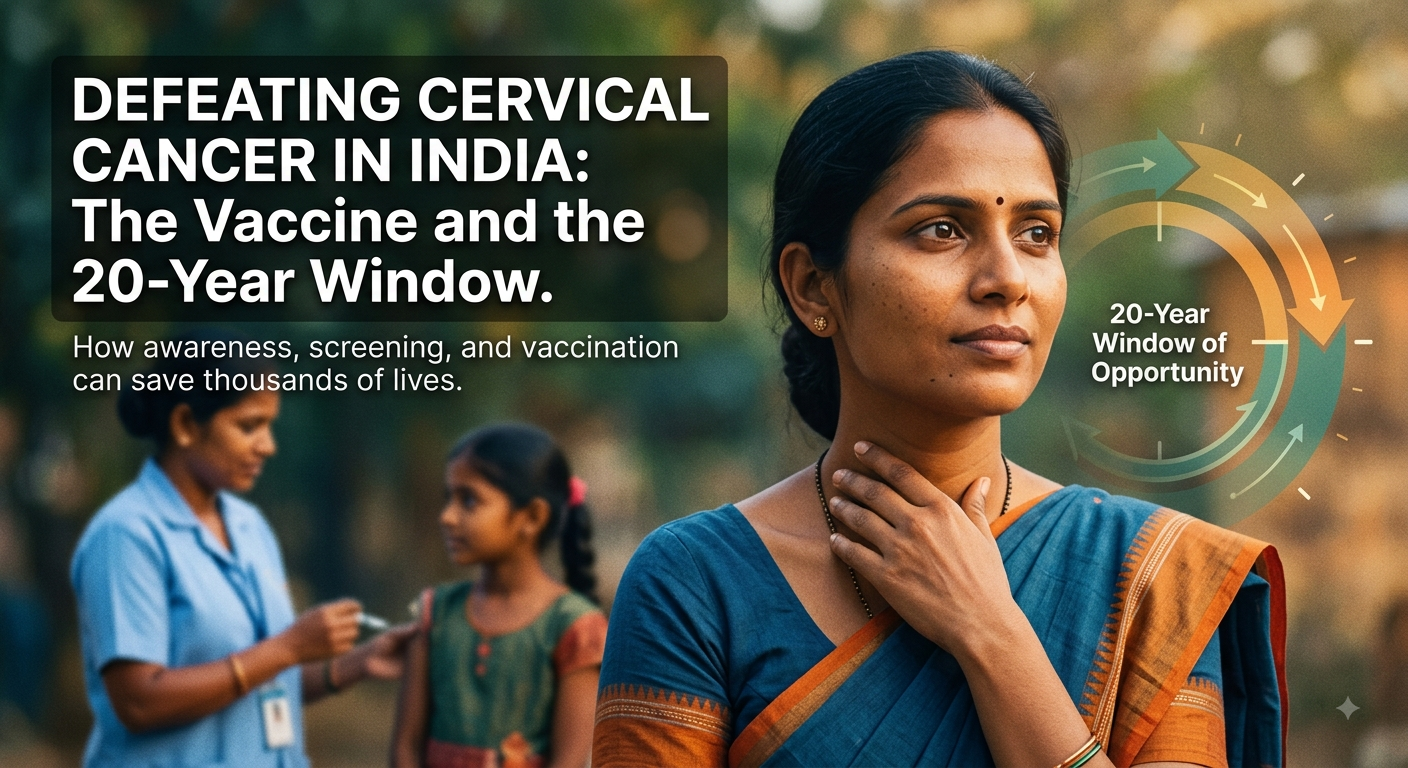
Cancer is a frightening word, and for many types of cancer, we still don’t know the exact cause or have a clear way to prevent them. But cervical cancer is different. We know exactly what causes it, we have a vaccine to stop it, and it gives us years of warning before it becomes dangerous.
Despite this, cervical cancer remains one of the leading causes of cancer deaths among women in India. Every year, tens of thousands of Indian women lose their lives to it, making up a huge portion of the world’s total cervical cancer deaths.
Why is a disease that is so easy to prevent causing so much harm? The answer comes down to medical gaps, lack of testing, and social silence.
The 20-Year Warning Window
Cervical cancer is almost always caused by the Human Papillomavirus, or HPV. HPV is a very common infection. In fact, most adults will catch it at some point in their lives, and usually, the body’s immune system fights it off naturally without the person ever knowing.
However, in some cases, the virus stays in the body and slowly begins to change the cells of the cervix. This change does not happen overnight. It is a very slow process that usually takes 10 to 20 years to actually turn into cancer.
This means a woman has a massive 10 to 20-year window where doctors can easily spot the danger and fix it with a simple, minor treatment before it ever becomes cancer.
Why Are We Missing the Warning Signs?
If we have 20 years to catch it, why are so many women still dying? There are three main reasons:
1. Lack of Testing
In many countries, women are regularly tested for cervical cancer, meaning the disease is caught very early. In India, only a tiny fraction of adult women ever get screened. Because of this, the disease is usually only discovered in its final, most dangerous stages when it is much harder to treat.
2. A Broken Healthcare Chain
Even when the government provides cheap, basic tests in rural areas, there is a big problem with what happens next. If a woman’s basic test shows a problem, she needs to go to a bigger hospital for an advanced check-up. Many women never make this trip because it means traveling far from their village, losing a day of work, and spending money they don’t have. Because the follow-up care is difficult to reach, many women simply drop out of the system.
3. Social Silence and Shame
Because the virus that causes cervical cancer is sexually transmitted, there is a lot of unfair shame attached to it. People mistakenly view it as a moral issue, even though it is just a common virus.
This shame causes silence. Women often ignore early warning signs because reproductive health is treated as a taboo topic. Furthermore, many women feel uncomfortable getting private tests done, especially if female doctors are not available. On top of this, in many households, a mother’s or wife’s health is often put last, coming behind the needs of her children and husband.
The Good News: A Life-Saving Vaccine
The brightest hope in this fight is the HPV vaccine. If given to young girls before they grow up and are exposed to the virus, it is highly effective at preventing the cancer from ever developing. Countries that started vaccinating their populations years ago have seen their cancer rates drop dramatically.
India has also taken a massive step forward by launching a national campaign to provide free HPV vaccines to young adolescent girls. By vaccinating young girls today, we are ensuring they do not have to worry about this cancer 20 years from now.
What Needs to Change?
Vaccines will protect the next generation, but to save the women at risk today, a few things must change:
Easier Testing: We need modern tests that allow women to collect their own samples in private. This would instantly remove the embarrassment and discomfort that keeps many away from clinics.
Better Care Systems: Hospitals need to make sure that if a woman tests positive, she receives immediate and accessible follow-up care.
Open Conversations: The biggest change must happen at home. Families need to break the silence and start talking openly about women’s health.
Cervical cancer gives us years of warning. It is time we start paying attention, getting checked, and talking about it so that no more lives are lost to a disease we know how to beat.