




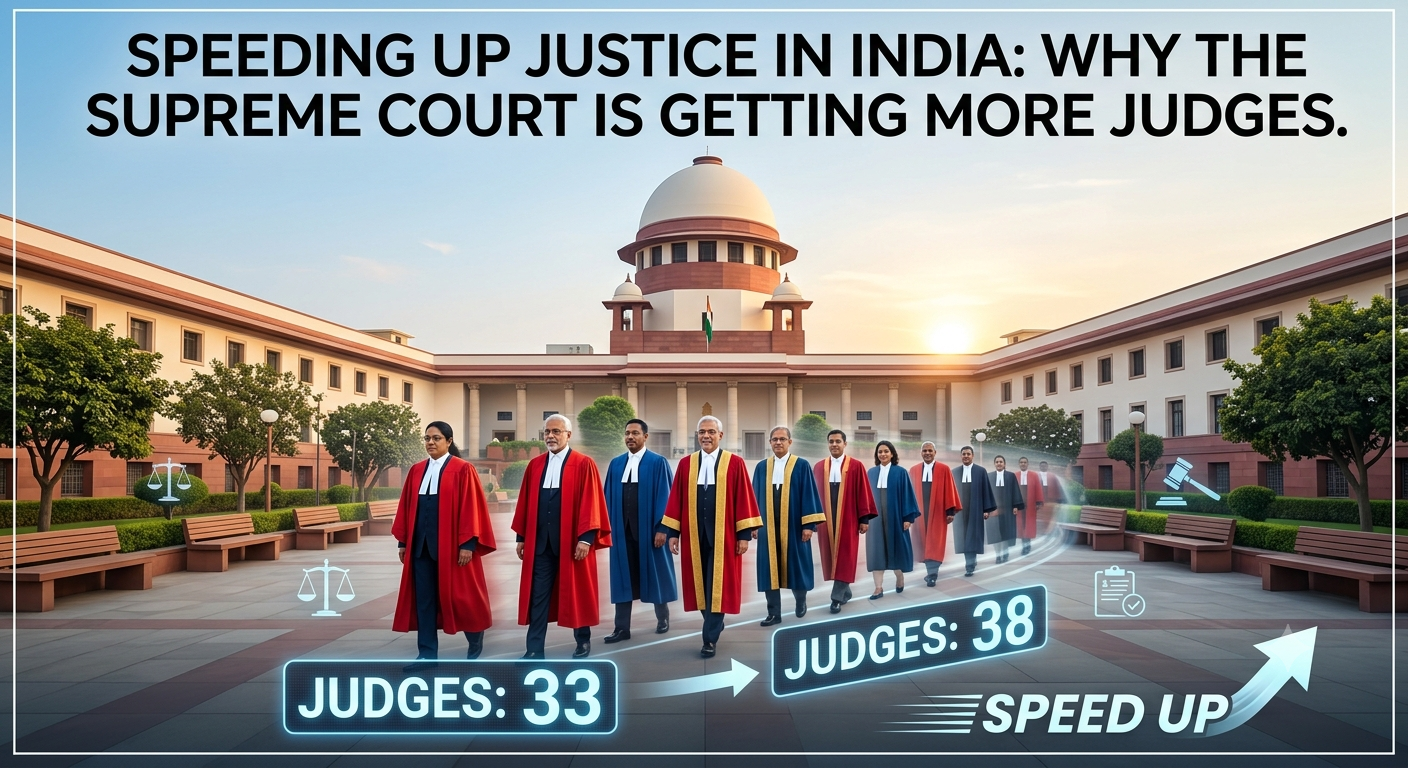
For a long time, the Indian legal system has faced a major challenge: a huge buildup of pending court cases. To help solve this problem and deliver faster justice to citizens, the Parliament recently passed a new law called the Supreme Court (Number of Judges) Amendment Bill, 2026.
Here is a simple breakdown of what this bill means for the country and why it is so important.
What Does the New Law Do?
The main goal of this new law is very simple: add more judges to the Supreme Court.
Before this, the maximum number of judges allowed was 33. This bill increases that limit to 37. When you include the Chief Justice of India, the total number of judges goes up to 38.
By having more judges, the Supreme Court can set up special, permanent teams (called benches) to focus on major national and constitutional issues. Right now, these big cases often get delayed because judges are too busy dealing with everyday legal disputes.
Why is this Change Needed?
Even though the number of judges has been increased a few times since 1950, it hasn’t been enough to keep up with the growing number of cases.
Across all courts in India, there are around 5 crore (50 million) cases waiting to be solved.
In the Supreme Court alone, there were over 94,000 pending cases by mid-2026.
Currently, India only has about 22 judges for every one million people. Legal experts say there should be at least 50, while many developed countries have over 100 judges per million people.
As the population grows and people become more aware of their legal rights, more cases are being filed. This makes adding more judges a basic necessity.
More Than Just Numbers: Other Upgrades
Adding a few more judges to the top court won’t magically fix everything. The government and the courts are also taking other steps to make the system faster:
Stronger Local Courts: The government is building more courtrooms and hiring more judges at the district and local levels. The idea is to solve problems locally so people don’t have to drag their cases all the way to the High Courts or the Supreme Court.
Going Digital: Courts are using more technology. E-courts and online document filing make it much easier and faster for judges to review information.
Updated Laws: The government has introduced new legal codes designed to cut down on complicated procedures that traditionally cause delays.
What Still Needs Fixing?
While the new bill is a great step forward, experts point out that there are still roadblocks to overcome:
Empty Seats: About 20% to 25% of judge positions in lower courts and High Courts are currently empty. The system that selects judges (the Collegium) and the government need to work together to fill these jobs much faster.
Too Many Delays: Lawyers often ask for case delays (adjournments) for minor reasons. Judges need to be stricter about saying no to unnecessary delays.
Government Cases: The government itself is involved in a massive number of court cases. Officials need to stop filing routine appeals that clog up the system.
The Bottom Line
There is a famous saying: “Justice delayed is justice denied.” When court cases drag on for years, it hurts the common man the most—whether it’s a farmer fighting for his land or a family spending their life savings on legal fees.
Increasing the number of Supreme Court judges is a vital step toward building a legal system that the public can trust to deliver fair and fast justice.